Kulith Saar
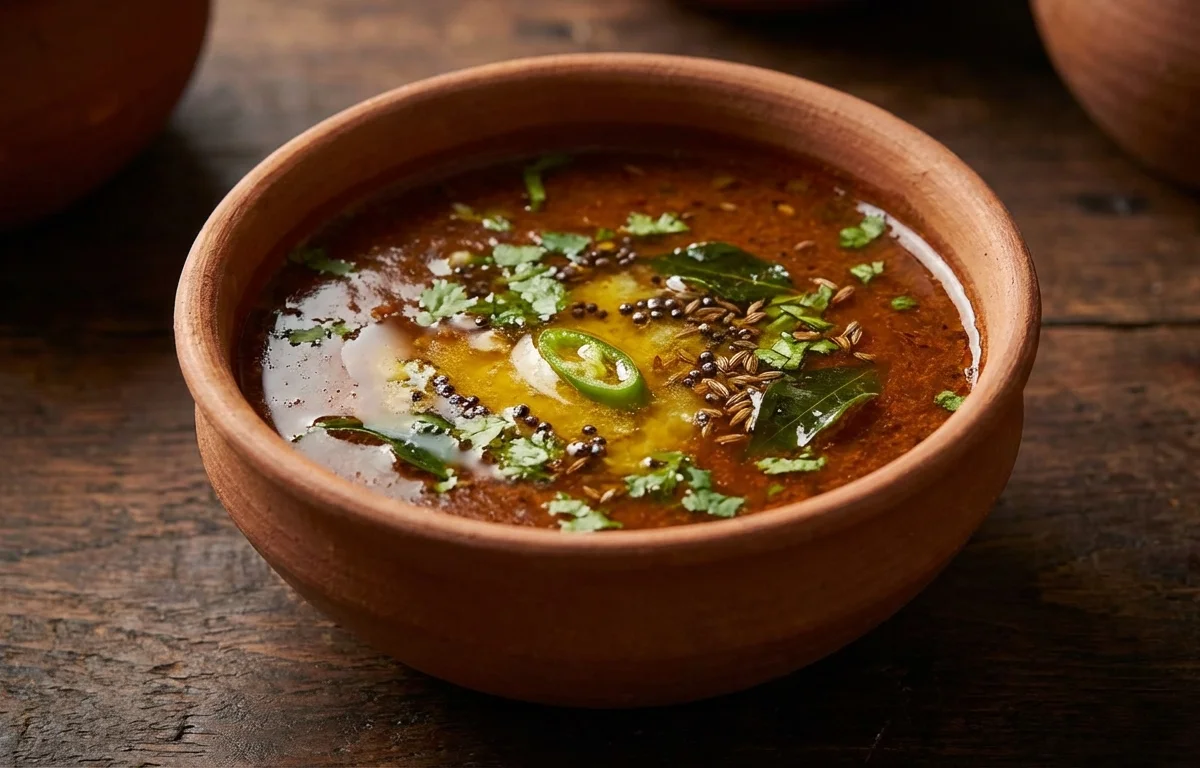
A warm, tangy, and lightly spiced Konkani soup made from horse gram. This protein-rich saar is tempered with mustard seeds, curry leaves, and asafoetida, making it a comforting companion to steamed rice on a rainy day.
For 4 servings
- prep
Soak and prep the horse gram.
Rinse the horse gram thoroughly and soak in 2 cups of water for at least 4 hours. Drain the soaking water before cooking.
TIPSoaking softens the tough skin and speeds up cooking. You can soak overnight for best results. - pressure cook · ~15 min
Pressure cook the horse gram until soft.
Transfer the soaked horse gram to a pressure cooker. Add 2 cups of fresh water, slit green chilies, and crushed ginger. Cook on medium heat for 4 to 5 whistles. Let the pressure release naturally.
TIPThe gram should mash easily between your fingers. If undercooked, add half a cup of water and cook for one more whistle. - mix · ~5 min
Mash and extract the broth.
Open the cooker. Using a whisk or traditional wooden churner, mash the cooked gram well directly in the pot. Add the tamarind paste, jaggery, salt, and 1 more cup of water. Stir vigorously to extract the flavor, then strain the liquid into a clean saucepan to remove the husks.
TIPDon't discard the husks immediately. Add a splash of water to them, squeeze, and strain again to get every last bit of flavor. - simmer · ~10 min
Simmer the saar.
Place the strained liquid on the stove. Bring it to a gentle boil over medium heat, then lower the flame and let it simmer for 8 to 10 minutes. Adjust consistency with hot water if it seems too thick.
- temper · ~2 min
Make the tempering.
1.Heat coconut oil in a small tadka pan over medium heat.2.Add mustard seeds and let them splutter completely.3.Add cumin seeds, crushed garlic, and broken red chilies. Sauté for 20 seconds.4.Toss in curry leaves and a pinch of asafoetida. Let them sizzle and turn crisp.TIPUse medium-low heat so the garlic infuses the oil without burning. Burnt garlic turns bitter. - simmer · ~2 min
Pour the tempering over the simmering saar and combine.
Immediately pour the sizzling tempering into the simmering saar. Stir well and let it bubble together for 2 minutes so the flavors meld. Turn off the heat.
- garnish
Garnish with fresh coriander and serve hot.
Ladle into bowls or katoris, sprinkle with chopped coriander leaves, and serve immediately with steamed rice and a drizzle of raw coconut oil if desired.
What to keep in mind.
6 tips from the recipe — small details that make a real difference to the final dish.
- 1Soak horse gram for at least 4 hours or overnight to reduce cooking time and improve digestibility.
- 2After mashing, add a splash of water to the husks and squeeze them again to extract maximum flavor.
- 3Use medium-low heat during tempering so the garlic infuses the oil without burning and turning bitter.
- 4For a thinner saar, add hot water during simmering until you reach your preferred consistency.
- 5Let the pressure release naturally from the cooker so the lentils finish cooking gently and evenly.
- 6Taste the saar before serving and adjust salt and jaggery to balance the tanginess of tamarind.
Adapt it for your goals.
Coconut-cream
Stir in 2 tablespoons of thick coconut milk just before serving for a richer, creamier saar with a subtle sweetness that complements the tangy tamarind.
spiced upSpiced-up
Add 1/2 teaspoon of freshly ground black pepper or a pinch of chili flakes during the simmer for extra heat and depth.
low oilLow-oil
Use only 1/2 teaspoon oil for the tempering and skip the final drizzle of raw oil to reduce fat while keeping the essential flavour base.
high protein bowlHigh-protein bowl
Keep the mashed gram (husks included) in the saar instead of straining for a chunkier, more filling soup that doubles protein and fibre.
Why this is on our healthy list.
Rich in Plant Protein
Horse gram is one of the highest-protein legumes, making this dish an excellent source of plant-based protein for muscle repair and satiety.
Low in Fat
Prepared with minimal oil and no heavy fats, this saar is a light, heart-friendly option that fits easily into low-fat diets.
Good Source of Iron
Horse gram provides non-heme iron, and cooking it with tamarind and ginger may enhance its absorption by the body.
Digestive Support
Asafoetida, ginger, and curry leaves are traditional digestive aids that can help reduce bloating and improve nutrient uptake from legumes.
Frequently asked questions
No, soaking is essential. Horse gram has a very tough outer skin; without at least 4 hours of soaking, it will remain hard even after pressure cooking.



.webp)