
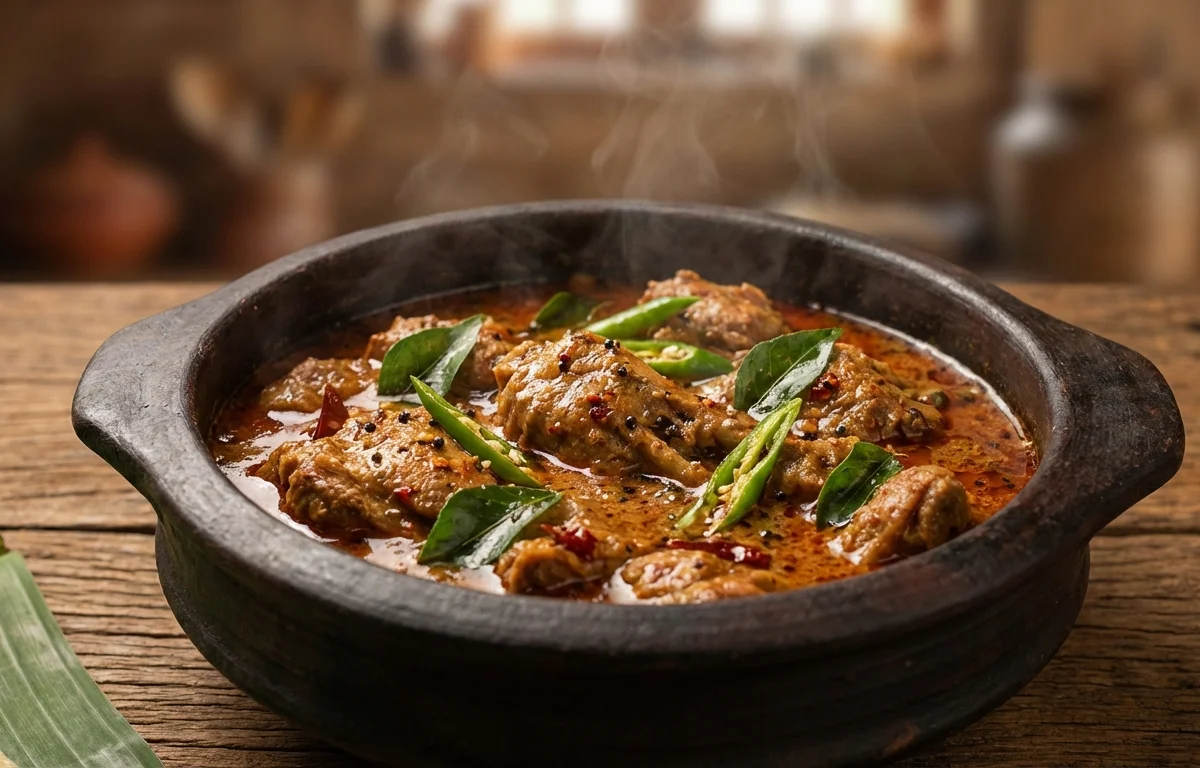
Kuttanadan Duck Curry
A rich Kerala duck curry with roasted coconut, warm spices, and a deep peppery kick. The duck turns tender as it cooks, while shallots and curry leaves give the gravy its unmistakable Kuttanad character.
For 4 servings
- prep · ~10 min
Clean and season the duck.
1.Wash the duck pieces well and drain fully.2.Rub the duck with salt and turmeric powder.3.Set aside for 10 minutes while you prepare the masala.TIPDrain the duck well so the gravy does not turn watery at the start. - roast · ~7 min
Roast the coconut and spices.
1.Heat a small pan over low heat.2.Add grated coconut, black pepper, coriander seeds, fennel seeds, and red chili powder.3.Roast, stirring often, until the coconut turns deep golden and smells nutty.4.Cool slightly, then grind with a little water to a smooth paste.TIPKeep the heat low so the coconut browns evenly without burning. - saute · ~12 min
Cook the shallots and aromatics.
1.Heat coconut oil in a pressure cooker over medium heat.2.Add cinnamon, cloves, cardamom, and curry leaves.3.Add shallots and cook until lightly golden.4.Add ginger, garlic, and green chili, then sauté until fragrant.5.Add tomato and cook until soft. - mix · ~3 min
Add the duck and ground masala.
Add the seasoned duck pieces to the cooker and mix well with the shallot base. Stir in the roasted coconut paste and garam masala, coating the duck evenly.
- pressure cook · ~25 min
Pressure cook the curry.
Pour in water, stir once, and close the cooker. Pressure cook on medium heat for 20 to 25 minutes, until the duck is tender.
TIPOlder duck can take a little longer, so cook until the meat softens nicely on the bone. - simmer · ~10 min
Simmer until the gravy thickens.
Open the cooker after the pressure drops. Simmer the curry uncovered for 8 to 10 minutes, stirring now and then, until the gravy turns thick and glossy.
- serve
Serve the duck curry hot.
What to keep in mind.
6 tips from the recipe — small details that make a real difference to the final dish.
- 1Drain the duck thoroughly after washing so it sears into the masala instead of releasing excess water.
- 2Roast the coconut on low heat until deep golden, not just pale beige, for the curry's signature dark, nutty depth.
- 3Let the pressure drop naturally before opening; quick release can leave tougher duck pieces.
- 4If your duck is mature or country duck, add a few extra minutes in the cooker until the meat yields easily near the bone.
- 5Simmer uncovered at the end until the oil lightly separates and the gravy clings to the duck pieces.
- 6This curry tastes even better the next day, after the pepper, roasted coconut, and shallot flavors settle into the meat.
Adapt it for your goals.
Stovetop
Cook in a heavy pot instead of a pressure cooker, simmering longer until the duck is tender; useful if you want more control over gravy reduction.
extra pepperyExtra-peppery
Increase black pepper and add a little more at the end for a sharper, more traditional spicy finish.
less spicyLess-spicy
Reduce green chili and red chili powder while keeping black pepper for warmth without too much heat.
thicker gravyThicker-gravy
Use slightly less water and simmer longer uncovered if you prefer a roast-style curry that coats rice or appam heavily.
Why this is on our healthy list.
Protein-Rich Main Dish
Duck provides substantial protein, making this curry hearty and satisfying as a centerpiece meal.
Aromatic Spice Benefits
Ginger, garlic, black pepper, fennel, and coriander add flavor complexity along with traditional digestive support.
Shallot and Tomato Base
The curry gets body from shallots and tomatoes, which contribute plant compounds and savory sweetness without relying on cream.
Frequently asked questions
Yes. Cook it in a covered heavy pot on low heat until the duck is tender, then uncover and reduce the gravy until thick.


.webp)
.webp)