
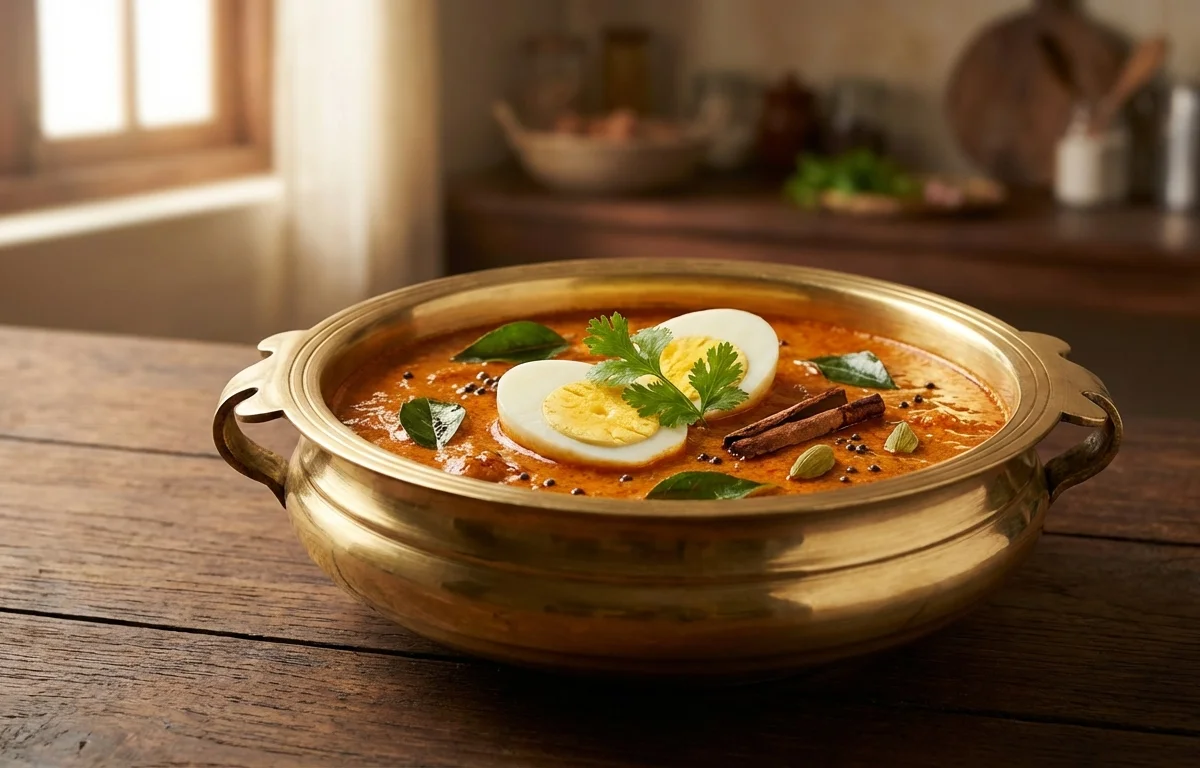
Malabar Egg Curry
Hard-boiled eggs simmered in a gently spiced Kerala-style coconut gravy with onions, tomatoes, curry leaves, and whole spices. It is rich without feeling heavy and tastes especially good with appam, idiyappam, or parotta.
For 4 servings
- boil · ~10 min
Boil and peel the eggs.
Cook the eggs in boiling water until hard-boiled, about 10 minutes. Cool them, peel, and make 2-3 light slits on each egg so the gravy can coat them better.
TIPThe small slits help the eggs soak up more flavor without breaking apart. - saute · ~4 min
Start the curry base.
1.Heat coconut oil in a pan over medium heat.2.Add mustard seeds and let them splutter.3.Add fennel seeds, curry leaves, and black pepper and cook for 10-15 seconds.4.Add sliced onions, green chili, ginger, and garlic.TIPKeep the heat medium so the spices turn fragrant but do not burn. - saute · ~13 min
Cook the onions and tomatoes.
1.Sauté the onions until soft and lightly golden, about 6-8 minutes.2.Add chopped tomatoes and mix well.3.Cook until the tomatoes soften and the mixture looks jammy, about 4-5 minutes. - saute · ~1 min
Add the ground spices.
Add turmeric powder, red chili powder, coriander powder, and salt. Cook for 30-40 seconds, stirring constantly, until the masala smells fragrant.
TIPIf the pan looks dry, splash in a little water so the spice powders do not scorch. - simmer · ~4 min
Make the gravy.
Pour in the water and bring the masala to a gentle simmer. Cook for 3-4 minutes so the onion-tomato base loosens into a smooth gravy.
- simmer · ~4 min
Add coconut milk and eggs.
1.Lower the heat and pour in the coconut milk.2.Add garam masala and stir gently.3.Slip in the boiled eggs and spoon some gravy over them.4.Simmer very gently for 3-4 minutes without boiling hard.TIPDo not let the curry boil vigorously after adding coconut milk, or it can split. - rest · ~5 min
Rest the curry for 5 minutes.
- serve
Serve hot with appam, idiyappam, or parotta.
What to keep in mind.
7 tips from the recipe — small details that make a real difference to the final dish.
- 1Make only shallow slits in the boiled eggs; deep cuts can make the whites tear while simmering.
- 2Cook the onions until lightly golden, not dark brown, so the gravy stays delicate and Kerala-style.
- 3Let the tomatoes turn fully soft and jammy before adding spice powders; this prevents a raw, sharp taste.
- 4If the masala catches after adding the powders, loosen it with a small splash of water instead of more oil.
- 5Keep the heat low once coconut milk goes in; a hard boil can make the gravy split or look grainy.
- 6Resting the curry for 5 minutes really helps the slit eggs absorb the coconut-spice gravy.
- 7This curry tastes even better after a few hours, so it is a good make-ahead dish for breakfast or dinner.
Adapt it for your goals.
Roasted-egg
Lightly pan-fry the boiled eggs in a little coconut oil and turmeric before adding them for a firmer surface and deeper flavor.
extra spicyExtra-spicy
Increase red chili powder and add one more slit green chili if you want a hotter curry to pair with appam or parotta.
thinner gravyThinner-gravy
Add a little extra water for a looser curry that soaks beautifully into idiyappam without feeling too rich.
vegetarian potatoVegetarian-potato
Replace the eggs with boiled potatoes for a similar Kerala-style coconut curry that is good for fasting or egg-free meals.
Why this is on our healthy list.
Protein From Eggs
Eggs make this curry satisfying and provide high-quality protein along with important nutrients from the yolk.
Aromatic Digestive Spices
Ginger, garlic, fennel, black pepper, and curry leaves add flavor while contributing traditional digestive benefits.
Balanced Richness
Coconut milk gives body and satiety, so the curry feels rich and comforting even with a relatively short ingredient list.
Frequently asked questions
Small slits help the gravy cling to the eggs and let some flavor seep in without the eggs falling apart.



.webp)
.webp)