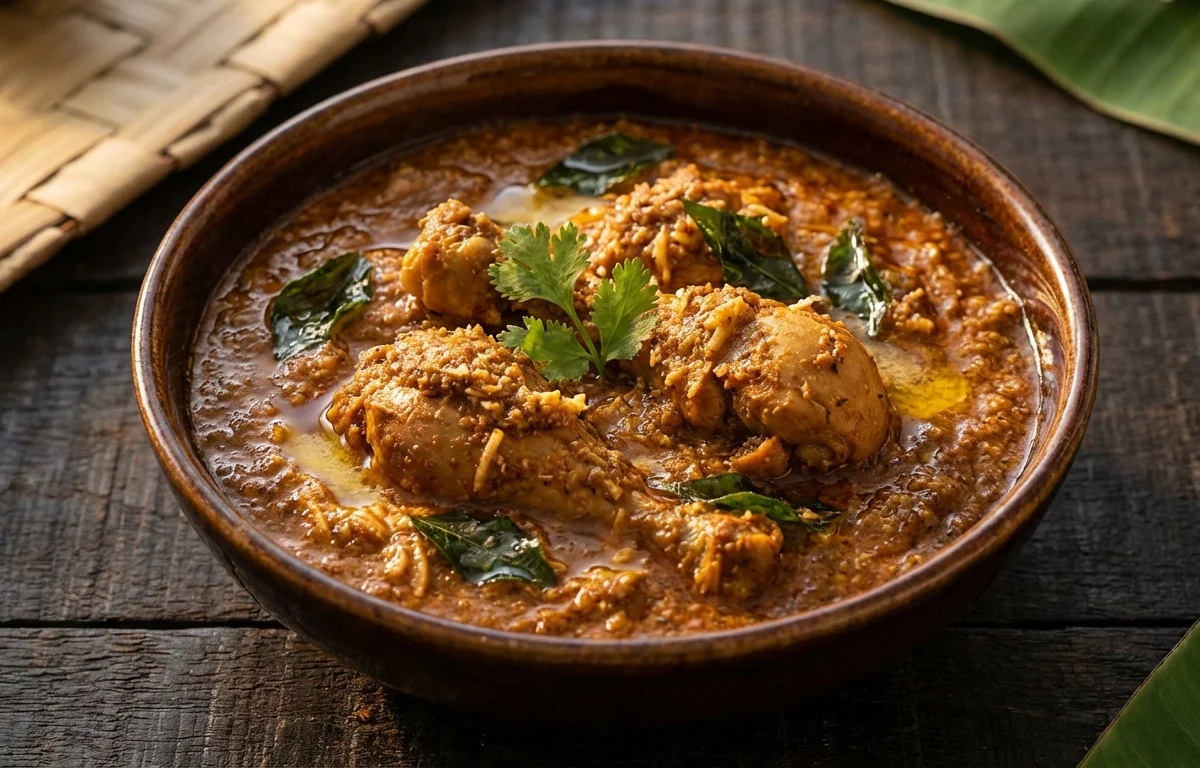
Mangalorean Chicken Gassi
A rich coastal chicken curry with a deep red coconut masala, gentle warmth from dried chilies, and a tangy finish from tamarind. This Mangalorean favorite is full of flavor and lovely with neer dosa, rice, or roti.
For 4 servings
- prep · ~15 min
Soak the tamarind and prep the chicken.
1.Soak the tamarind in a little warm water for 15 minutes.2.Wash the chicken and keep the pieces ready.3.Slice the onion and chop the tomato. - roast · ~8 min
Roast the spices and coconut.
1.Heat a pan over low to medium heat.2.Dry roast the dried red chili, coriander seeds, cumin seeds, black peppercorns, and fenugreek seeds until fragrant, about 2 to 3 minutes.3.Add the grated coconut, garlic, and ginger and roast until the coconut turns light golden and smells nutty, about 4 to 5 minutes.4.Take everything off the heat and cool slightly.TIPKeep the heat moderate so the coconut browns evenly and the spices do not burn. - mix · ~3 min
Grind the masala.
Transfer the roasted mixture to a grinder. Add the soaked tamarind and enough water for grinding, then blend to a smooth, thick masala paste.
- saute · ~10 min
Cook the onion and tomato base.
1.Heat oil in a kadai over medium heat.2.Add the sliced onion and cook until soft and lightly golden, about 5 to 6 minutes.3.Add the chopped tomato and turmeric powder.4.Cook until the tomato softens and starts breaking down, about 4 minutes. - saute · ~5 min
Coat the chicken with the masala.
Add the chicken pieces and salt to the pan. Stir for 2 to 3 minutes, then add the ground masala and mix well so the chicken is evenly coated.
- simmer · ~25 min
Simmer the gassi until the chicken is tender.
Pour in the water and bring the curry to a gentle boil. Lower the heat, cover, and simmer until the chicken is cooked through and tender, 20 to 25 minutes, stirring once or twice.
TIPCook until the oil rises slightly on top and the gravy thickens to a spoon-coating consistency. - garnish
Garnish with coriander leaves.
- serve
Serve hot with rice, neer dosa, or roti.
What to keep in mind.
7 tips from the recipe — small details that make a real difference to the final dish.
- 1Use Byadagi chilies if possible; they give gassi its deep red color without making the curry overly hot.
- 2Roast the coconut only to light golden, not dark brown, or the masala can turn bitter and muddy.
- 3Grind the roasted coconut masala very smooth with minimal water so the gravy stays rich rather than watery.
- 4Bone-in chicken works best here because it adds body and savoriness to the simmering gravy.
- 5If the tamarind is very sour, add it gradually while grinding and taste before using all of it.
- 6Let the curry rest 10 to 15 minutes after cooking; the coconut masala settles and the flavors round out noticeably.
- 7Reheat on low heat with a splash of water, since coconut-based gravies thicken as they sit.
Adapt it for your goals.
Spicier
Use hotter dried red chilies along with Byadagi-style ones for a fiercer curry while keeping the classic red color.
low oilLow-oil
Reduce the oil slightly and roast the masala carefully so you still get depth from the coconut and spices.
bonelessBoneless
Swap in boneless chicken for easier eating, but simmer a little less so the pieces stay juicy.
seafoodSeafood
Use prawns or firm fish instead of chicken for a coastal-style gassi; add seafood near the end to avoid overcooking.
Why this is on our healthy list.
Protein-Rich Main Dish
Chicken makes this curry filling and satisfying, helping turn it into a substantial meal rather than just a sauce.
Spice-Based Antioxidants
Dried red chilies, coriander, cumin, pepper, turmeric, garlic, and ginger add flavor along with beneficial plant compounds.
No Cream Needed
Fresh coconut gives the gravy body and richness, so the curry stays luscious without dairy cream.
Frequently asked questions
Yes. Thaw it first and roast it well to remove excess moisture so the masala develops the same nutty depth.