Mangalorean Egg Bafat Curry
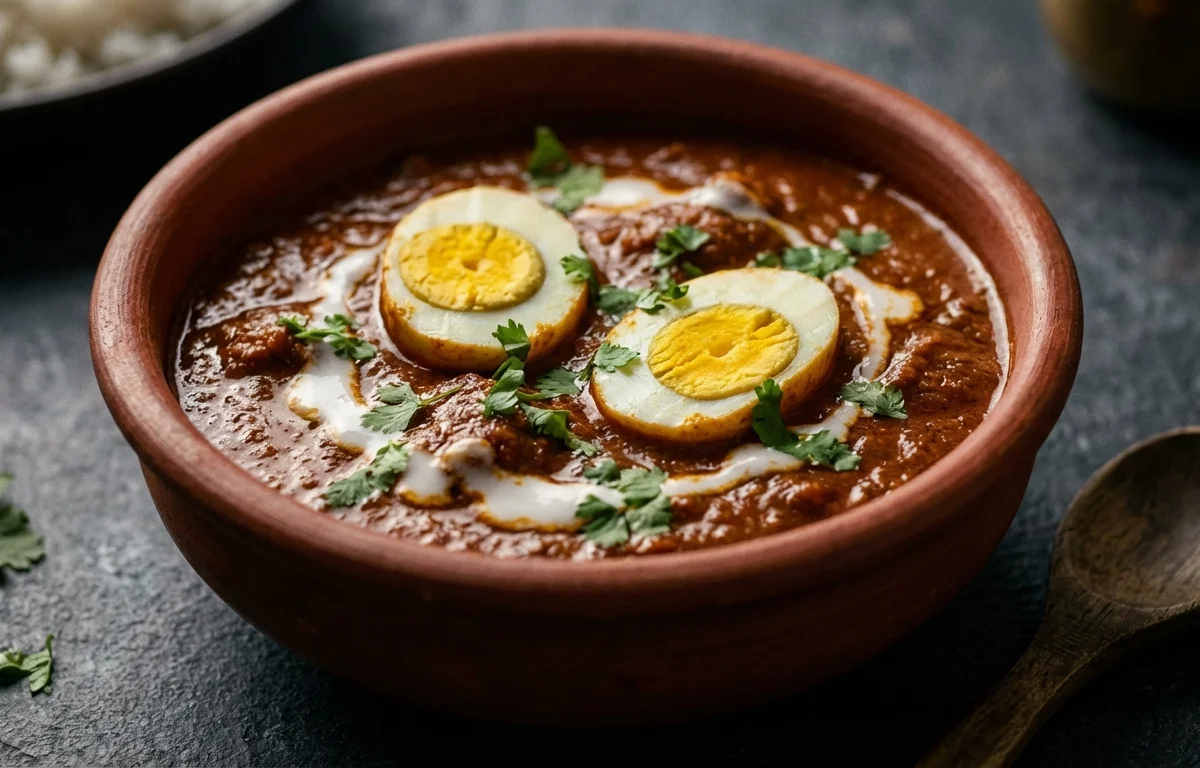
Hard-boiled eggs simmer in a deeply spiced Mangalorean bafat masala with coconut, onion, and tomato. The gravy is warm, earthy, and gently tangy, making it perfect with neer dosa, bread, or steamed rice.
For 4 servings
- boil · ~10 min
Boil the eggs.
Cook the eggs in water until hard-boiled, about 10 minutes. Cool, peel, and make a few light slits on each egg so the curry flavors seep in.
TIPDo not cut deep slits or the eggs may break while simmering. - roast · ~5 min
Roast the bafat masala ingredients.
1.Heat a pan on low heat.2.Add dried red chili, coriander seeds, cumin seeds, black peppercorns, and fenugreek seeds.3.Roast until fragrant and a shade darker, about 2 to 3 minutes.4.Add grated coconut and garlic, then roast until the coconut turns light golden.TIPKeep the heat low so the spices and coconut toast evenly without turning bitter. - mix · ~3 min
Grind the masala.
Cool the roasted mixture slightly, then grind it with turmeric powder, tamarind paste, and a little water to a smooth, thick paste.
- saute · ~11 min
Cook the onion and tomato base.
1.Heat oil in a pan over medium heat.2.Add sliced onion and cook until soft and lightly golden, 5 to 6 minutes.3.Add chopped tomato and cook until soft and pulpy, 4 to 5 minutes. - simmer · ~10 min
Simmer the curry.
1.Add the ground bafat masala to the pan and cook for 2 minutes.2.Pour in water and add salt, then mix well.3.Bring the curry to a gentle simmer and cook until slightly thickened, 6 to 8 minutes.TIPThe gravy should be pourable but not thin; add a splash of water only if it gets too thick. - simmer · ~5 min
Add the eggs and finish the curry.
Add the boiled eggs and simmer gently for 4 to 5 minutes so they soak up the masala. Turn off the heat and scatter coriander leaves on top.
- serve
Serve hot.
What to keep in mind.
7 tips from the recipe — small details that make a real difference to the final dish.
- 1Make only shallow slits in the boiled eggs so the bafat gravy penetrates without the eggs splitting.
- 2Roast the chilies and whole spices on low heat; scorched fenugreek will make the curry noticeably bitter.
- 3Toast the grated coconut just to light golden, not brown, so the masala stays rich without tasting burnt.
- 4Grind the roasted mixture to a very smooth paste for the characteristic thick, velvety Mangalorean-style gravy.
- 5Cook the ground masala for a couple of minutes before adding water to remove any raw spice edge.
- 6Keep the final simmer gentle after adding eggs, or the eggs can toughen and the gravy may split.
- 7This curry tastes even better after 30 minutes of resting, when the eggs absorb the tamarind-spice flavors.
Adapt it for your goals.
Spicier
Increase the black pepper slightly or add a couple of hotter dried chilies if you want a sharper, more fiery bafat profile.
vegetableVegetable
Replace some or all of the eggs with boiled potatoes or cauliflower for a hearty version that still works well with the coconut bafat gravy.
thicker gravyThicker-gravy
Use a little less water for a richer, clingier curry that pairs especially well with bread or set dosa.
shallot basedShallot-based
Swap the sliced onions for small shallots for a sweeter, more traditional coastal flavor in the base.
Why this is on our healthy list.
Protein from Eggs
Hard-boiled eggs make this curry filling and provide high-quality protein that helps turn the dish into a satisfying main.
Spice-Rich Base
Coriander, cumin, pepper, garlic, and turmeric add aroma and depth while contributing beneficial plant compounds.
Natural Fats from Coconut
Fresh coconut gives the curry body and richness, helping carry the roasted spice flavors without needing heavy cream.
Frequently asked questions
Yes. Roast and grind the masala paste in advance, then refrigerate it for a day or two so the curry comes together faster.