
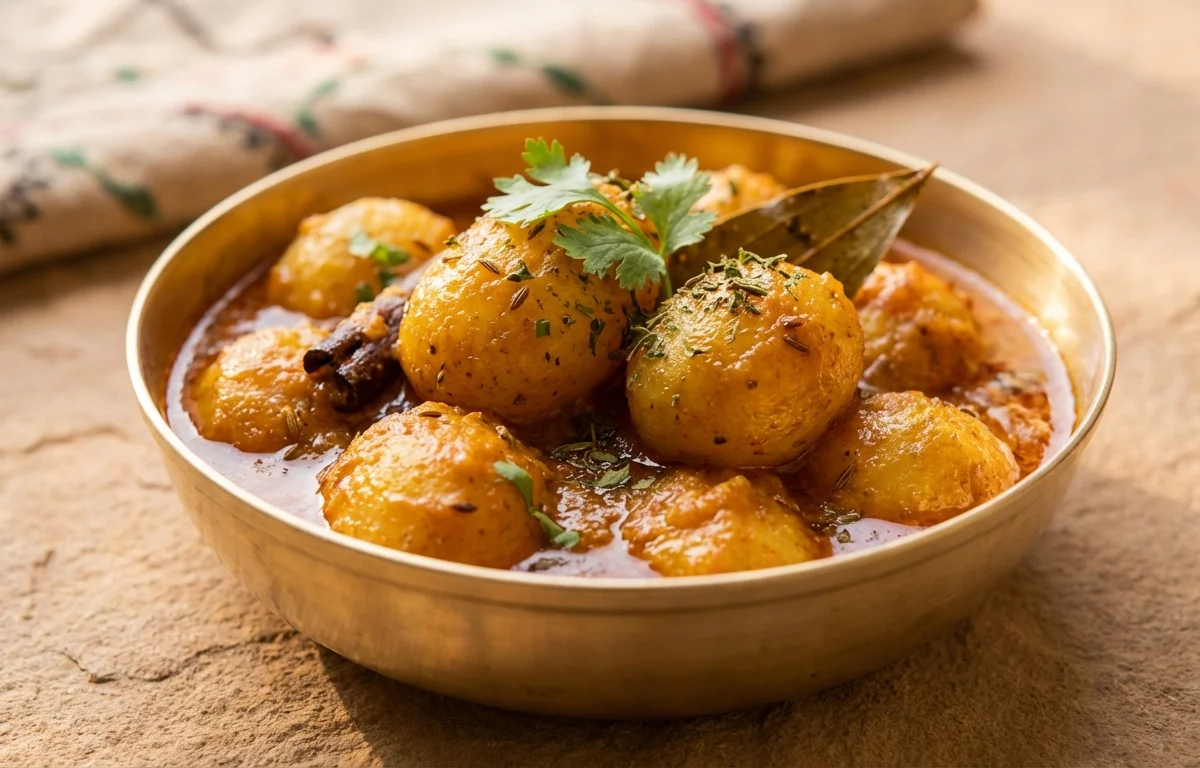
Marwari Aloo Dum
Baby potatoes simmered in a spiced yogurt gravy with the warm, rustic flavors of Marwari cooking. It is rich without being heavy, gently tangy, and perfect with phulka, poori, or plain rice.
For 4 servings
- boil · ~15 min
Boil the potatoes until just tender.
Cook the baby potatoes in water until a knife slips in with slight resistance. Drain, cool slightly, peel if desired, and prick them lightly with a fork.
TIPDo not overboil the potatoes or they may break while simmering in the gravy. - mix · ~3 min
Whisk the yogurt with the dry spices.
In a bowl, whisk the yogurt until smooth. Mix in coriander powder, red chili powder, turmeric powder, fennel powder, garam masala, dry mango powder, and salt.
- saute · ~5 min
Lightly fry the potatoes.
Heat the oil in a pan over medium heat and add the boiled potatoes. Cook for a few minutes, turning gently, until they get light golden spots. Remove them to a plate.
- temper · ~1 min
Make the tempering.
1.In the same pan, add cumin seeds and let them crackle.2.Add asafoetida and stir for a few seconds.3.Add grated ginger and slit green chili.4.Cook briefly until fragrant without letting the spices burn.TIPKeep the heat low once asafoetida goes in so it stays aromatic, not bitter. - simmer · ~7 min
Cook the yogurt gravy.
Lower the heat and add the whisked yogurt mixture to the pan, stirring continuously. Cook gently until the yogurt looks smooth and slightly thickened, then add water and mix well.
TIPContinuous stirring helps keep the yogurt from splitting. - simmer · ~10 min
Simmer the potatoes in the gravy.
Return the fried potatoes to the pan and coat them well in the gravy. Cover and simmer on low heat until the flavors soak in and the curry thickens lightly.
- garnish
Garnish with cilantro.
- serve
Serve hot.
Serve Marwari Aloo Dum hot with phulka, poori, or plain rice.
What to keep in mind.
6 tips from the recipe — small details that make a real difference to the final dish.
- 1Prick the boiled baby potatoes lightly so the yogurt gravy and spices seep into the center.
- 2Let the potatoes get only light golden spots; deep browning can make the gravy taste heavier than intended.
- 3Keep the flame low when adding the yogurt mixture and stir without stopping to prevent curdling.
- 4If the gravy thickens too much after simmering, loosen it with a splash of hot water, not cold.
- 5Use slightly sour yogurt for the most authentic Marwari-style tang without needing extra amchur.
- 6This curry tastes even better after 30 minutes of resting, when the fennel, amchur, and ginger settle into the potatoes.
Adapt it for your goals.
Jain
Skip ginger and asafoetida if needed, and rely on cumin, fennel, yogurt, and amchur for a clean, tangy Jain-friendly version.
no onion no garlicNo-onion-no-garlic
This recipe is already naturally no-onion and no-garlic, making it ideal for vrat-style or satvik-leaning everyday meals.
low oilLow-oil
Reduce the oil slightly and pan-roast the boiled potatoes just until spotted; the curry stays flavorful but lighter.
spicierSpicier
Add one extra slit green chili or a little more red chili powder for a sharper, more robust heat.
Why this is on our healthy list.
Comforting energy from potatoes
Baby potatoes make the dish filling and satisfying, especially when served as a complete meal with phulka or rice.
Yogurt adds protein and calcium
The yogurt-based gravy contributes dairy protein and calcium while giving the curry its gentle tang and body.
Digestive spice profile
Cumin, fennel, ginger, and asafoetida are traditional spices often used to make rich gravies feel more balanced and aromatic.
Frequently asked questions
Keep the heat low, use well-whisked yogurt, and stir continuously as soon as you add it to the pan.



.webp)
.webp)
.webp)