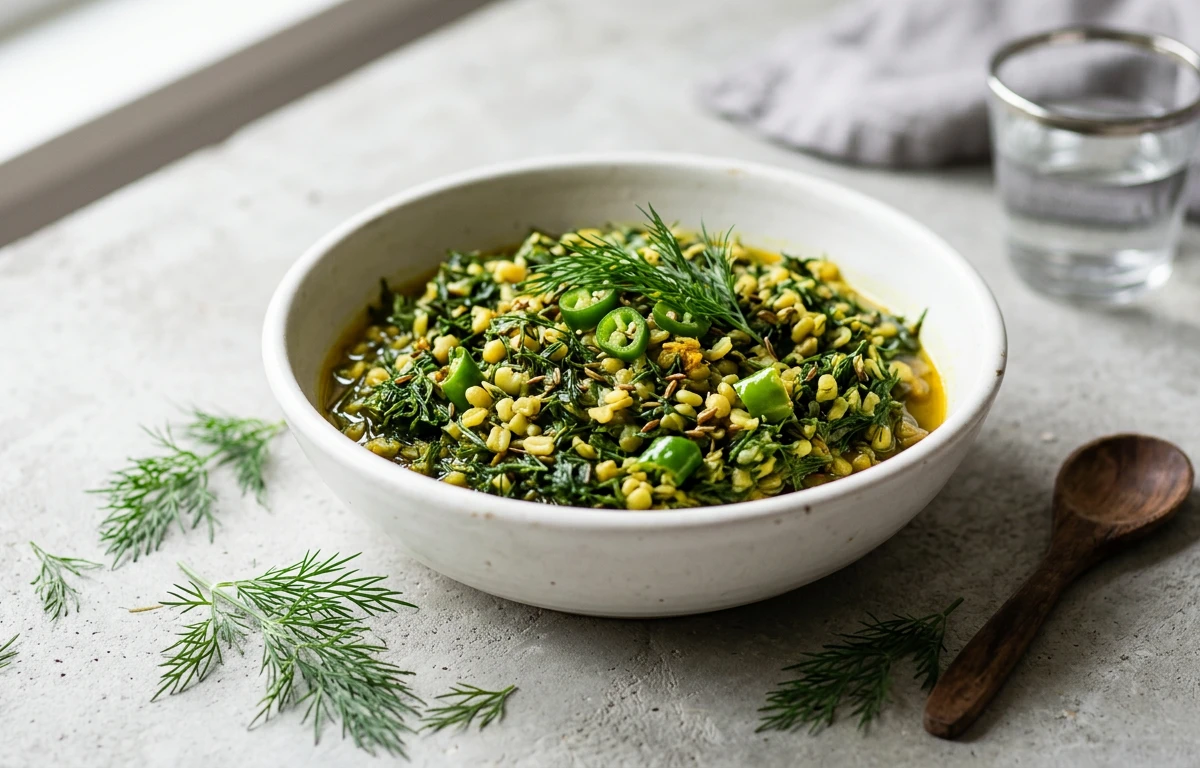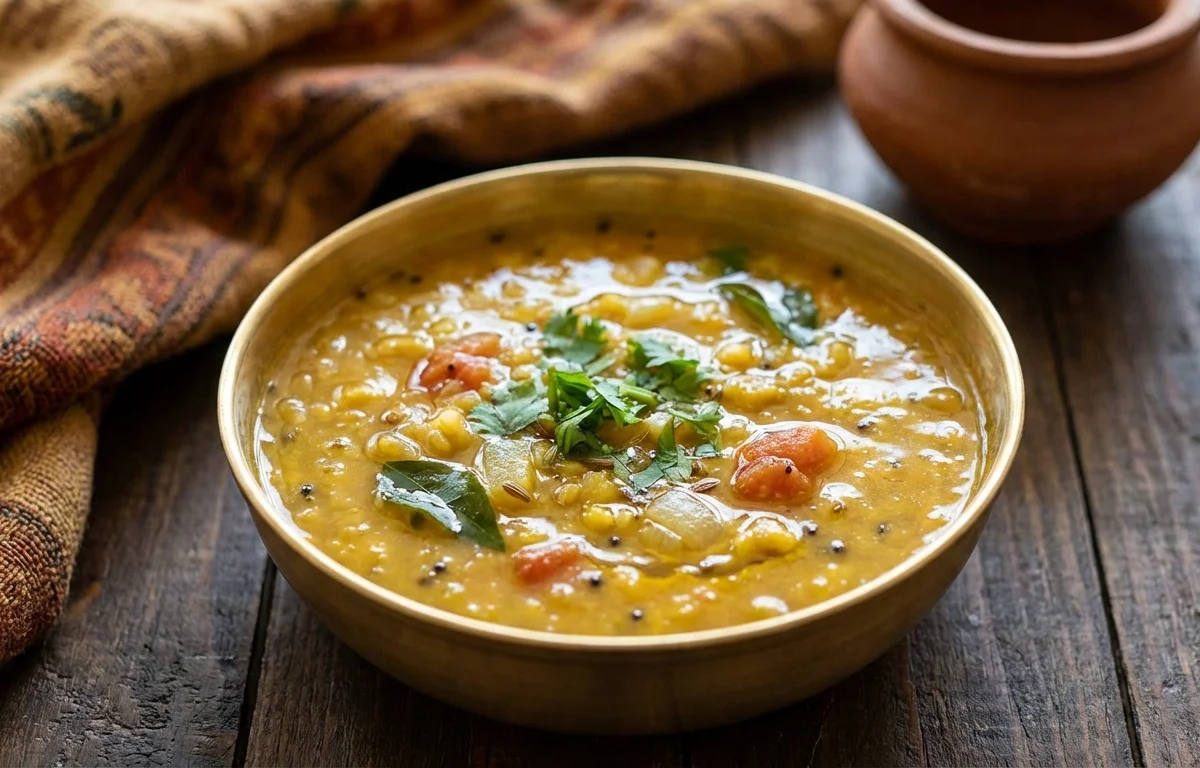
Moong Dal Amti
A tangy, mildly spiced Maharashtrian dal made with split green gram. The earthy sweetness of moong dal meets a vibrant tempering of mustard seeds, cumin, and curry leaves, finished with tamarind and a touch of jaggery for that signature sweet-sour balance. Light yet comforting, it pairs beautifully with steamed rice and a dollop of ghee.
For 4 servings
- pressure cook · ~15 min
Pressure cook the moong dal.
Combine washed moong dal, 3 cups water, and turmeric powder in a pressure cooker. Close the lid and cook on medium heat for 4-5 whistles until the dal is soft and mushy. Let the pressure release naturally. Once cooled, whisk the dal lightly until smooth.
TIPDo not add salt before pressure cooking — it can toughen the dal skins. - simmer · ~10 min
Simmer the dal with tamarind and jaggery.
Transfer the whisked dal to a deep pan. Add 1.5 cups water, tamarind paste, jaggery, and salt. Stir well and bring to a gentle boil. Lower the heat and let it simmer uncovered for 8-10 minutes, stirring occasionally, until the raw tamarind smell disappears and the flavors meld.
TIPThe dal will splutter while simmering — keep the pot partially covered to avoid a mess. - temper · ~2 min
Make the tempering.
1.Heat 1 tsp ghee in a small tadka pan over medium heat.2.Add mustard seeds and let them splutter completely (30 sec).3.Add cumin seeds, curry leaves, asafoetida, and slit green chilies. Sauté until fragrant (20 sec).4.Add grated ginger and fry for another 15 seconds.TIPUse medium heat — high heat burns the mustard seeds and makes them bitter. - simmer · ~3 min
Pour the tempering over the dal and finish.
Immediately pour the hot tempering over the simmering dal. The dal will sizzle dramatically. Stir well, then simmer for another 2 minutes on low heat. Turn off the heat. Drizzle 1 tsp raw ghee on top for aroma and cover the pot for a minute.
TIPPouring hot tadka into simmering dal locks in the aroma — never the other way around. - garnish
Garnish with fresh coriander leaves and serve hot.
Ladle the amti into serving bowls. Sprinkle generously with chopped coriander leaves. Serve immediately with steamed rice and a wedge of lemon on the side.
What to keep in mind.
7 tips from the recipe — small details that make a real difference to the final dish.
- 1Wash the moong dal thoroughly until the water runs clear to remove any bitterness.
- 2Do not add salt before pressure cooking; salt can harden the dal skins and prevent a creamy texture.
- 3Let the pressure release naturally for a softer, mushier dal that blends easily.
- 4Simmer the dal uncovered after adding tamarind to let the raw sour smell cook off completely.
- 5Use a small tadka pan so the spices heat evenly and the mustard seeds pop fully without burning.
- 6Pour the hot tempering immediately into the simmering dal; the sizzle infuses the dish with aroma.
- 7For extra depth, let the finished amti rest covered for 5 minutes before serving.
Adapt it for your goals.
Low-oil
Skip the final drizzle of ghee and use 1 tsp oil in the tadka instead. Perfect for those watching their fat intake while still enjoying authentic flavor.
high proteinHigh-protein
Add 1/4 cup finely chopped paneer or cubed tofu during the simmer step for extra protein that soaks up the tangy broth.
veganVegan
Replace ghee with coconut oil for both the tadka and the final drizzle. The coconut oil complements the curry leaves and tamarind beautifully.
Why this is on our healthy list.
Rich in Plant Protein
Moong dal is a excellent source of plant-based protein, making this dish a satisfying and muscle-friendly option for vegetarians.
Aids Digestion
Asafoetida, ginger, and cumin in the tempering are traditionally used to reduce bloating and improve digestion after a heavy meal.
Low in Saturated Fat
The minimal use of ghee keeps saturated fat low compared to many other Indian lentil preparations, while still delivering essential fat-soluble nutrients.
Antioxidant Boost
Turmeric and curry leaves provide natural anti-inflammatory compounds that support overall wellness.
Frequently asked questions
Yes, but green split moong retains more texture and holds its shape better. Yellow moong will cook faster and become very soft, so reduce pressure cooking to 3 whistles.



.webp)