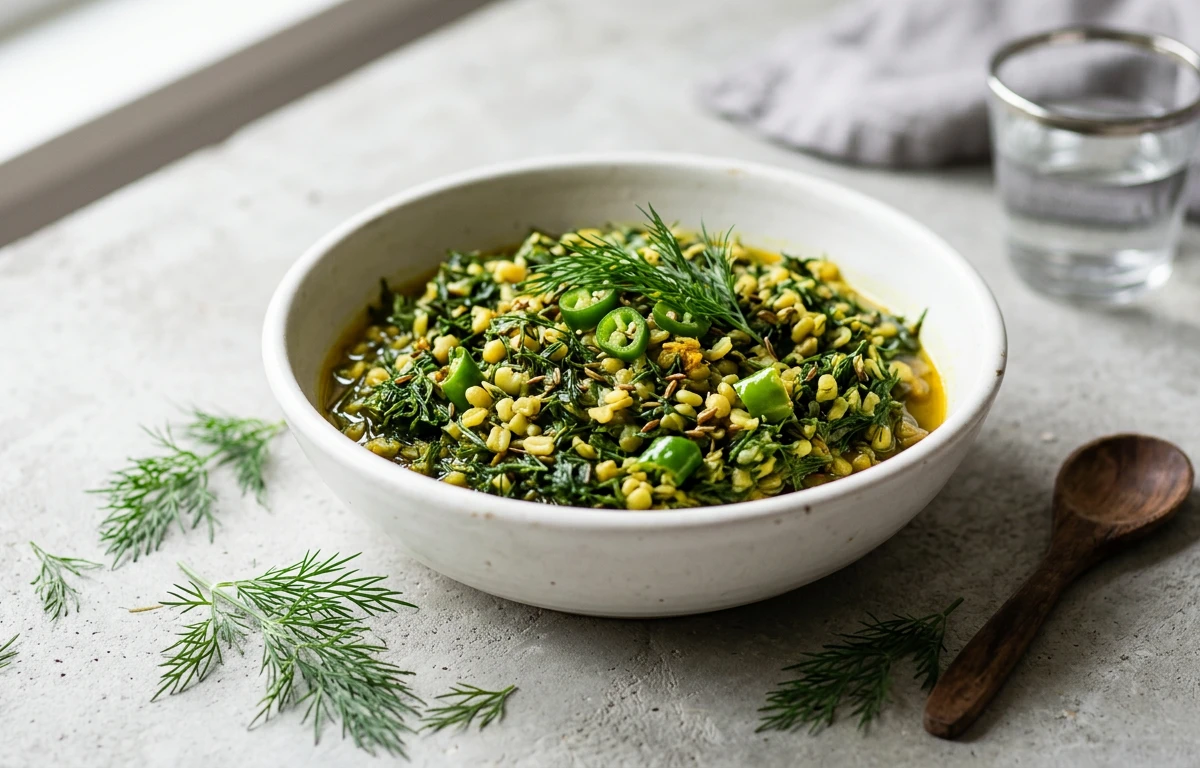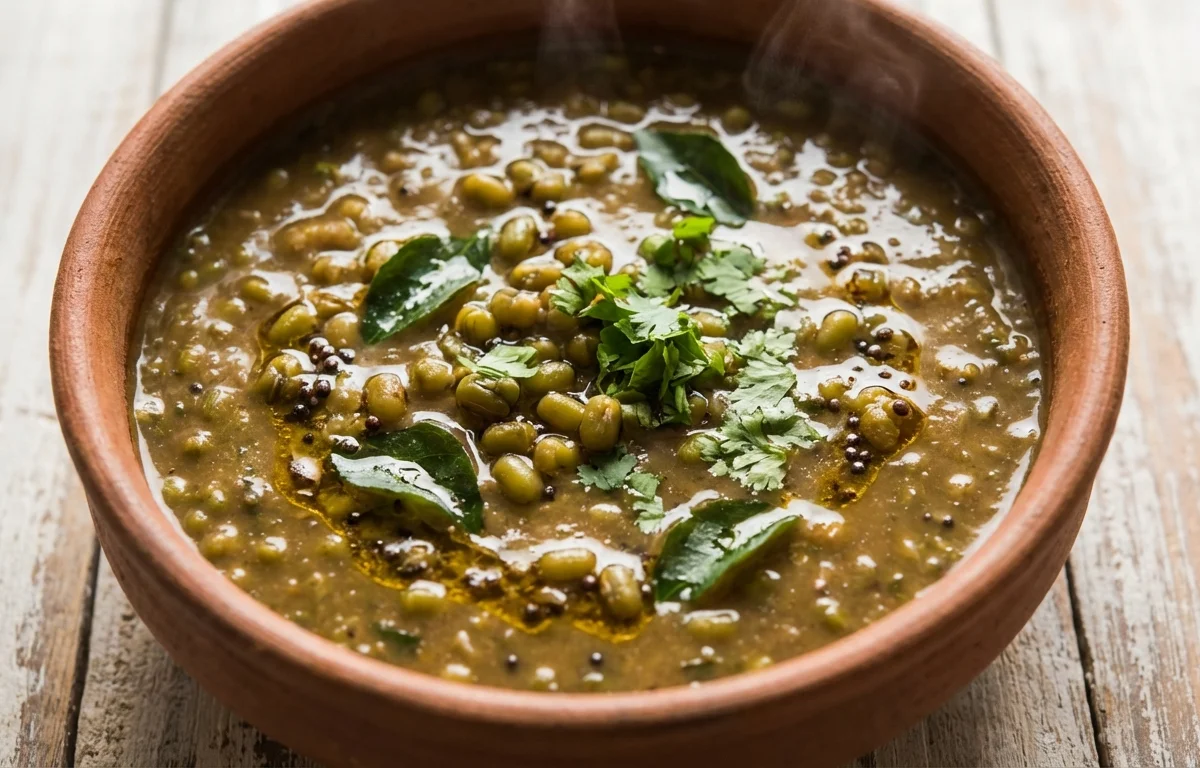
Mugachi Amti
A soul-warming Maharashtrian dal made with sprouted or whole green gram, gently simmered in a tangy-spiced coconut gravy. The earthy sweetness of moong pairs beautifully with the subtle heat of goda masala and a bright hit of kokum, making every spoonful feel like a hug from home.
For 4 servings
- pressure cook · ~15 min
Pressure cook the whole green gram.
Drain the soaked green gram. Add it to the pressure cooker with 2 cups of water. Pressure cook for 4 whistles on medium heat. Let the pressure release naturally, then set the cooked dal aside.
TIPSoaking the green gram for at least 2 hours helps them cook evenly and retain their shape. - temper · ~2 min
Make the tempering.
1.Heat oil in a heavy-bottomed pan over medium heat until shimmering.2.Add mustard seeds and let them crackle (30 sec).3.Add cumin seeds, asafoetida, and curry leaves — sauté until fragrant (15 sec). - saute · ~10 min
Build the aromatic base.
1.Add finely chopped onion to the pan and sauté until translucent (4-5 min).2.Stir in ginger paste and green chilli, cooking for 30 seconds until the raw aroma fades.3.Add tomato, turmeric powder, and red chili powder. Cook until tomatoes turn soft and mushy (4-5 min). - simmer · ~10 min
Simmer the amti.
1.Add the cooked green gram (along with its water) to the tomato masala.2.Pour in the soaked kokum along with its soaking water.3.Stir in goda masala, grated jaggery, salt, and fresh coconut.4.Add ½ cup water if needed to adjust consistency. Bring to a gentle boil, then simmer for 8-10 minutes.TIPDo not discard kokum water — it carries the tang that makes this amti special. - garnish
Finish with fresh coriander.
Turn off the heat. Garnish with chopped coriander leaves and serve hot.
What to keep in mind.
7 tips from the recipe — small details that make a real difference to the final dish.
- 1Soak the green gram for at least 2 hours so they cook evenly and hold their shape.
- 2Let the pressure release naturally after cooking the dal for a creamier texture.
- 3Do not skip the kokum soaking water — it carries the signature tang of this amti.
- 4Crush the cooked dal lightly with a ladle for a thicker, more rustic gravy.
- 5Add goda masala towards the end of simmering to preserve its aromatic notes.
- 6Taste and adjust the balance of tang (kokum) and sweetness (jaggery) before serving.
- 7For a richer finish, swirl in a teaspoon of ghee just before turning off the heat.
Adapt it for your goals.
Low-oil
Skip the tempering oil and dry-roast mustard seeds, cumin, and curry leaves before adding onion. Use a non-stick pan. Ideal for those reducing fat without losing the tempering aroma.
high proteinHigh-protein
Add a handful of boiled peanuts or paneer cubes in the simmering step. Great for post-workout meals or anyone wanting a protein boost from this hearty dal.
jainJain
Replace onion and garlic with asafoetida (increase to 1/4 tsp) and use turmeric in place of ginger paste. A Jain-friendly version that keeps the authentic taste of amti.
veganVegan
Ensure no ghee is used in the final garnish. This recipe is naturally vegan except for optional butter — simply omit it. Perfect for plant-based eaters.
Why this is on our healthy list.
High in Plant Protein
Whole green gram (moong) is a rich source of plant-based protein, supporting muscle repair and satiety.
Digestive Comfort
Asafoetida and ginger aid digestion, while the skin of the green gram provides gentle fibre for gut health.
Antioxidant Rich
Turmeric, curry leaves, and fresh coconut supply antioxidants that help fight inflammation and support immunity.
Low Glycemic Impact
The combination of whole moong (with skin) and jaggery provides sustained energy without sharp blood sugar spikes.
Frequently asked questions
Yes, but the texture will be softer and more porridge-like. Whole green gram holds its shape better and gives a heartier bite in this amti.



.webp)