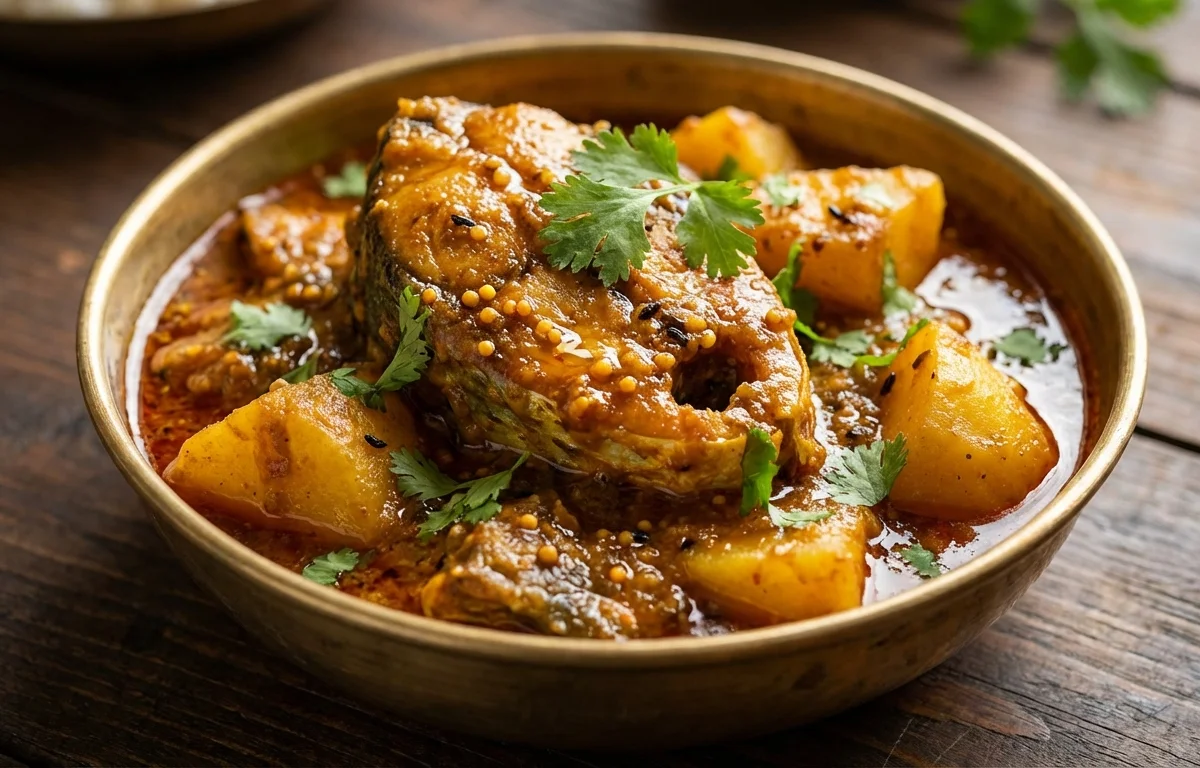
Munddi Gathi
A rustic and flavorful Odia curry made with fried fish head and potatoes, simmered in a tangy mustard and tomato gravy. This traditional delicacy is a true taste of coastal Odisha.
For 4 servings
Marinate Fish and Prepare Mustard Paste
1.Thoroughly clean the fish head pieces and pat them dry. In a mixing bowl, marinate the pieces with 1/2 tsp of turmeric powder and 1/2 tsp of salt. Let it rest for 15 minutes.2.While the fish marinates, add the yellow mustard seeds, cumin seeds, and garlic cloves to a small grinder jar. Add 2-3 tablespoons of water and grind to a very smooth paste. This is the 'besara'. Set aside.Fry Fish Head and Potatoes
1.Heat the mustard oil in a heavy-bottomed pan or kadai over medium-high heat until it is lightly smoking.2.Carefully slide the marinated fish head pieces into the hot oil. Fry for 4-5 minutes per side until they are golden brown and crisp. Remove with a slotted spoon and keep aside.3.In the same oil, add the cubed potatoes. Fry for 6-8 minutes, stirring occasionally, until they are golden brown and about 80% cooked. Remove and set aside with the fish.Prepare the Curry Base (Masala)
1.Reduce the heat to medium. In the remaining oil (there should be about 2-3 tbsp left), add the panch phoron and dried red chilies. Allow them to splutter for about 30 seconds.2.Add the finely chopped onion and sauté for 7-8 minutes until it turns soft and golden brown.3.Stir in the ginger-garlic paste and cook for one minute until the raw smell disappears.4.Add the tomato puree, the remaining 1/2 tsp turmeric powder, red chili powder, coriander powder, and the remaining 1 tsp of salt. Cook this masala on medium-low heat for 6-7 minutes, stirring frequently, until the oil begins to separate from the mixture.Combine and Simmer the Curry
1.Add the prepared mustard (besara) paste to the pan. Sauté for ONLY 1-2 minutes. Do not overcook, as it will make the curry bitter.2.Immediately pour in 2 cups of warm water and stir well to combine. Bring the gravy to a gentle boil.3.Carefully add the fried fish head pieces and fried potatoes to the gravy. Sprinkle the amchur powder over the top.4.Reduce the heat to low, cover the pan, and let the curry simmer for 10-12 minutes, allowing the fish and potatoes to absorb the flavors and cook completely.Garnish and Serve
1.Turn off the heat. Gently stir the curry. Garnish with freshly chopped coriander leaves.2.Let the Munddi Gathi rest, covered, for at least 10 minutes before serving. This helps the flavors to meld and deepen.3.Serve hot with steamed rice ('pakhala' or plain rice).
What to keep in mind.
6 tips from the recipe — small details that make a real difference to the final dish.
- 1For the most authentic flavor, use mustard oil. Its pungent aroma is characteristic of Odia cuisine.
- 2The most critical step is to not overcook the mustard paste. Sautéing it for more than two minutes will release bitter compounds.
- 3Frying the fish head and potatoes separately before adding them to the gravy is essential for their texture and flavor.
- 4Be very gentle when stirring the curry after adding the fish pieces to prevent them from breaking apart.
- 5If you don't have amchur, you can use a small piece of dried green mango (ambula) or a squeeze of lemon juice at the end.
- 6Ensure the fish head is very fresh. Ask your fishmonger to clean and cut it for you.
Adapt it for your goals.
Add Vegetables
You can add other vegetables like eggplant (baigana) or drumsticks (sajana chhuin) along with the potatoes for added texture and nutrition.
Spicier PasteSpicier Paste
For a more pungent flavor, use a mix of black and yellow mustard seeds. You can also add a green chili while grinding the mustard paste.
Creamier GravyCreamier Gravy
For a slightly richer and milder gravy, you can add 1/4 cup of coconut milk during the last 5 minutes of simmering.
Why this is on our healthy list.
Rich in Omega-3 Fatty Acids
The fish head, particularly the brain and fatty tissues, is a concentrated source of Omega-3s (EPA and DHA), which are crucial for brain health, reducing inflammation, and supporting cardiovascular function.
Excellent Source of Protein
Fish is a high-quality lean protein that provides essential amino acids necessary for building and repairing tissues, including muscle and skin.
Anti-inflammatory Properties
This curry is rich in ingredients with anti-inflammatory benefits. Mustard seeds, turmeric (curcumin), and garlic work together to help combat inflammation in the body.
Boosts Digestion
The blend of spices used, including cumin, coriander, and ginger, are known in traditional medicine to stimulate digestive enzymes and promote better gut health.
Frequently asked questions
Munddi Gathi is a traditional and iconic curry from the coastal state of Odisha in India. It features a fried fish head ('Munddi') cooked with potatoes in a robust and tangy gravy ('Gathi') made from a base of mustard paste, tomatoes, and spices.