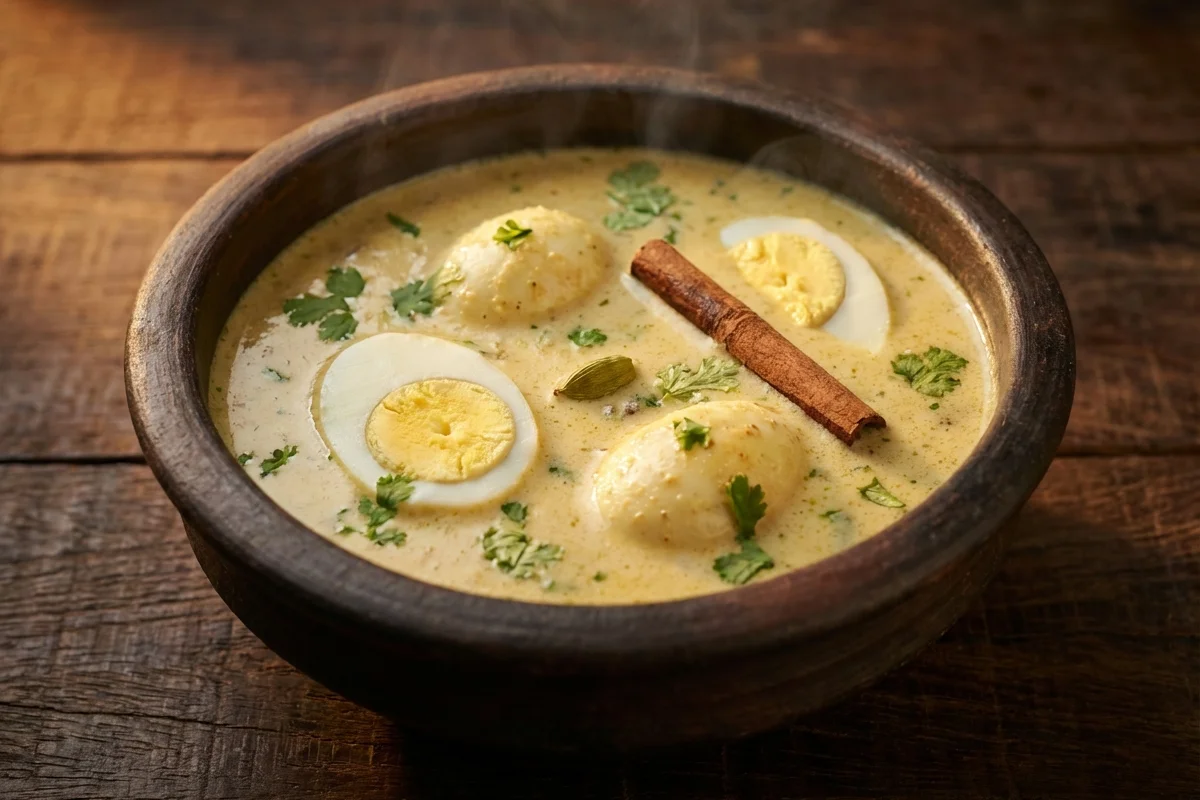
Muttai Korma
Boiled eggs simmered in a gently spiced South Indian style gravy with onion, tomato, coconut, and whole spices. This comforting korma is rich enough for parotta or dosa, yet light enough to sit nicely in a full meal spread.
For 4 servings
- prep · ~12 min
Boil and prepare the eggs.
1.Place eggs in a pot, cover with water, and boil until hard cooked (10-12 min).2.Cool the eggs, peel them, and make a few light slits so the gravy can coat them.3.Set the boiled eggs aside.TIPLight slits help the eggs absorb flavor without breaking apart. - mix · ~3 min
Grind the coconut masala.
1.Add coconut, poppy seeds, fennel seeds, ginger, garlic, and green chili to a grinder jar.2.Pour in a little water and grind to a smooth, thick paste.3.Keep the masala ready for the gravy. - fry · ~2 min
Lightly fry the eggs.
Heat 1 tsp oil in a pan. Add the boiled eggs with turmeric powder and fry gently for 1-2 minutes, turning to coat them lightly. Remove and keep aside.
TIPKeep the heat low so the eggs do not blister too much or turn rubbery. - saute · ~8 min
Cook the whole spices and onions.
1.Heat the remaining oil in a pan over medium heat.2.Add cinnamon, cloves, cardamom, bay leaf, and curry leaves; cook until fragrant (30 sec).3.Add sliced onion and cook until soft and light golden (5-7 min). - saute · ~6 min
Cook the tomatoes and spice powders.
1.Add chopped tomato and cook until soft and pulpy (4-5 min).2.Add red chili powder, coriander powder, garam masala, and salt.3.Mix well and cook for 1 minute so the spices lose their raw edge. - simmer · ~5 min
Make the korma gravy.
Add the ground coconut masala and cook for 2 minutes, stirring often. Pour in water, mix until smooth, and bring the gravy to a gentle simmer.
TIPStir well after adding the ground paste so the gravy stays smooth and does not catch at the bottom. - simmer · ~6 min
Simmer the eggs in the gravy.
Add the fried eggs to the simmering korma and cook for 5-6 minutes so they take on the flavor. The gravy should be medium thick and spoonable.
- garnish
Garnish with coriander leaves.
- serve
Serve the muttai korma hot.
Serve with parotta, chapati, idiyappam, dosa, or plain rice.
What to keep in mind.
6 tips from the recipe — small details that make a real difference to the final dish.
- 1Grind the coconut-poppy seed paste very smooth, or the korma will taste coarse instead of silky.
- 2Fry the slit eggs only briefly on low heat; over-frying makes the whites chewy.
- 3Cook the onions to light golden, not deep brown, to keep the gravy pale and balanced.
- 4After adding the coconut masala, stir frequently and keep the simmer gentle so it does not catch or split.
- 5If the gravy thickens too much as it rests, loosen it with a splash of hot water before serving.
- 6This korma tastes even better after 20-30 minutes of resting, when the eggs absorb the spice and coconut flavor.
Adapt it for your goals.
Low-oil
Skip frying the eggs and reduce the sautéing oil slightly; the korma will be lighter but still flavorful from the coconut masala and whole spices.
spicierSpicier
Add an extra green chili or a little more red chili powder for a hotter version that pairs especially well with parotta.
vegetableVegetable
Add boiled potato, peas, or cauliflower along with the eggs to make the korma more substantial for rice or chapati.
more gravyMore-gravy
Increase the water slightly for a looser, spoonable korma that works better with idiyappam or dosa.
Why this is on our healthy list.
Protein from Eggs
Boiled eggs make this korma filling and nourishing, helping turn the gravy into a satisfying main dish.
Good Fats from Coconut
Fresh coconut adds richness and satiety while also giving the gravy body without cream or butter.
Phytonutrients from Spices
Onion, tomato, ginger, garlic, curry leaves, and whole spices contribute aromatic plant compounds along with depth of flavor.
Frequently asked questions
Yes. The korma will still be tasty, but lightly frying the eggs with turmeric gives better color, flavor, and helps the gravy cling to them.