Muttai Kuzhambu
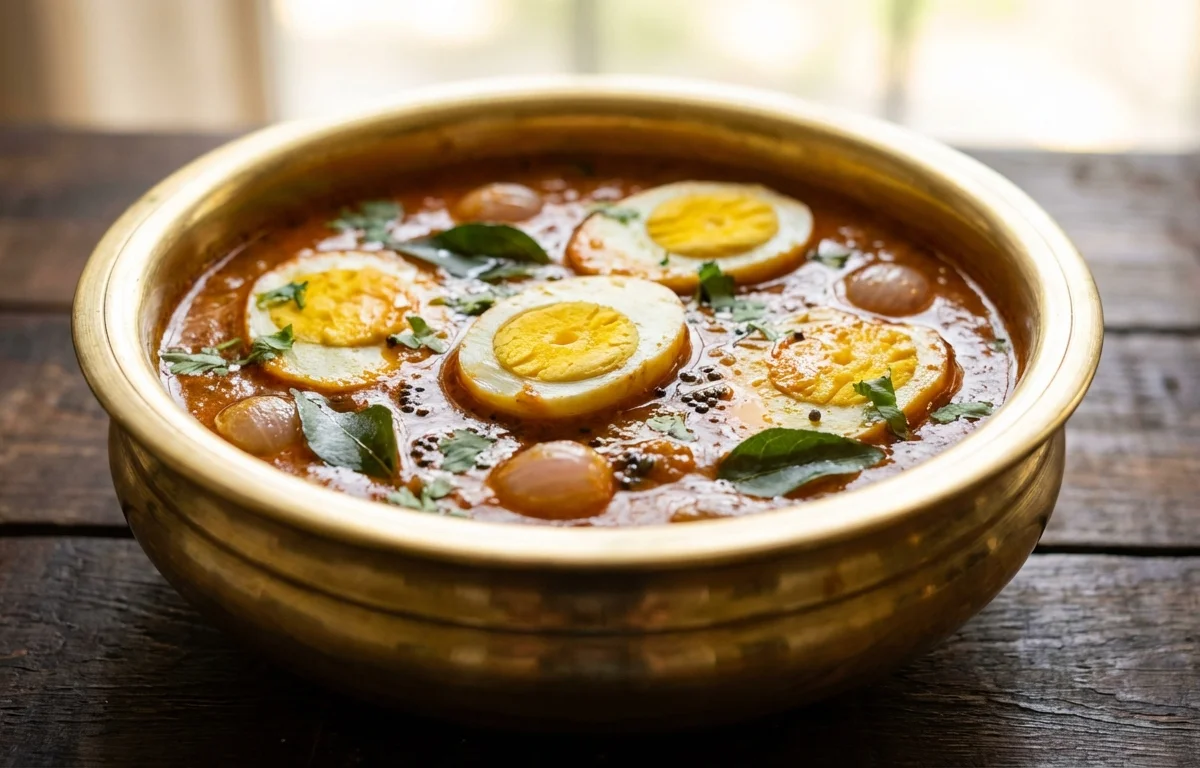
A homestyle Tamil egg curry with boiled eggs simmered in a tangy onion-tomato gravy. The sauce gets its deep flavor from roasted spices, tamarind, and a gentle simmer that brings everything together beautifully.
For 4 servings
- prep · ~15 min
Soak the tamarind and prepare the eggs.
1.Soak tamarind in a little warm water for 10 minutes and squeeze out a thick extract.2.Boil the eggs until hard cooked, peel them, and make a few shallow slits on each egg.3.Chop the onions and tomatoes finely.4.Pound or crush the ginger and garlic together.TIPSlitting the eggs helps the gravy soak in and keeps them from tasting plain inside. - roast · ~3 min
Roast and grind the spices.
1.Heat a small dry pan over low heat.2.Add fennel seeds, coriander seeds, cumin seeds, black peppercorns, and dried red chili.3.Roast for 1 to 2 minutes until fragrant, without letting them burn.4.Cool slightly and grind to a fine powder.TIPKeep the heat low so the spices turn aromatic, not bitter. - temper · ~1 min
Make the tempering.
1.Heat sesame oil in a kadai over medium heat.2.Add mustard seeds and let them splutter.3.Add fenugreek seeds and curry leaves.4.Stir for a few seconds until fragrant. - saute · ~11 min
Cook the onion base.
1.Add chopped onions and cook until soft and lightly golden, 5 to 6 minutes.2.Add crushed ginger and garlic and cook for 1 minute until the raw smell fades.3.Add chopped tomatoes and cook until they soften and turn pulpy, 4 to 5 minutes. - mix · ~1 min
Add the ground spices and seasonings.
Stir in the ground spice powder, turmeric powder, red chili powder, and salt. Mix well and cook for 1 minute so the masala coats the onion-tomato mixture evenly.
- simmer · ~10 min
Simmer the gravy.
Pour in the tamarind extract and water, then bring the curry to a gentle simmer. Cook uncovered for 8 to 10 minutes until the raw tamarind smell fades and the gravy thickens slightly.
- simmer · ~5 min
Add the eggs and finish the kuzhambu.
Slide in the boiled eggs and spoon some gravy over them. Simmer for 4 to 5 minutes so the eggs pick up the flavor without overcooking.
- garnish
Garnish with coriander leaves.
- serve
Serve hot with rice, dosa, or idiyappam.
What to keep in mind.
7 tips from the recipe — small details that make a real difference to the final dish.
- 1Make 2-3 shallow slits in each boiled egg so the tamarind gravy seasons the surface better.
- 2Roast the fennel, coriander, cumin, pepper, and red chili only until aromatic; darkening them too much will make the kuzhambu bitter.
- 3Cook the onions until lightly golden before adding tomatoes, or the gravy can taste flat and slightly raw.
- 4Let the tomatoes turn fully pulpy before adding spice powders so the masala blends smoothly into the gravy.
- 5Simmer the tamarind gravy uncovered until the raw sour smell disappears; that is the cue it is properly cooked.
- 6Add the eggs only in the final simmer so they absorb flavor without turning rubbery.
- 7This kuzhambu often tastes even better after 30 minutes of resting, when the spices and tamarind settle together.
Adapt it for your goals.
Spicier
Add an extra dried red chili or a little more black pepper for a hotter, more peppery Tamil-style kuzhambu.
coconutCoconut
Grind a little fresh coconut with the roasted spices for a thicker, slightly sweeter gravy.
shallot basedShallot-based
Use small onions instead of regular onions for a sweeter, more traditional South Indian flavor.
potato and eggPotato-and-egg
Add parboiled potato pieces during the gravy simmer for a heartier curry that stretches further.
Why this is on our healthy list.
Protein from Eggs
Boiled eggs make this curry filling and provide good-quality protein in a simple homestyle dish.
Antioxidant-Rich Spices
Black pepper, cumin, coriander, turmeric, and curry leaves add protective plant compounds along with flavor.
Tomato and Onion Base
The onion-tomato gravy contributes vegetables and natural savory depth without relying on heavy cream.
Frequently asked questions
The shallow cuts help the kuzhambu cling to the eggs and let some of the tangy masala seep in during the final simmer.