
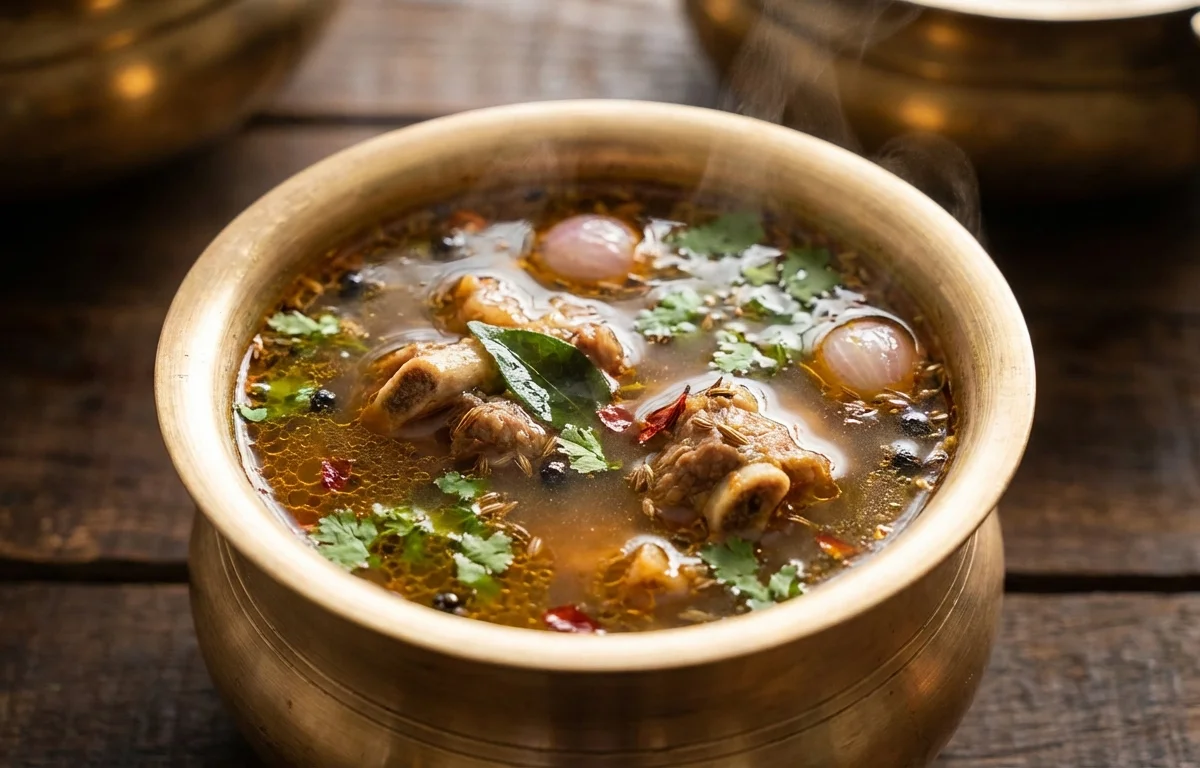
Mutton Elumbu Rasam
A soul-warming South Indian soup made by simmering mutton bones with aromatic spices and tamarind. This peppery, tangy rasam extracts deep meaty flavor from the marrow, making it a comforting remedy for cold days or a perfect start to a heavy meal.
For 4 servings
- prep · ~15 min
Soak the tamarind and extract the pulp.
1.Soak the tamarind in 1 cup of warm water for 15 minutes.2.Squeeze the tamarind well with your fingers to extract the pulp.3.Strain and discard the fibers. Set the tamarind water aside. - pressure cook · ~25 min
Pressure cook the mutton bones with aromatics.
1.Wash the mutton bones thoroughly under running water.2.In a pressure cooker, add the bones, quartered tomatoes, crushed garlic, whole black peppercorns, cumin seeds, turmeric powder, red chili powder, coriander powder, and salt.3.Pour in 800 ml water and stir well.4.Close the lid and pressure cook on high heat for 2 whistles, then reduce to low heat for 15 minutes.5.Let the pressure release naturally.TIPNatural release is key — the marrow becomes softer and the broth gets richer as it rests. - simmer · ~7 min
Combine the bone broth with tamarind water and simmer.
1.Once the pressure settles, open the cooker and strain the bone broth into a heavy-bottomed pot.2.Pick out the bones and return them to the pot (keep them in the rasam for serving).3.Add the tamarind water to the pot and stir.4.Bring the rasam to a gentle boil and let it simmer on medium heat for 5-7 minutes.TIPDon't discard the meaty bits clinging to the bones — they add texture and flavor to every sip. - temper · ~2 min
Make the tempering.
1.Heat ghee in a small pan over medium heat.2.Add mustard seeds and let them splutter (30 seconds).3.Add dried red chilies, curry leaves, and a pinch of asafoetida.4.Fry for 15-20 seconds until the curry leaves turn crisp and fragrant.TIPPour the tempering the moment the curry leaves crisp up — the aroma peaks exactly then. - mix · ~1 min
Pour the tempering over the simmering rasam.
Carefully pour the hot ghee tempering directly into the pot of simmering rasam. It will sizzle and release a burst of aroma. Stir gently to incorporate the tempered spices into the broth.
- simmer · ~2 min
Simmer briefly and adjust seasoning.
Let the rasam simmer for 2 more minutes so the tempering flavors meld with the broth. Taste and adjust salt if needed. The rasam should be thin, peppery, and deeply aromatic.
TIPRasam should never be thick — it's meant to be a light, drinkable broth. - garnish · ~1 min
Finish with fresh coriander and serve piping hot.
Turn off the heat. Ladle the rasam into serving cups or bowls, making sure each portion gets a marrow bone. Garnish with fresh coriander leaves. Serve steaming hot with steamed rice or simply sip as a soup.
TIPServe immediately — mutton rasam tastes best when you can feel the peppery heat at the back of your throat.
What to keep in mind.
7 tips from the recipe — small details that make a real difference to the final dish.
- 1Use bones with visible marrow for the richest, most flavorful broth.
- 2Let the pressure release naturally — it makes the marrow softer and the broth silkier.
- 3Don't skip straining the bone broth; it ensures a clean, sediment-free rasam.
- 4Add the tamarind water only after cooking the bones to prevent the broth from turning bitter.
- 5Pour the hot tempering directly into the simmering rasam — the sizzle locks in the aroma.
- 6Taste the rasam before serving; it should be thin, tangy, and peppery, not thick.
- 7Serve immediately — the peppery heat fades as the rasam cools.
Adapt it for your goals.
Vegetarian
Replace mutton bones with a mix of chopped vegetables (carrot, beans, pumpkin) and use a vegetable stock cube with a dash of smoked paprika for depth. Ideal for those avoiding meat but craving the rasam experience.
extra spicyExtra-spicy
Double the whole black peppercorns and add 2 slit green chilies with the tamarind water. Perfect for those who love a fiery kick that warms from the inside.
low fatLow-fat
Use lean mutton bones trimmed of visible fat, and replace half the ghee in the tempering with coconut oil. This reduces saturated fat while keeping the authentic South Indian flavor.
Why this is on our healthy list.
Bone Broth Rich in Collagen
Simmering mutton bones releases gelatin and collagen, which support joint health and skin elasticity.
Digestion-Friendly Spices
Cumin, asafoetida, and black pepper aid digestion and reduce bloating, making this soup gentle on the stomach.
Iron from Mutton Bones
Mutton bones provide heme iron, which helps combat fatigue and supports healthy red blood cell production.
Antioxidant Boost from Tamarind
Tamarind is naturally rich in antioxidants and vitamin C, which help strengthen the immune system.
Frequently asked questions
Bones are essential for the marrow flavor and body. Using only meat will yield a thinner, less rich broth — add a few marrow bones if you can.


