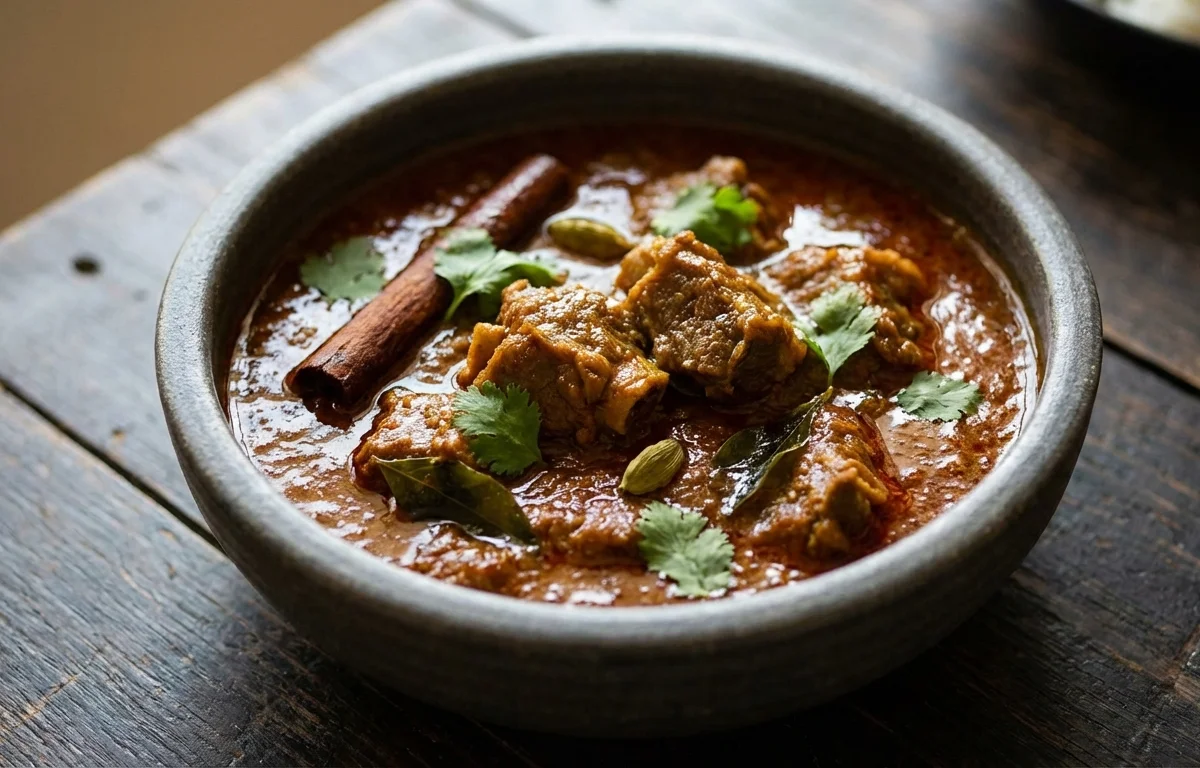
Mutton Gassi
A coastal Karnataka favorite with tender mutton simmered in a rich roasted coconut gravy. Warming spices, tamarind, and a deep onion base give this curry its bold, earthy character.
For 4 servings
- prep · ~10 min
Prepare the mutton and the masala ingredients.
1.Wash the mutton and let the excess water drain.2.Slice the onions, chop the tomatoes, and roughly chop the ginger.3.Keep the garlic, curry leaves, tamarind paste, and cilantro ready. - roast · ~8 min
Roast the coconut and whole spices.
1.Heat a dry pan over medium heat.2.Add the grated coconut, dried red chili, coriander seeds, cumin seeds, black peppercorns, and fenugreek seeds.3.Roast, stirring often, until the coconut turns deep golden and smells nutty.4.Take the pan off the heat and cool the mixture slightly.TIPKeep the heat medium and stir constantly near the end so the coconut browns evenly without burning. - mix · ~3 min
Grind the gassi masala.
Transfer the roasted mixture to a grinder with tamarind paste and 0.5 cup water. Grind to a smooth, thick masala paste.
- pressure cook · ~30 min
Pressure cook the mutton.
Add the mutton, 1 cup water, 1 pinch turmeric powder, and 0.25 tsp salt to a pressure cooker. Cook until tender, about 5-6 whistles, then let the pressure release naturally.
TIPBone-in mutton gives the gravy better flavor and body. - saute · ~15 min
Cook the onion base.
1.Heat oil in a wide pan over medium heat.2.Add curry leaves and let them sizzle for a few seconds.3.Add the sliced onions and cook until golden brown.4.Add ginger and garlic, then sauté until the raw smell disappears.5.Add chopped tomatoes and cook until soft and pulpy. - simmer · ~15 min
Simmer the curry.
Add the ground masala to the pan and cook for 3-4 minutes. Pour in the cooked mutton with its cooking liquid, the remaining 1 cup water, and the remaining 0.25 tsp salt. Mix well and simmer until the gravy thickens and the oil rises lightly on top.
- garnish
Garnish with cilantro.
- serve
Serve hot with neer dosa, appam, or rice.
What to keep in mind.
7 tips from the recipe — small details that make a real difference to the final dish.
- 1Roast the coconut to a deep golden brown, not just pale beige, for the signature gassi depth.
- 2Use a wide pan for the final simmer so the gravy reduces evenly and the oil can separate lightly.
- 3Let the pressure release naturally after cooking the mutton; quick release can tighten the meat.
- 4Grind the roasted masala very smooth so the curry has a rich, velvety texture without graininess.
- 5Cook the onions until truly golden brown before adding tomatoes; this builds the dark, savory base.
- 6If the curry thickens too much after resting, loosen it with a splash of hot water, not cold water.
- 7Mutton gassi tastes even better after a few hours, once the coconut, spices, and tamarind meld.
Adapt it for your goals.
Spicier
Add 2-3 more dried red chilies and a few extra peppercorns for a fiercer, more robust coastal-style heat.
thicker gravyThicker-gravy
Use a little less water in the final simmer for a richer gassi that clings better to neer dosa or appam.
stovetop onlyStovetop-only
If you do not use a pressure cooker, simmer the mutton covered until tender; it takes longer but still develops good flavor.
chicken gassiChicken-gassi
Swap mutton for bone-in chicken for a faster version with the same roasted coconut masala profile.
Why this is on our healthy list.
Rich in Protein
Mutton provides substantial protein, which helps make this curry filling and satisfying as a main dish.
Contains Beneficial Spices
Ginger, garlic, pepper, cumin, coriander, and turmeric add aroma along with plant compounds commonly valued in traditional cooking.
Natural Source of Minerals
Bone-in goat meat can contribute minerals and deep savory body to the curry through the cooking liquid.
Frequently asked questions
Yes. Cook the mutton covered in a heavy pot with water until tender, adding more hot water as needed; it will simply take longer.