
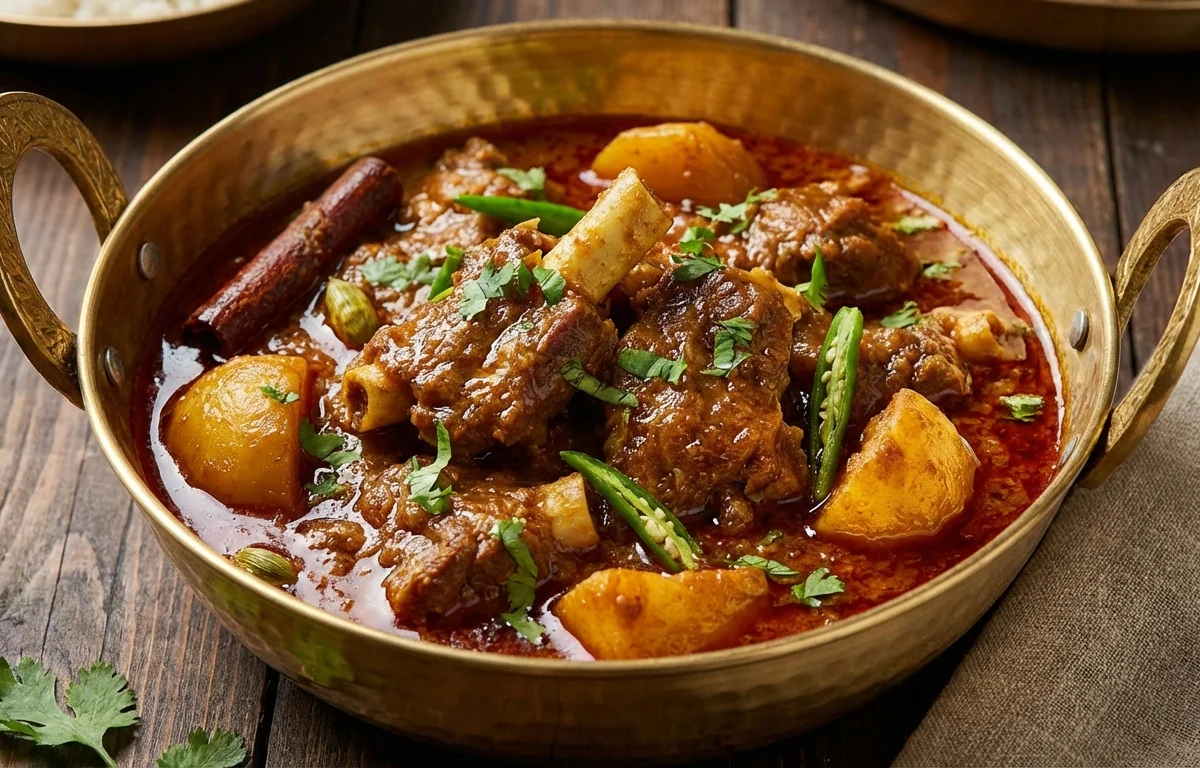
Mutton Kasa
A bold, slow-cooked Bengali mutton curry where the meat is braised in its own juices with caramelized onions, ginger, and warm spices. No water is added — the mutton cooks in the moisture released from the onions, yielding intensely deep, concentrated flavors with a thick, dark gravy that clings to every piece.
For 4 servings
- prep
Marinate the mutton.
1.In a mixing bowl, combine mutton pieces with yogurt, turmeric powder, red chili powder, and half the salt.2.Mix well so every piece is coated.3.Cover and set aside for at least 30 minutes while you prepare the other ingredients.TIPRoom-temperature marination works best — cold mutton seizes up in the pan. - fry · ~8 min
Brown the mutton pieces.
1.Heat 2 tbsp mustard oil in the kadai over high heat until it smokes lightly, then lower to medium.2.Add the marinated mutton pieces in a single layer and sear until browned on all sides (6-8 minutes).3.Remove the mutton with a slotted spoon and set aside on a plate.TIPDon't crowd the pan — sear in batches if needed. Browning builds the deep flavor. - temper · ~1 min
Bloom the whole spices.
1.Add the remaining 2 tbsp mustard oil to the same kadai and heat on medium.2.Drop in bay leaves, dried red chilies, green cardamom, cinnamon stick, and cloves.3.Let them sizzle and release their aroma (30-40 seconds). - saute · ~15 min
Caramelize the onions.
1.Add the sliced onions to the kadai along with the sugar.2.Cook on medium heat, stirring frequently, until deep golden brown (12-15 minutes).3.The onions should be richly caramelized — this is the heart of the kasa.TIPBe patient. The colour should be deep brown, almost mahogany. Sugar helps the caramelization. - saute · ~10 min
Build the spice base.
1.Add ginger paste and garlic paste to the caramelized onions. Sauté until the raw smell disappears (2-3 minutes).2.Add chopped tomatoes and cook until they soften completely and oil starts separating at the edges (5-6 minutes).3.Sprinkle in cumin powder, coriander powder, and the remaining salt. Stir and cook for another minute.TIPIf the masala sticks to the pan, splash a tablespoon of water — just enough to release it. - simmer · ~70 min
Slow-cook the mutton in its own juices.
1.Return the browned mutton pieces to the kadai along with any resting juices.2.Add slit green chilies and stir everything to coat the mutton with the masala.3.Lower the heat, cover tightly with a lid, and let it cook in its own steam for 60-70 minutes.4.Stir every 15 minutes. If it looks too dry, add a splash of hot water — but only if absolutely necessary.TIPThe real kasa magic happens with no added water. The mutton and onions release enough moisture. Trust the process. - simmer · ~7 min
Finish the kasa.
1.When the mutton is fork-tender, remove the lid and increase heat to medium.2.Stir continuously as the remaining liquid evaporates and the oil surfaces — this is the 'kasa' stage (5-7 minutes).3.Sprinkle garam masala and stir once more.TIPKeep stirring during this stage — the thick masala can catch at the bottom. - garnish
Garnish with chopped cilantro and serve hot.
1.Transfer to a serving bowl.2.Scatter fresh cilantro on top. - rest · ~5 min
Rest the curry for 5 minutes before serving.
Letting it sit allows the flavors to settle and meld. The gravy thickens further as it cools slightly.
TIPMutton kasa tastes even better the next day. Make it ahead if you can.
What to keep in mind.
6 tips from the recipe — small details that make a real difference to the final dish.
- 1Use bone-in mutton from the shoulder or leg for maximum flavor and tenderness during the long slow cook.
- 2Mustard oil is non-negotiable for authentic Bengali flavor; heat it until it reaches its smoking point to mellow the pungency.
- 3Caramelize the onions to a deep mahogany color — this is the single most important step for the rich, dark gravy.
- 4Resist the urge to add water; the onions and mutton release enough liquid to braise the meat perfectly.
- 5Rest the finished kasa for at least 5 minutes before serving — the gravy thickens further and flavors meld beautifully.
- 6Make this dish a day ahead; the flavors deepen overnight and the texture improves.
Adapt it for your goals.
Chicken Kasa
Substitute the mutton with bone-in chicken (curry cut). Reduce the simmering time to 25-30 minutes. This yields a quicker, lighter yet equally flavorful curry perfect for weeknights.
Vegetable KasaVegetable Kasa
Replace mutton with a mix of hearty vegetables like potatoes, cauliflower, and paneer. Simmer for 15-20 minutes until vegetables are tender. A great vegetarian option that retains the rich, thick gravy of the original.
Spicier KasaSpicier Kasa
Increase the dried red chilies to 4-5 and add 1 tsp of kashmiri red chili powder for heat and vibrant color. This variation is for those who enjoy a fiery, intense curry.
Why this is on our healthy list.
Rich in Iron
Mutton (goat meat) is an excellent source of heme iron, which is highly absorbable and helps prevent anemia and support energy levels.
High-Quality Protein
This dish provides a substantial serving of complete protein from mutton, essential for muscle repair, immune function, and overall body maintenance.
Digestive Spices
The blend of ginger, cumin, coriander, and cardamom in this recipe aids digestion, reduces bloating, and helps the body process the rich meat and oils.
Anti-Inflammatory Properties
Turmeric and ginger are well-known for their anti-inflammatory compounds (curcumin and gingerol), which may help reduce inflammation and support joint health.
Frequently asked questions
Yes, but adjust cooking time: lamb may be ready in 45-55 minutes, while beef (chuck or short ribs) will need a similar 60-70 minutes. Bone-in cuts work best.





-curry.webp)
.webp)