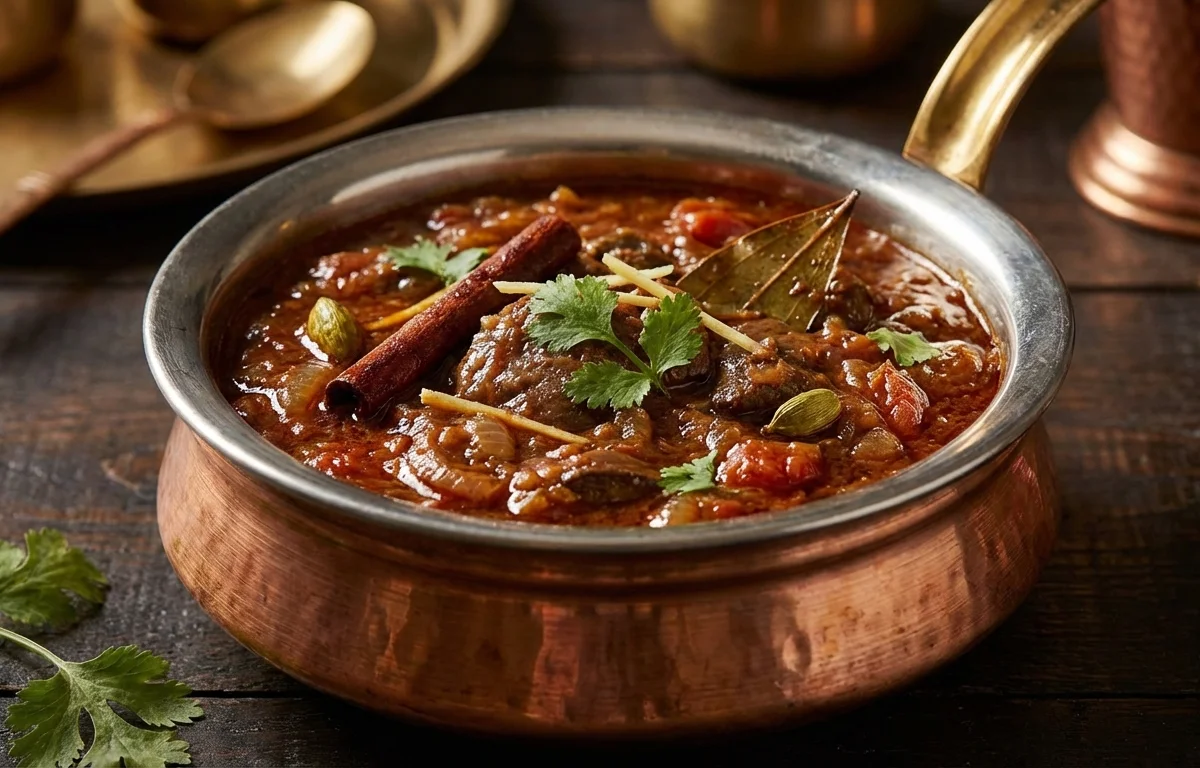
Mutton Liver Masala
Tender pieces of mutton liver cooked in a rich, aromatic onion-tomato masala with warm spices. This robust Indian curry has a deep, earthy flavor with a hint of heat from black pepper and green chilies. A protein-packed delicacy ready in under 40 minutes, best enjoyed with hot parathas or steamed rice.
For 4 servings
- prep
Prep the liver and aromatics.
1.Rinse mutton liver pieces under cold water and drain well.2.Pat dry with a clean cloth to remove excess moisture.3.Slice onions, chop tomatoes, slit green chilies, and crush cardamom pods. - temper · ~1 min
Temper the whole spices.
1.Heat oil in a heavy pan over medium heat until shimmering.2.Add cumin seeds and let splutter for 30 seconds.3.Add bay leaf, cinnamon, cardamom, and cloves; fry until fragrant (20-30 sec).TIPKeep the heat medium — whole spices burn quickly and turn bitter. - saute · ~10 min
Cook the onions until deep golden.
1.Add sliced onions and a pinch of salt to the pan.2.Stir often and cook until they turn deep golden brown (8-10 min).3.Add ginger-garlic paste and green chilies; sauté until raw smell disappears (1 min).TIPDon't rush the onions — deep browning builds the rich, sweet base of the masala. - saute · ~7 min
Cook down the tomatoes with spice powders.
1.Add chopped tomatoes and mix well.2.Add turmeric, red chili powder, and coriander powder.3.Cook, stirring occasionally, until tomatoes soften and oil starts to separate (5-7 min). - saute · ~3 min
Sear the liver pieces.
1.Add the cleaned liver pieces to the masala base.2.Increase heat to medium-high and sear for 2-3 minutes, stirring constantly.3.Season with salt and black pepper powder.TIPOvercooking liver makes it rubbery. Sear quickly and move to the next step. - simmer · ~7 min
Simmer until liver is tender.
1.Add water and stir to combine.2.Cover with a lid and cook on low heat for 5-7 minutes.3.Remove lid and check the liver; it should be tender but not mushy.TIPIf the masala looks dry before the liver is cooked, add a splash more water. - mix · ~1 min
Finish with garam masala and a final toss.
1.Uncover and increase heat to dry any excess liquid.2.Sprinkle garam masala and toss gently to coat, cooking 1 more minute.3.Turn off the heat. - garnish
Garnish with fresh coriander leaves and serve hot.
What to keep in mind.
6 tips from the recipe — small details that make a real difference to the final dish.
- 1Pat the liver dry thoroughly to avoid splattering while searing.
- 2Do not skip deep-browning the onions—this builds the masala's sweet richness.
- 3Sear liver on medium-high heat for exactly 2-3 minutes to keep it tender.
- 4Check doneness by cutting a piece; the inside should be just cooked through, not pink.
- 5Add a splash of water if the masala dries out before the liver is tender.
- 6Garam masala is added at the very end to preserve its volatile aroma.
Adapt it for your goals.
High-protein
Replace half the oil with ghee for a richer taste and extra protein from the dairy; serve with a side of yogurt raita.
low oilLow-oil
Use a non-stick pan and reduce oil to 1 tablespoon; add a splash of water when cooking onions to prevent sticking. Ideal for those watching fat intake.
mild & creamyMild & creamy
Add ¼ cup of fresh cream or thick yogurt after simmering to tone down the heat and create a luxuriously creamy gravy.
jainJain
Skip onions and ginger-garlic paste; use asafoetida (hing) in the tempering and double the tomatoes and green chilies for flavor.
spicy hyderabadiSpicy hyderabadi
Add 1 tablespoon of coconut paste and ½ teaspoon of tamarind paste along with the water for a tangy, fiery South Indian twist.
Why this is on our healthy list.
Rich in Iron
Mutton liver is an excellent source of heme iron, which is easily absorbed by the body and helps prevent anemia.
High in Vitamin A
Liver is packed with retinol, a bioavailable form of vitamin A that supports vision, immune function, and skin health.
Good Source of B Vitamins
This dish provides B12 and folate from the liver, essential for energy production and red blood cell formation.
Low Carb, High Protein
With no added grains and a focus on liver, this curry is naturally low in carbohydrates and high in protein, suitable for low-carb diets.
Frequently asked questions
Soak the cleaned liver pieces in buttermilk or milk with a pinch of salt for 30 minutes before cooking. Rinse and pat dry; this helps draw out bitterness and tenderizes the liver.