Mutton Paya Soup
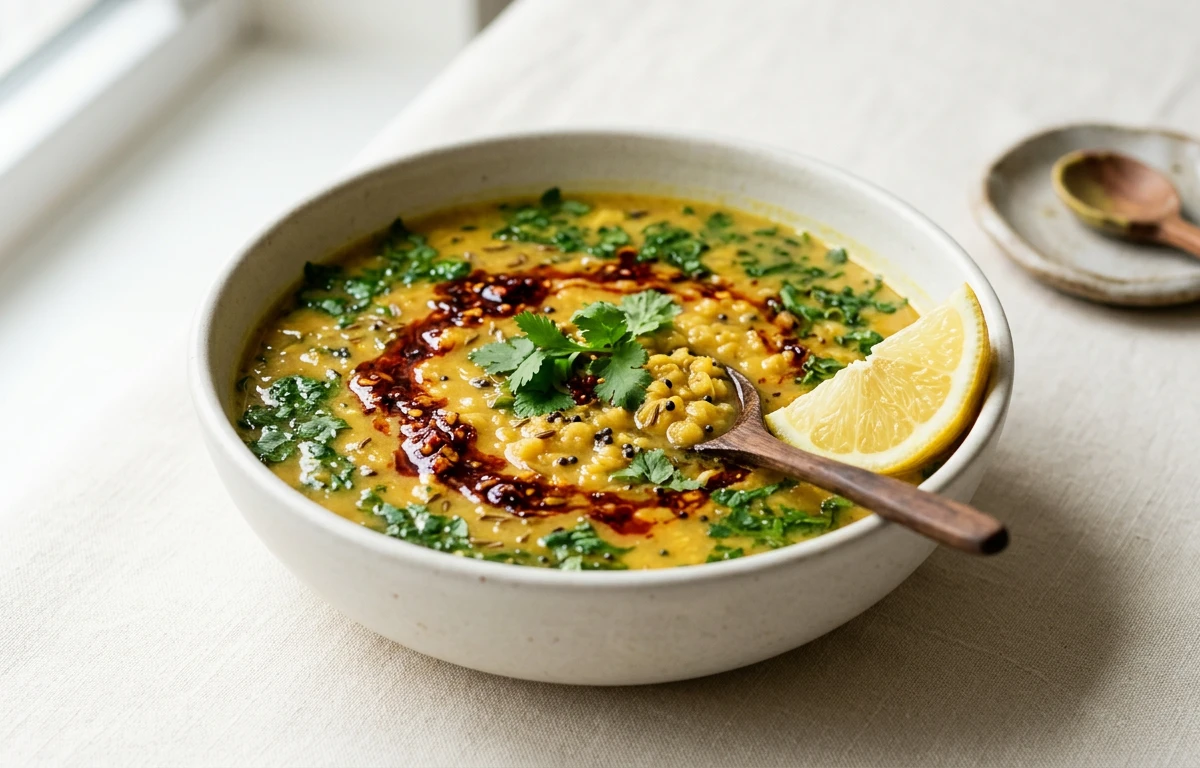
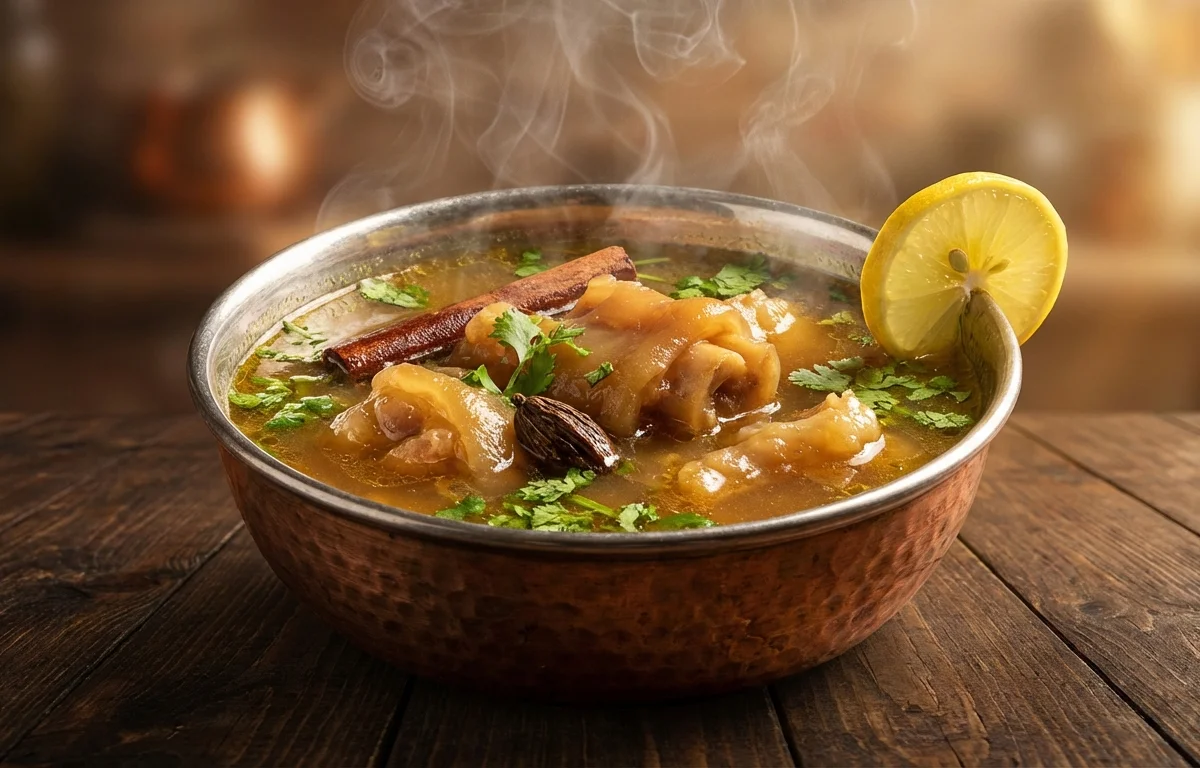
A slow-cooked Indian soup made with mutton trotters, onion, ginger, garlic, and warm spices. The broth turns rich and silky as the paya cooks down, making it deeply comforting with naan or steamed rice.
For 4 servings
- prep · ~10 min
Clean and ready the paya.
1.Rinse the mutton paya well under running water.2.Scrape and trim any rough bits if needed.3.Keep the paya drained and ready with the onion, tomato, ginger, garlic, and green chili. - saute · ~10 min
Cook the onion and spices.
1.Heat oil in a pressure cooker over medium heat.2.Add cumin seeds, black peppercorns, cloves, green cardamom, cinnamon, and bay leaf.3.Let the spices sizzle for 30 seconds until fragrant.4.Add sliced onion and cook until lightly golden, 6 to 8 minutes.5.Add ginger and garlic, then cook for 1 minute until the raw smell fades.TIPKeep the heat medium so the whole spices flavor the oil without burning. - saute · ~6 min
Build the masala base.
1.Add chopped tomato and green chili.2.Stir in turmeric powder, red chili powder, coriander powder, garam masala, and salt.3.Cook until the tomato softens and the masala looks glossy, 5 to 6 minutes. - pressure cook · ~70 min
Pressure cook the paya.
Add the mutton paya and water, then mix well and bring to a boil. Lock the cooker and cook on medium-low heat for 60 to 70 minutes, or until the paya is very tender and the broth turns rich.
TIPPaya needs time to release its gelatin, so do not rush this stage. - rest · ~15 min
Let the pressure drop naturally.
- simmer · ~15 min
Simmer the soup to finish.
Open the cooker and check the consistency. Simmer uncovered for 10 to 15 minutes if you want a slightly thicker broth, then stir in lemon juice.
- garnish
Garnish with coriander leaves.
- serve
Serve the paya soup hot.
What to keep in mind.
6 tips from the recipe — small details that make a real difference to the final dish.
- 1If the trotters have any lingering odor, blanch them briefly before step 2, then drain and proceed.
- 2Cook the onions only to light golden; deeply browned onions can make the broth taste heavy and slightly bitter.
- 3After pressure cooking, the paya should feel very soft around the joints and the broth should look naturally glossy.
- 4For a cleaner soup, skim excess fat from the top after resting the cooker, then simmer to the texture you like.
- 5Add the lemon juice only at the end so the broth keeps its bright finish and the paya stays tender.
- 6This soup tastes even better the next day; chill it overnight and reheat gently so the spices meld fully.
Adapt it for your goals.
Spicier
Add extra slit green chilies or a little more red chili powder for a hotter, more assertive paya.
low oilLow-oil
Reduce the oil and skim the fat after cooking for a lighter bowl that still keeps the broth's gelatinous texture.
nihari styleNihari-style
Add a little fennel and extra garam masala during simmering for a deeper, more aromatic North Indian style finish.
clear brothClear-broth
Strain the finished soup after pressure cooking for a smoother, restaurant-style broth while serving the paya pieces separately.
Why this is on our healthy list.
Protein-Rich Main Dish
Mutton paya provides animal protein, making this soup filling and useful as a substantial meal.
Naturally Gelatinous Broth
Slow-cooked trotters release collagen into the soup, giving it a rich body without flour or cream.
Aromatic Digestive Spices
Ginger, garlic, cumin, pepper, and coriander contribute bold flavor and are traditionally used in warming savory broths.
Frequently asked questions
The trotters should be very tender around the joints, and the broth should look rich, silky, and slightly sticky from released gelatin.