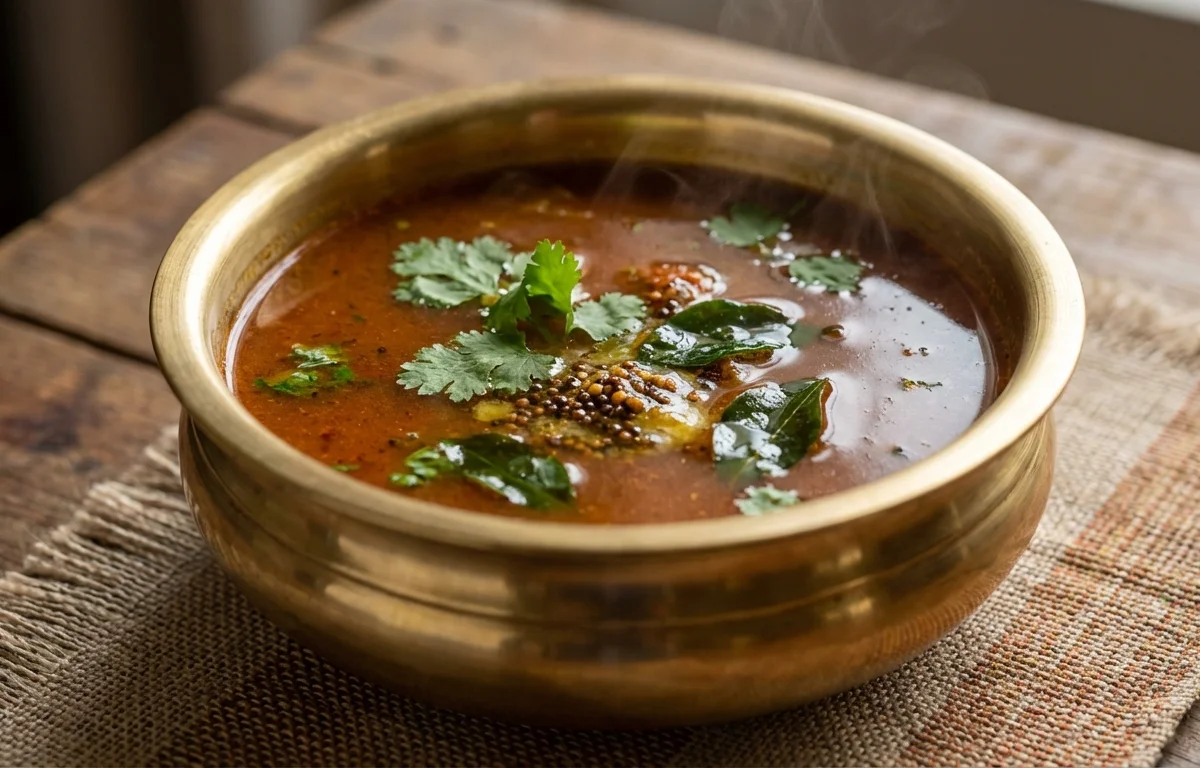
Mysore Rasam
A tangy, spicy, and slightly sweet rasam from the palace kitchens of Mysore. Roasted spices and fresh coconut are ground to a fragrant paste, then simmered with toor dal and tamarind, creating a thin, golden-hued broth that warms the soul. Perfect with hot rice and a drizzle of ghee.
For 4 servings
- prep · ~10 min
Soak the tamarind.
Soak the tamarind in 1/4 cup of warm water for 10 minutes. Squeeze well, extract the pulp, and discard the fibers.
- pressure cook · ~20 min
Cook the toor dal.
1.Wash toor dal and add to a pressure cooker with 1.5 cups of water and turmeric powder.2.Close the lid and pressure cook for 3-4 whistles or until the dal is completely soft.3.Once the pressure releases naturally, mash the dal well with a whisk or spoon until smooth. - roast · ~7 min
Roast the spices for the masala paste.
1.Heat 1 tsp of ghee in a small pan over low heat.2.Add chana dal and roast until it turns light golden (1-2 min).3.Add coriander seeds, cumin seeds, peppercorns, dried red chilies, fenugreek seeds, and curry leaves.4.Roast, stirring constantly, until the spices are fragrant and the coriander seeds turn golden brown (2-3 min).5.Stir in the grated coconut and roast for one more minute until it gives off a nutty aroma.TIPDo this on low heat — the spices burn easily and will taste bitter. - mix · ~2 min
Grind the Mysore masala paste.
Transfer the roasted ingredients to a mixer grinder. Add 3 tablespoons of water and grind to a very fine, smooth paste. Scrape down the sides once to get an even texture.
- simmer · ~10 min
Simmer the rasam base.
1.Pour the mashed dal into a deep pot. Add about 3 cups of water to thin it to a rasam consistency.2.Add the tamarind extract and quartered tomato. Stir in salt and bring to a gentle boil.3.Once it starts bubbling, reduce the heat to low and let it simmer for 5-7 minutes until the tomato is soft and the raw tamarind smell has mellowed.TIPDo not let it boil hard — a gentle simmer keeps the flavors delicate. - simmer · ~10 min
Add the masala paste and jaggery.
Stir in the ground Mysore masala paste and grated jaggery. Mix well and let it simmer on low heat for another 8-10 minutes. The rasam will thicken slightly and a layer of froth will form on top, signaling it is well-cooked.
TIPThis froth is the hallmark of a well-simmered Mysore Rasam — do not stir it away. - temper · ~2 min
Make the tempering.
1.In a small tadka pan, heat 1 tsp of ghee over medium heat.2.Add mustard seeds and let them splutter for 20-30 seconds.3.Add cumin seeds and let them sizzle for 10-15 seconds until fragrant.4.Tear in fresh curry leaves and add a pinch of asafoetida. Swirl the pan and turn off the heat immediately. - garnish · ~5 min
Pour the tempering over the rasam and garnish.
Pour the sizzling tempering directly over the simmering rasam. It will splutter and release an incredible aroma. Turn off the heat, cover the pot, and let it rest for 5 minutes. Garnish with fresh coriander leaves and serve hot.
TIPResting is essential — it allows the tempering flavors to bloom into the broth.
What to keep in mind.
7 tips from the recipe — small details that make a real difference to the final dish.
- 1Use Byadgi or Kashmiri dried red chilies for a deep red color and mild heat.
- 2Roast the coconut only until it turns fragrant and lightly golden to avoid bitterness.
- 3Let the rasam simmer until a thin froth forms on top — this signals the flavors have melded.
- 4Do not boil the rasam vigorously after adding the tamarind; a gentle simmer preserves the delicate aroma.
- 5The rasam thickens as it cools; add a splash of hot water while reheating to restore the right consistency.
- 6For the best flavor, use freshly grated coconut instead of desiccated or frozen.
- 7Rest the rasam for 5 minutes after pouring the tempering to let the ghee and spices infuse the broth.
Adapt it for your goals.
Oil-free
Skip the ghee in both the roasting and tempering steps. Dry-roast the spices and coconut in a pan over low heat, and for the tempering, heat the mustard seeds and cumin in a tablespoon of water until they splutter. This variation is ideal for those following a no-oil or low-fat diet.
high proteinHigh-protein
Double the toor dal to 6 tablespoons for a thicker, protein-packed rasam. You may need to add an extra 1/2 cup of water when thinning the base. This version is perfect for a post-workout meal or when you want a heartier soup.
veganVegan
Replace the ghee with coconut oil in both the roasting and tempering steps. Use a vegan-friendly sweetener like coconut sugar or palm jaggery instead of traditional jaggery if it contains dairy. This keeps the recipe plant-based while retaining the authentic flavour profile.
Why this is on our healthy list.
Rich in Digestive Spices
Cumin, asafoetida, and fenugreek seeds in this rasam are known in Ayurveda to stimulate digestion and reduce bloating, making it a soothing after-meal soup.
Good Source of Plant Protein
Toor dal (pigeon pea lentils) provides a solid amount of plant-based protein and dietary fiber, supporting satiety and steady energy release.
Packed with Antioxidants
Coriander seeds, black peppercorns, and curry leaves are rich in antioxidant compounds that help combat oxidative stress and support overall immunity.
Low in Saturated Fat
With only a small amount of ghee used for roasting and tempering, this rasam is a light, low-saturated-fat soup that fits well into a heart-conscious diet.
Frequently asked questions
Bitterness usually comes from over-roasting the spices or coconut. Keep the heat low and stop roasting as soon as the coconut turns golden and the coriander seeds change color — they continue cooking from residual heat.