Pandi Curry
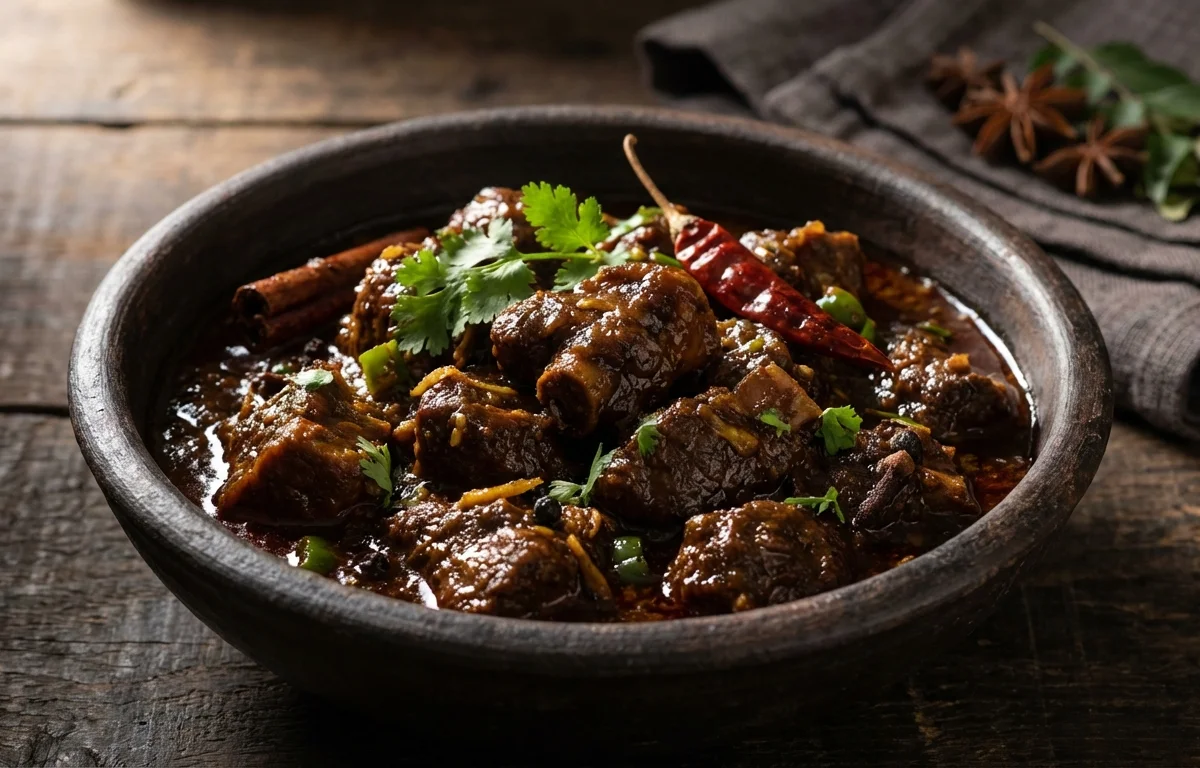
A rich Coorg-style pork curry with deep roasted spices, earthy kachampuli, and slow-cooked meat that turns tender and glossy. It is bold, peppery, and intensely savory, made for small portions alongside rice, akki roti, or neer dosa.
For 4 servings
- roast · ~3 min
Roast the whole spices.
1.Heat a small pan over low heat.2.Add coriander seeds, cumin seeds, black peppercorns, fenugreek seeds, mustard seeds, dried red chili, cinnamon, and cloves.3.Roast until fragrant and slightly darkened, stirring often so the spices do not burn, about 2 to 3 minutes.4.Cool completely.TIPKeep the heat low here; burnt fenugreek or mustard will make the curry bitter. - mix · ~3 min
Grind the masala.
Grind the cooled roasted spices with garlic and ginger to a coarse paste. Add a spoonful of water only if needed to help it move.
- saute · ~8 min
Cook the onions and green chili.
1.Heat oil in a heavy pan over medium heat.2.Add onion and green chili.3.Cook until the onion turns soft and lightly browned, 6 to 8 minutes. - saute · ~12 min
Cook the pork with the masala.
1.Add the ground masala paste and turmeric powder to the pan.2.Cook for 2 minutes until the raw smell fades.3.Add pork and salt, then mix well to coat every piece.4.Cook for 8 to 10 minutes, stirring often, until the pork starts releasing fat and the masala looks glossy.TIPLet the pork catch slightly at the bottom in spots, but scrape and stir before it scorches. That light browning builds the signature deep flavor. - simmer · ~45 min
Slow-cook the curry.
Pour in water, bring the curry to a gentle boil, then lower the heat. Cover and cook until the pork is tender and the gravy is thick, 40 to 45 minutes, stirring a few times.
- assemble · ~4 min
Finish with kachampuli.
Stir in kachampuli and cook uncovered for 3 to 4 minutes so the sour note settles into the gravy. Taste and adjust with a little more water only if the curry is too thick.
TIPAdd kachampuli only near the end; long cooking can dull its sharp, smoky tang. - garnish
Garnish with coriander leaves.
- serve
Serve hot.
What to keep in mind.
7 tips from the recipe — small details that make a real difference to the final dish.
- 1Choose pork with some fat; very lean pieces can turn dry before the gravy develops its signature gloss.
- 2Roast the whole spices only until fragrant and slightly darkened; burnt fenugreek or mustard will make the curry harsh.
- 3Keep the masala paste coarse rather than silky for a more rustic Coorg-style texture and deeper cling on the pork.
- 4Let the pork fry in the masala until it releases fat and looks glossy before adding water; this step builds the curry's depth.
- 5Add kachampuli only at the end and simmer briefly, so its smoky sourness stays bright instead of flattening out.
- 6This curry tastes even better after a few hours or the next day, once the peppery masala and vinegar settle into the meat.
- 7If the gravy tightens too much on standing, loosen with a splash of hot water rather than more vinegar.
Adapt it for your goals.
Bone-in
Use bone-in pork for a fuller, richer gravy; it may need a little more simmering time but gives deeper flavor.
spicierSpicier
Increase black pepper and dried red chilies for a fiercer, more traditional heat profile that suits small servings with rice.
milderMilder
Reduce the dried red chilies and green chilies while keeping the pepper and kachampuli, for the same character with gentler heat.
pressure cookerPressure-cooker
After frying the pork in masala, pressure-cook until tender, then finish uncovered with kachampuli for a quicker weeknight version.
Why this is on our healthy list.
Protein-Rich Main Dish
Pork makes this curry substantial and satisfying, helping turn a small serving into a filling meal.
Spice-Forward Flavor
Black pepper, ginger, garlic, cumin, and coriander bring bold taste without relying on heavy cream or sugary additions.
Naturally Low in Carbs
The curry itself is built from meat, spices, onion, and vinegar, making it relatively low in carbohydrate-heavy ingredients.
Frequently asked questions
Use a mix of tamarind water and a small splash of a dark, mild vinegar. The flavor will differ, but it will still add the needed tang.