
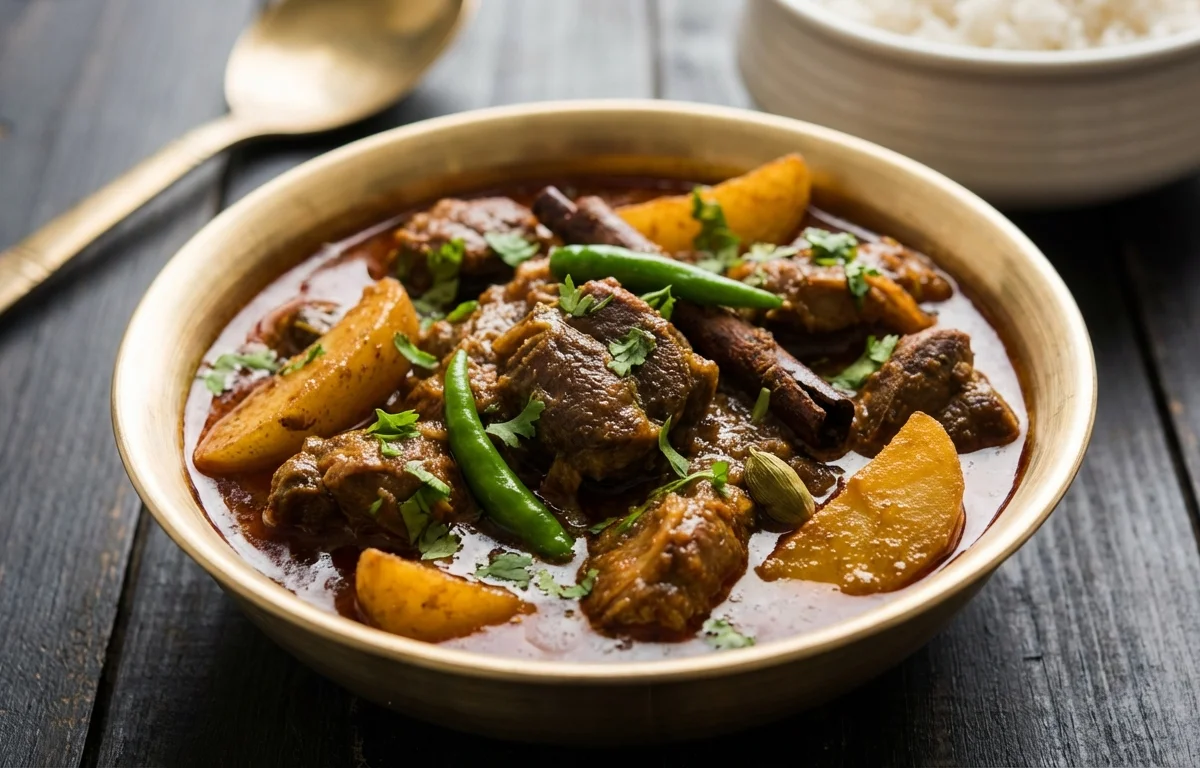
Paro Mangsho
A rustic Bengali-style pigeon curry with tender meat, warm spices, and a light onion-tomato gravy. It is deeply savory, gently spiced, and traditionally served with plain rice for a comforting, old-world meal.
For 4 servings
- prep · ~20 min
Marinate the pigeon.
1.Wash and drain the pigeon pieces well.2.Mix the pigeon with yogurt, 1 tbsp ginger-garlic paste, turmeric powder, red chili powder, and half of the salt.3.Coat well and set aside for 20 minutes.TIPA short rest helps the meat take on the spices and cook more evenly. - fry · ~6 min
Fry the potatoes lightly.
Heat the mustard oil in a heavy pan until it reaches smoking point, then lower the heat. Add the potato halves and fry until lightly golden on the edges. Remove and keep aside.
- saute · ~8 min
Cook the whole spices and onions.
1.In the same pan, add bay leaf, cinnamon, green cardamom, and cloves.2.Let them sizzle for a few seconds until fragrant.3.Add sliced onion and cook over medium heat until soft and light golden.TIPDo not darken the onions too much or the gravy will taste bitter. - saute · ~8 min
Build the masala base.
1.Add the remaining ginger-garlic paste and cook for 1 minute.2.Add chopped tomato and cook until soft and pulpy.3.Stir in coriander powder, cumin powder, garam masala, remaining salt, and sugar.4.Cook until the masala looks glossy and the oil begins to separate. - saute · ~10 min
Brown the pigeon in the masala.
Add the marinated pigeon along with all the marinade. Cook over medium heat, stirring often, until the pieces lose their raw look and are well coated in the masala.
TIPCook this stage patiently so the meat picks up the onion-spice base before liquid goes in. - simmer · ~25 min
Simmer the curry with potatoes.
1.Return the fried potatoes to the pan.2.Add slit green chili and hot water, then mix well.3.Bring to a boil, then cover and cook on low heat until the pigeon is tender and the potatoes are cooked through.TIPAdd a little more hot water only if needed; Paro Mangsho is best with a light but flavorful gravy. - rest · ~5 min
Rest the curry for 5 minutes.
- serve
Serve hot with plain rice.
What to keep in mind.
7 tips from the recipe — small details that make a real difference to the final dish.
- 1Smoke the mustard oil first, then lower the heat before frying; this tames its sharpness while keeping the classic Bengali flavor.
- 2Drain the washed pigeon thoroughly before marinating so the yogurt coating clings instead of turning watery.
- 3Keep the onions only light golden, not deep brown, so the gravy stays light and rustic rather than heavy.
- 4Cook the masala until it looks glossy and releases oil; that is the cue the tomato and spices have properly fried.
- 5Use hot water for simmering, as cold water can tighten the meat and slow tender cooking.
- 6If the pigeon is older and tougher, give it extra covered simmering time rather than raising the heat.
- 7The curry tastes even better after a short rest, when the potato absorbs the gravy and the whole spices mellow.
Adapt it for your goals.
Low-oil
Skip frying the potatoes separately and simmer them directly in the curry; the dish stays lighter while still soaking up the gravy.
spicierSpicier
Add an extra slit green chili or a little more red chili powder for a hotter, more assertive Bengali-style curry.
no potatoNo-potato
Leave out the potatoes for a meat-forward version with a thinner, cleaner gravy that pairs well with plain rice.
pressure cookerPressure-cooker
Use a pressure cooker after browning the meat if your pigeon is tough; it shortens cooking time while keeping the curry flavorful.
Why this is on our healthy list.
Protein-Rich Main Dish
Pigeon provides substantial animal protein, making this curry a hearty main course when served with rice.
Digestive Spice Support
Ginger, garlic, cumin, coriander, and cardamom add aroma while contributing traditional digestive benefits associated with spiced curries.
Balanced with Potatoes
Potatoes add satisfying carbohydrates and make the meal more filling, especially when paired with the savory gravy.
Fermented Dairy in Marinade
The yogurt marinade adds tang and helps soften the meat while contributing some dairy-based nourishment.
Frequently asked questions
The meat should feel tender when pierced, lose all raw color near the bone, and the gravy should smell rich rather than sharp or raw.




-curry.webp)
.webp)