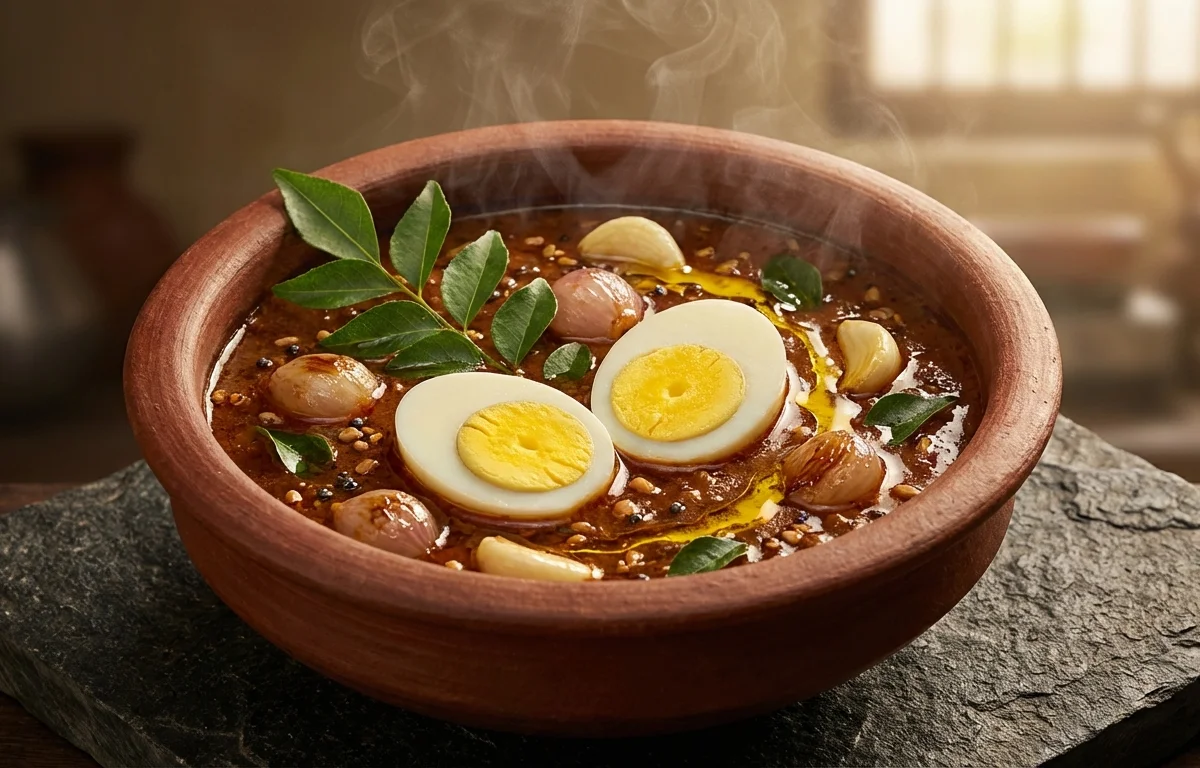
Poondu Muttai Kuzhambu
A bold, tangy Tamil-style egg curry simmered in a rich tamarind gravy with pearl onions and lots of garlic. Hard-boiled eggs soak up smoky, spicy notes from roasted spices and coconut paste, making this a deeply comforting dish that pairs perfectly with steamed rice and a drizzle of sesame oil.
For 4 servings
- prep · ~30 min
Prepare the tamarind water and roast the coconut paste.
1.Soak tamarind in 1 cup warm water for 30 minutes. Squeeze and extract thick pulp; discard solids.2.Dry roast grated coconut, cumin seeds, and black peppercorns on medium heat until golden and fragrant (2-3 min).3.Grind into a smooth paste using 3-4 tbsp water. Set aside. - temper · ~3 min
Make the tempering.
1.Heat sesame oil and ghee together in a heavy-bottomed pan over medium heat.2.Add mustard seeds and let them splutter (30 sec).3.Add fenugreek seeds, dried red chilies, sliced garlic, and curry leaves. Sauté until garlic turns light golden (1 min).TIPUse medium-low heat for the tempering — fenugreek seeds turn bitter if they burn. - saute · ~10 min
Sauté onions and tomatoes.
1.Add halved pearl onions and crushed garlic to the pan.2.Sprinkle salt and cook until onions turn translucent and soft (5-7 min).3.Add chopped tomato and sauté until it turns mushy and oil separates (3-4 min). - saute · ~1 min
Bloom the spice powders.
1.Lower the heat. Add coriander powder, red chili powder, and turmeric powder.2.Sauté for 30-40 seconds until the raw smell disappears. Take care not to burn.TIPAdd a splash of water if the spices stick to the pan. - simmer · ~12 min
Simmer the gravy with tamarind.
1.Pour in the extracted tamarind water and 1 cup fresh water. Stir well.2.Bring to a boil, then reduce heat and simmer uncovered for 10-12 minutes until the raw tamarind smell fades and the gravy thickens slightly. - mix · ~8 min
Add the coconut paste.
1.Stir in the ground coconut-spice paste.2.Let the kuzhambu simmer gently for another 6-8 minutes. The gravy will deepen in color and turn slightly creamy.TIPDo not boil vigorously after adding coconut paste — gentle simmering prevents the gravy from splitting. - assemble · ~5 min
Add the boiled eggs.
1.Gently drop the peeled, pierced boiled eggs into the simmering gravy.2.Baste the eggs with the gravy and let them absorb the flavors for 5 minutes on low heat.3.Taste and adjust salt if needed. Turn off the heat.TIPPiercing the eggs lightly with a fork allows the tangy gravy to seep inside, making every bite flavorful. - rest · ~15 min
Rest the kuzhambu for 15 minutes.
Let the curry rest covered for 15 minutes before serving. The flavors deepen and the eggs absorb more of the smoky-tangy gravy.
TIPPoondu Muttai Kuzhambu always tastes better the next day. The garlic mellows and the tamarind rounds out beautifully. - garnish
Garnish with fresh coriander and serve hot.
Sprinkle chopped coriander leaves over the kuzhambu. Drizzle a few drops of raw sesame oil on top for an authentic finish. Serve hot with steamed rice and a side of paruppu thogayal or dry sabzi.
What to keep in mind.
7 tips from the recipe — small details that make a real difference to the final dish.
- 1Pierce boiled eggs with a fork before adding to the gravy so the tamarind base seeps in and flavors the inside.
- 2Dry-roast the coconut-cumin-pepper mix until deeply golden for a smoky foundation that defines this kuzhambu.
- 3Simmer the tamarind water until the raw sour smell completely vanishes — this takes a full 10-12 minutes.
- 4Add the coconut paste only after the tamarind gravy has thickened, then keep the heat low to prevent curdling.
- 5Let the finished kuzhambu rest for 15 minutes (or overnight) so the garlic mellows and the flavors meld.
- 6Use Indian gingelly (sesame) oil for tempering and a final drizzle — it gives the dish its characteristic earthy aroma.
- 7When blooming the spice powders, add a splash of water if they stick to the pan to avoid a burnt taste.
Adapt it for your goals.
Vegan Eggless
Replace hard-boiled eggs with firm tofu puffs (pierced the same way) or pan-fried potato wedges; the hearty texture and absorbent surface mimic eggs while keeping the dish plant-based.
Low OilLow-Oil
Reduce sesame oil to 1 tbsp and ghee to 1 tsp, and skip the final drizzle; dry-roast the spice powders in a non-stick pan — the tamarind and coconut still deliver full flavor.
Extra GarlickyExtra Garlicky
Double the garlic cloves (24 total) — crush 20 for the gravy and slice 4 for tempering; this version is for those who adore pungent, mellowed garlic in every spoonful.
Kerala StyleKerala-Style
Add 2 tbsp of coconut milk along with the coconut paste and drop a sprig of fresh curry leaves; garnish with a squeeze of coconut vinegar for a tangy, creamy twist.
Why this is on our healthy list.
Rich in Protein
Eggs provide high-quality complete protein, essential for muscle repair and satiety, making this curry a filling meal.
Garlic for Immunity
This recipe uses a generous 12 cloves of garlic, known for its allicin content which may support immune function and heart health.
Digestive Support from Fenugreek
Fenugreek seeds aid digestion and help soothe the stomach, especially when paired with the tangy tamarind base.
Healthy Fats from Sesame Oil
Sesame oil provides anti-inflammatory antioxidants and heart-friendly unsaturated fats, used both in cooking and as a finishing drizzle.
Frequently asked questions
Yes, but thaw them completely and pat dry before sautéing to avoid excess water diluting the gravy.