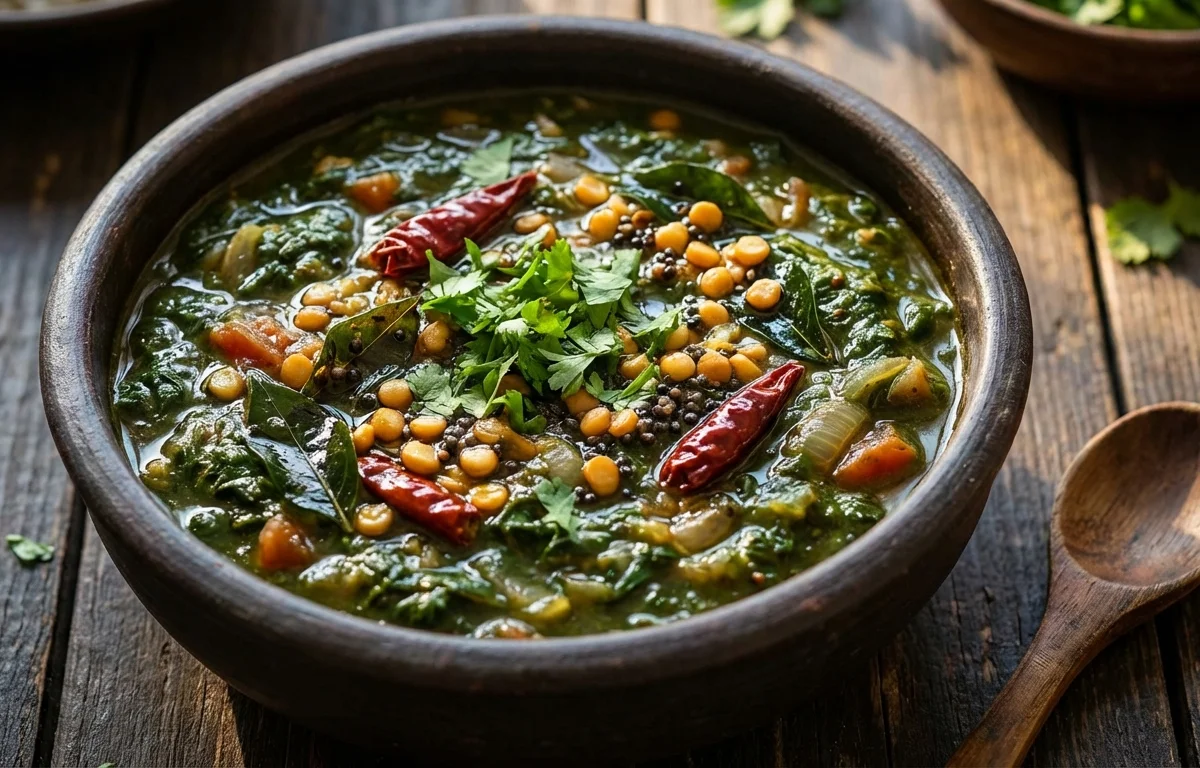
Spinach Pulusu
A tangy, earthy spinach stew from Andhra cuisine, simmered with tamarind and jaggery for that classic sweet-sour balance. Red chili and garlic add a gentle kick, while a final crackle of mustard seeds and curry leaves lifts the entire dish. Serve it over steamed rice with a drizzle of ghee.
For 4 servings
- prep · ~15 min
Soak tamarind and prep spinach.
1.Soak 30g tamarind in 1 cup warm water for 15 minutes, then squeeze well to extract the pulp. Discard the solids.2.Wash the spinach thoroughly and roughly chop the leaves and tender stems. - boil · ~10 min
Cook the spinach.
Place the chopped spinach in a saucepan with 1 cup water and a pinch of salt. Bring to a boil over medium-high heat, then reduce to a simmer. Cook for 8-10 minutes until the spinach is completely wilted and tender.
TIPAvoid overcooking — the spinach should just soften and turn dark green, not turn mushy and olive-colored. - simmer · ~10 min
Build the pulusu base.
1.Mash the cooked spinach lightly with the back of a ladle, right in the saucepan.2.Pour in the extracted tamarind pulp and add red chili powder, turmeric powder, grated jaggery, and salt.3.Add the remaining 1 cup water and stir well.4.Bring to a gentle simmer and cook for 10 minutes, letting the flavors meld and the raw tamarind smell disappear.TIPLet it simmer until the raw tamarind aroma mellows and the pulusu tastes balanced — the right moment is when the tanginess integrates into the spinach rather than hitting you upfront. - temper · ~6 min
Make the tempering.
1.Heat 2 tsp oil in a small tempering pan over medium heat.2.Add mustard seeds and let them splutter (30 seconds).3.Add cumin seeds and let them sizzle (15 seconds).4.Add dried red chilies, curry leaves, and asafoetida — fry until fragrant (15 seconds).5.Add crushed garlic cloves and slit green chilies. Sauté until the garlic turns golden (1-2 minutes).6.Add the chopped onion and fry until translucent (3-4 minutes).TIPKeep the heat at medium — garlic can burn fast and turn bitter. You want golden, not brown. - mix · ~2 min
Finish the pulusu.
1.Pour the hot tempering directly into the simmering spinach mixture.2.Stir well to incorporate all the flavors.3.Simmer for 2 more minutes, then switch off the heat. - rest · ~10 min
Let the flavors settle.
Cover the saucepan and let the pulusu rest for 10 minutes before serving. This resting time allows the tamarind, jaggery, and tempering flavors to deepen and balance out.
TIPPulusu always tastes better after a short rest — the tanginess rounds out and the garlic and curry leaves infuse more fully. - serve
Serve with steamed rice and a drizzle of ghee.
Ladle the spinach pulusu into bowls and serve hot alongside plain steamed rice. A drizzle of warm ghee on top before eating elevates the earthy spinach beautifully.
What to keep in mind.
6 tips from the recipe — small details that make a real difference to the final dish.
- 1Wash spinach thoroughly in several changes of water to remove any grit hidden in the leaves.
- 2Squeeze tamarind pulp well and strain to avoid fibrous bits in the final stew.
- 3Simmer the pulusu base until the raw tamarind smell disappears — about 10 minutes.
- 4Do not let the garlic turn dark brown during tempering; golden is the goal for sweet, not bitter, flavor.
- 5Let the finished pulusu rest for 10 minutes before serving — the flavors deepen and balance.
- 6Use fresh curry leaves for the most aromatic crackle; dried ones lack intensity.
Adapt it for your goals.
Mild Version
Skip the green chilies and reduce red chili powder to 1/4 tsp for a family-friendly pulusu that still retains the sweet-sour backbone.
Coconut TwistCoconut Twist
Stir in 2 tbsp fresh grated coconut at the end for a subtle sweetness and creamier texture, common in coastal Andhra variations.
Dal PulusuDal Pulusu
Add 1/2 cup cooked toor dal (pigeon pea lentils) along with the spinach for a thicker, protein-packed stew that turns it into a one-dish meal.
Pumpkin PulusuPumpkin Pulusu
Replace half the spinach with 200g diced pumpkin — simmer it with the tamarind base for a sweeter, heartier pulusu with a different texture.
Why this is on our healthy list.
Rich in Iron
Spinach is a well-known source of non-heme iron, which supports healthy blood and energy levels.
Packed with Vitamin A
The spinach in this dish provides a generous amount of beta-carotene, essential for eye health and immune function.
Digestive Support
Asafoetida and cumin seeds are traditionally used in Indian cooking to aid digestion and reduce bloating.
Antioxidant Boost
Turmeric and curry leaves contain compounds with antioxidant properties that help protect cells from damage.
Frequently asked questions
Yes, thaw and squeeze out excess water from 500g frozen spinach before adding it to the pot — you will not need the initial boiling step.



.webp)