Udupi Egg Kothu Parotta
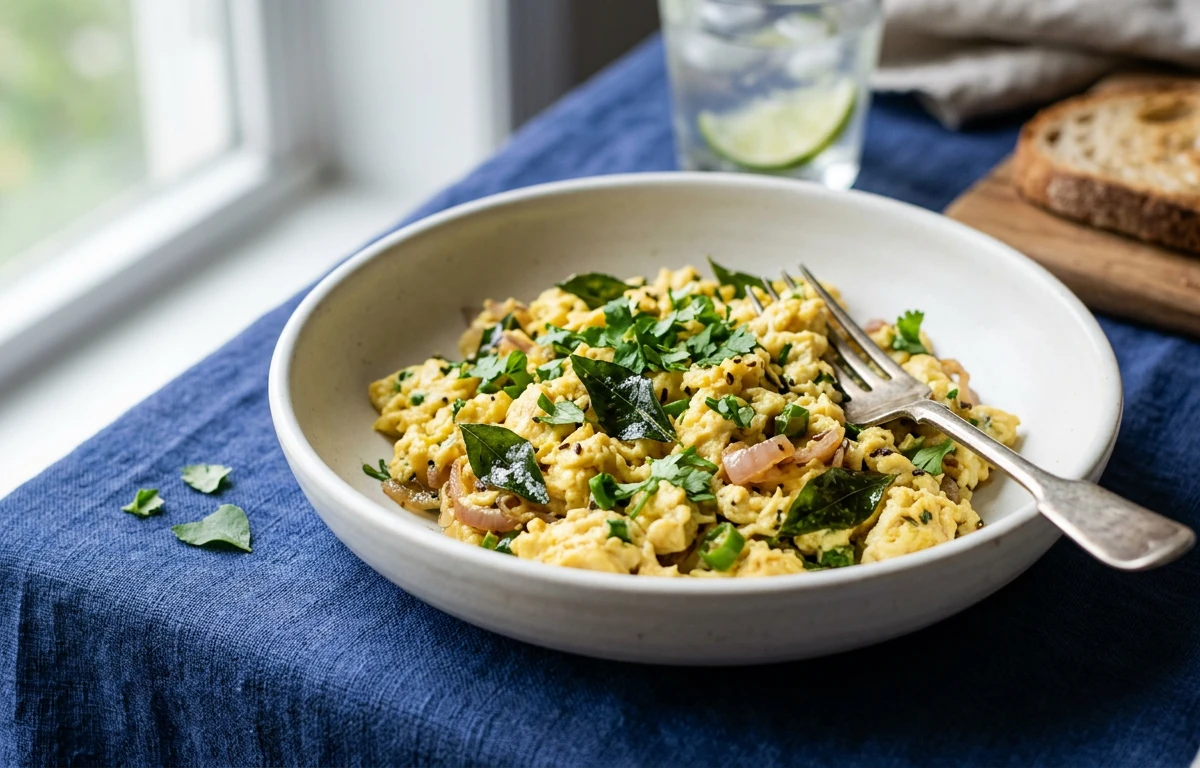
A delightful twist on the classic South Indian street food. Shredded parotta is tossed with scrambled eggs and a fragrant, mildly sweet and tangy Udupi-style masala made with coconut and spices. A hearty and flavorful one-pan meal.
For 4 servings
Prepare the parottas by tearing them into small, bite-sized pieces by hand. Set them aside.
Heat coconut oil in a large, heavy-bottomed pan or kadai over medium heat. Once hot, add the mustard seeds and let them splutter. Add the urad dal and sauté for 30 seconds until golden. Then, add the curry leaves and slit green chilies, and sauté for another 30 seconds.
Add the finely chopped onions and cook for 4-5 minutes until they become soft and translucent. Stir in the ginger-garlic paste and cook for 1 minute until the raw aroma disappears.
Add the chopped tomatoes and cook for 5-6 minutes, stirring occasionally, until they turn soft and mushy. Lower the heat and add the turmeric powder, red chili powder, coriander powder, garam masala, and salt. Mix well and cook for 2 minutes.
Stir in the grated coconut, tamarind paste, and optional jaggery. Pour in 1/4 cup of water, stir well, and allow the masala to simmer for 3-4 minutes until it forms a thick gravy.
Push the masala to one side of the pan. Crack the 4 eggs into the empty space. Let them set for 30 seconds, then gently scramble them until they are about 80% cooked. Mix the scrambled eggs thoroughly with the masala.
Add the shredded parotta pieces to the pan. Toss everything together until the parotta is evenly coated. Using two flat metal spatulas, chop and mix the parotta on the pan for 2-3 minutes. This 'kothu' action is key to the dish's texture. Continue to cook for another 2-3 minutes until heated through.
Turn off the heat, garnish with freshly chopped coriander leaves, and serve hot.
What to keep in mind.
6 tips from the recipe — small details that make a real difference to the final dish.
- 1Using day-old or leftover parottas gives the best texture as they are drier and absorb the masala without becoming mushy.
- 2The 'kothu' or chopping action on the pan is essential. It breaks down the parotta and helps it meld with the masala for the authentic street-food texture.
- 3A wide, heavy pan like a cast-iron skillet or a large kadai provides enough surface area for effective chopping and mixing.
- 4Don't fully cook the eggs before mixing them with the masala; they will finish cooking with the parotta.
- 5For a richer flavor, you can add a splash of coconut milk along with the water when making the gravy.
- 6Adjust the tamarind and jaggery to achieve your preferred balance of tangy and sweet flavors, which is characteristic of Udupi cuisine.
Adapt it for your goals.
Vegetarian
Replace the eggs with 200g of crumbled paneer or sautéed mushrooms. Add them along with the shredded parotta.
SpicierSpicier
Increase the number of green chilies to 3-4 or add 1/2 teaspoon of black pepper powder along with the other spices.
With VegetablesWith Vegetables
Add 1/2 cup of finely chopped carrots, peas, or bell peppers along with the onions for extra nutrition and texture.
Chettinad StyleChettinad Style
For a different flavor profile, substitute the garam masala with 1 teaspoon of Chettinad masala powder.
Why this is on our healthy list.
Excellent Source of Protein
The eggs in this dish provide high-quality protein, which is essential for muscle repair, growth, and overall body function.
Energy Boosting
This dish is rich in carbohydrates from the parotta and healthy fats from coconut oil, providing a substantial and sustained energy release.
Rich in Aromatic Spices
Spices like turmeric, coriander, and mustard seeds are known for their anti-inflammatory and antioxidant properties, which can aid digestion and support overall health.
Frequently asked questions
A single serving of Udupi Egg Kothu Parotta contains approximately 450-550 calories, depending on the size of the parottas and the amount of oil used. It's a calorie-dense and filling meal.