Val Papdichi Bhaji
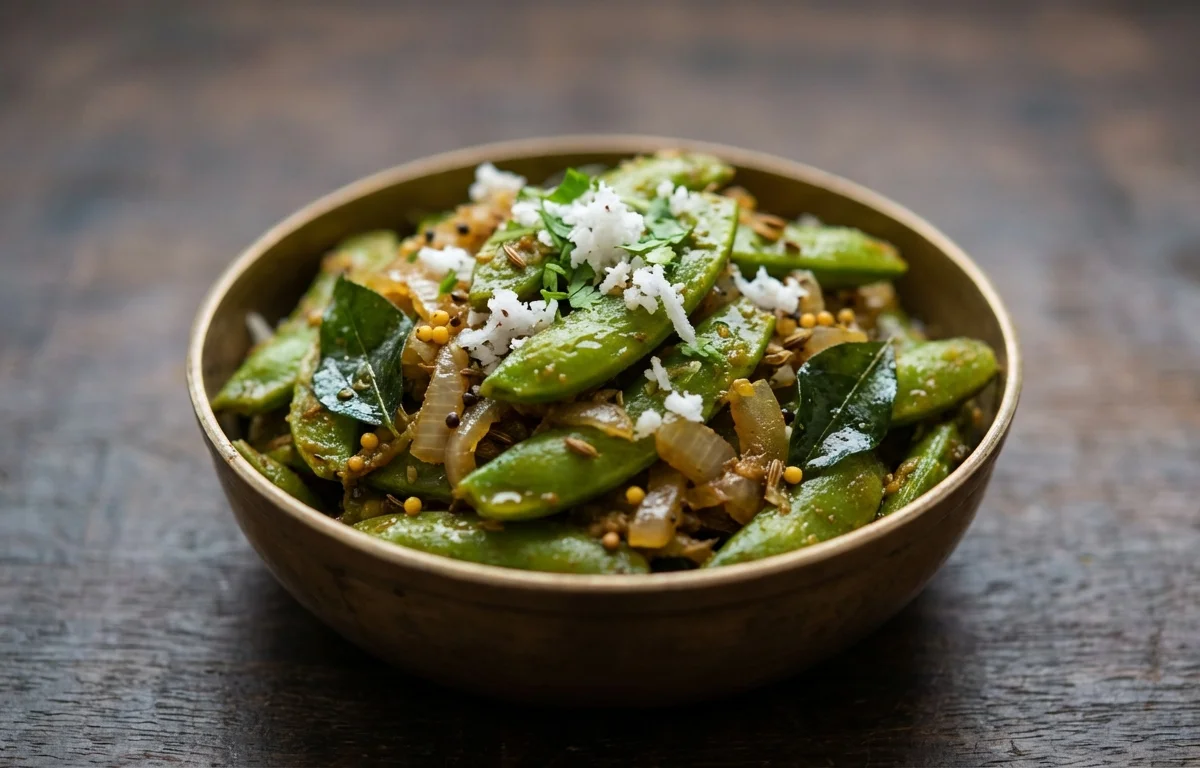
A homestyle Maharashtrian beans and flat beans curry with a lightly spiced coconut masala. It cooks into a comforting, semi-dry bhaji that tastes wonderful with chapati, bhakri, or simple steamed rice.
For 4 servings
- prep · ~20 min
Prepare the beans and vegetables.
1.Drain the soaked val beans and rinse them once.2.Remove the strings from the flat beans and cut them into small pieces.3.Chop the onion and tomato finely.4.Grate the fresh coconut and keep the coriander leaves ready. - pressure cook · ~15 min
Pressure cook the val beans.
Add the soaked val beans and 1 cup water to a pressure cooker. Cook for 3 whistles, then let the pressure drop naturally. The beans should be soft but still hold their shape.
TIPDo not overcook the val beans or they will turn mushy in the bhaji. - temper · ~2 min
Make the tempering.
1.Heat oil in a kadai over medium heat.2.Add mustard seeds and let them splutter.3.Add cumin seeds and asafoetida.4.Add turmeric powder and stir for a few seconds. - saute · ~9 min
Cook the onion and tomato.
1.Add the chopped onion and cook until soft and light golden, 4 to 5 minutes.2.Add the chopped tomato and cook until it breaks down, 3 to 4 minutes.3.Add red chili powder and god masala, then mix well. - simmer · ~12 min
Cook the bhaji.
1.Add the flat beans and mix well with the masala.2.Add the cooked val beans along with their cooking liquid.3.Add the remaining 0.5 cup water, salt, jaggery, and tamarind paste.4.Cover and cook until the flat beans are tender and the flavors come together, 10 to 12 minutes.TIPStir once or twice while simmering so the beans cook evenly without sticking. - garnish · ~2 min
Finish with coconut and coriander.
Add the grated coconut and chopped coriander leaves. Mix gently and cook uncovered for 1 to 2 minutes until the bhaji looks semi-dry.
- serve
Serve hot.
What to keep in mind.
7 tips from the recipe — small details that make a real difference to the final dish.
- 1Soak the val beans fully overnight so they cook evenly and stay creamy inside without splitting.
- 2Pressure-cook the val only until soft but intact; they will cook a bit more when simmered with the flat beans.
- 3Cut the flat beans into small, even pieces so they turn tender in the same time as the masala comes together.
- 4Let the onion turn light golden before adding tomato; this gives the bhaji a deeper, sweeter base.
- 5Add coconut at the very end so it stays fresh-tasting and doesn't turn oily or dull.
- 6Cook uncovered for the last 1 to 2 minutes to get the classic semi-dry texture that pairs well with chapati or bhakri.
- 7This bhaji tastes even better after resting 10 minutes, once the jaggery, tamarind, and god masala settle into the beans.
Adapt it for your goals.
No-onion
Skip the onion for a simpler, sattvic-style version; let the tomato cook down well so the masala still has body.
spicierSpicier
Increase red chili powder slightly or add a green chili with the tempering if you prefer a sharper heat.
dry bhakri styleDry-bhakri-style
Use a little less water and cook uncovered longer for a drier bhaji that is especially good with jowar bhakri.
peanut coconutPeanut-coconut
Add a spoon of roasted peanut powder with the coconut for a nuttier, fuller Maharashtrian-style finish.
Why this is on our healthy list.
Fiber-Rich Beans and Vegetables
Val beans and flat beans make this bhaji filling and hearty, with plenty of natural fiber from legumes and vegetables.
Plant-Based Protein
Field beans contribute plant protein, making the dish more satisfying, especially when served with bhakri, chapati, or rice.
Spice-Forward, Not Heavy
Flavor comes from mustard, cumin, god masala, tamarind, and coconut rather than a heavy cream or rich gravy base.
Frequently asked questions
Yes. Simmer the soaked val beans in a pot until tender but not broken, then continue with the recipe as written.



.webp)