
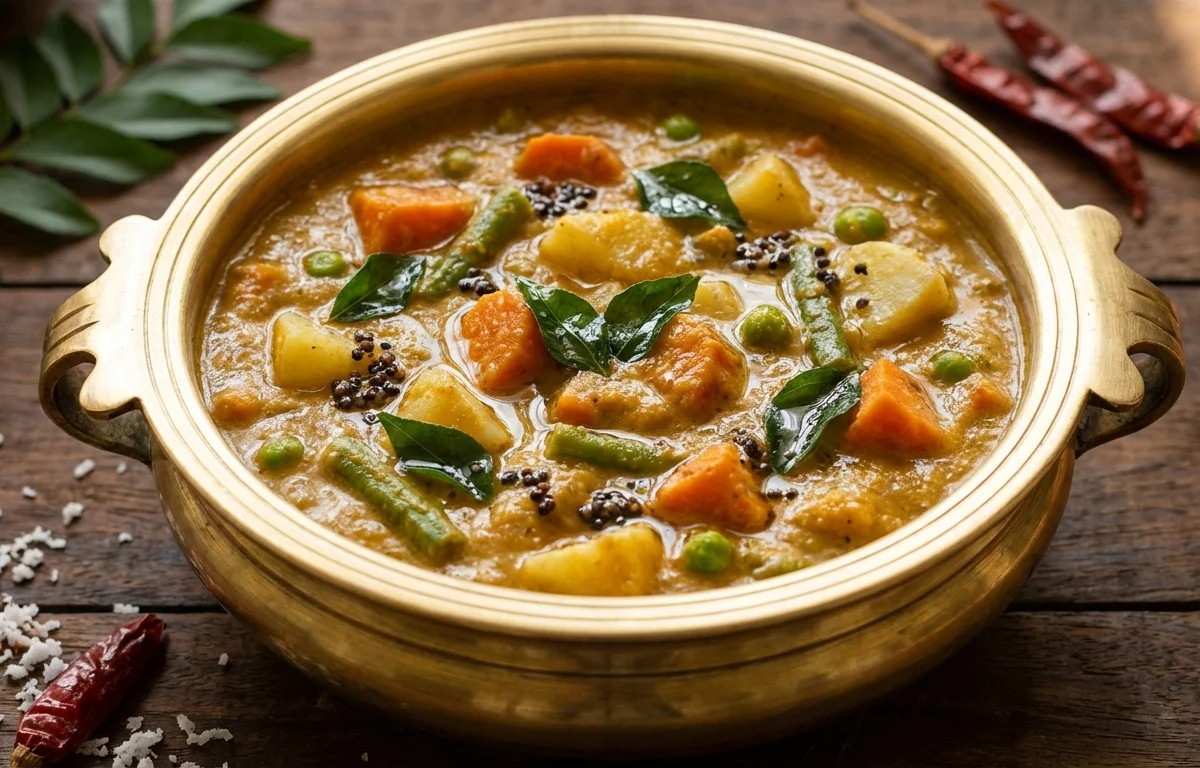
Varutharacha Vegetable Curry
A deeply aromatic vegetable curry from Kerala where freshly roasted coconut and spices are ground into a rich, nutty paste. Mixed vegetables simmer in this fragrant base, absorbing the smoky-sweet notes of roasted coconut, fennel, and dry red chilies. A comforting dish that pairs beautifully with steamed rice or appam.
For 4 servings
- prep
Prep the vegetables and tamarind.
1.Peel and cube the potato, dice the carrot, and trim and cut the green beans.2.Soak the tamarind in 2 tablespoons of warm water. After 10 minutes, squeeze and extract the pulp. Set aside. - roast · ~10 min
Dry roast the coconut and spices for the masala paste.
1.Heat a heavy-bottomed pan over medium-low heat.2.Add grated coconut and roast, stirring continuously, until it turns a deep golden brown. Remove and set aside.3.In the same pan, dry roast coriander seeds, dried red chilies, fennel seeds, and black peppercorns for 2-3 minutes until fragrant. Let cool.4.Grind the roasted coconut with the roasted spices, turmeric powder, and a little water into a smooth, thick paste.TIPWatch the coconut closely — it burns easily. Stir constantly and remove from heat the moment it's golden. - boil · ~8 min
Parboil the root vegetables.
1.In a pot, add the cubed potato and carrot pieces with 1 cup of water.2.Bring to a boil and cook for 5 minutes until just tender but still firm.3.Add the green beans and cook for 2 more minutes. Drain and set aside. - temper · ~2 min
Temper the spices in coconut oil.
1.Heat coconut oil in a deep pan or kadai over medium heat.2.Add mustard seeds and let them pop.3.Add curry leaves and sauté for 10 seconds until fragrant. - saute · ~14 min
Build the aromatic base.
1.Add the thinly sliced onions and sauté until they turn deep golden brown (8-10 minutes).2.Add minced garlic, chopped ginger, and slit green chilies. Sauté for 1-2 minutes until the raw smell disappears.3.Add chopped tomatoes and cook until they turn soft and mushy (3-4 minutes).TIPTake your time browning the onions — this is where the curry gets much of its depth. - simmer · ~15 min
Combine and simmer the curry.
1.Add the ground roasted coconut-spice paste to the pan. Stir well.2.Add 1 cup of water, salt, and the tamarind pulp extract. Mix thoroughly and bring to a gentle boil.3.Add the parboiled vegetables and simmer on low heat for 10-12 minutes until the gravy thickens and vegetables are tender.4.Adjust the consistency with more water if needed — the curry should have a thick gravy.TIPSimmer gently and stir occasionally to prevent the coconut paste from sticking and scorching at the bottom. - serve
Serve hot with steamed rice or appam.
What to keep in mind.
6 tips from the recipe — small details that make a real difference to the final dish.
- 1Roast the grated coconut on medium-low heat, stirring constantly, until it turns deep golden brown — this builds the signature nutty aroma.
- 2Grind the roasted coconut and spices into a very smooth paste; a coarse paste can make the gravy gritty.
- 3Parboil the potatoes and carrots until just tender but still firm, so they hold their shape during the final simmer.
- 4Brown the onions thoroughly (8–10 minutes) until deep golden — this adds essential sweetness and depth to the curry.
- 5Simmer the curry on low heat and stir occasionally to prevent the thick coconut paste from sticking and burning at the bottom.
- 6Adjust the gravy consistency with water just before serving; it thickens further as it stands.
Adapt it for your goals.
Vegan
The recipe is already vegan as written. Use coconut oil for tempering and vegetable-based sides to keep it fully plant-based.
Low OilLow-Oil
Reduce coconut oil to 1 tablespoon and skip the tempering step; instead, add mustard seeds and curry leaves directly to the sautéing onions for flavor with less fat.
High ProteinHigh-Protein
Add 1 cup of cooked chickpeas or paneer cubes along with the parboiled vegetables for a protein boost while keeping the Kerala flavor profile intact.
Keto FriendlyKeto-Friendly
Replace potatoes and carrots with low-carb vegetables like cauliflower, zucchini, and bell peppers. Simmer a few minutes less to keep them crunchy.
Why this is on our healthy list.
Rich in Healthy Fats
Coconut and coconut oil provide medium-chain triglycerides (MCTs), a type of fat that can support energy metabolism.
High in Dietary Fiber
Mixed vegetables and coconut offer natural fiber, which aids digestion and promotes satiety.
Antioxidant-Rich Spices
Coriander seeds, fennel, turmeric, and curry leaves are packed with antioxidants that help combat oxidative stress.
Good Source of Vitamin A
Carrots provide beta-carotene, which the body converts into vitamin A for eye health and immune function.
Frequently asked questions
Yes, but rehydrate it first by soaking in a little warm water for 15 minutes. Fresh coconut yields a better texture and flavor.



.webp)
.webp)