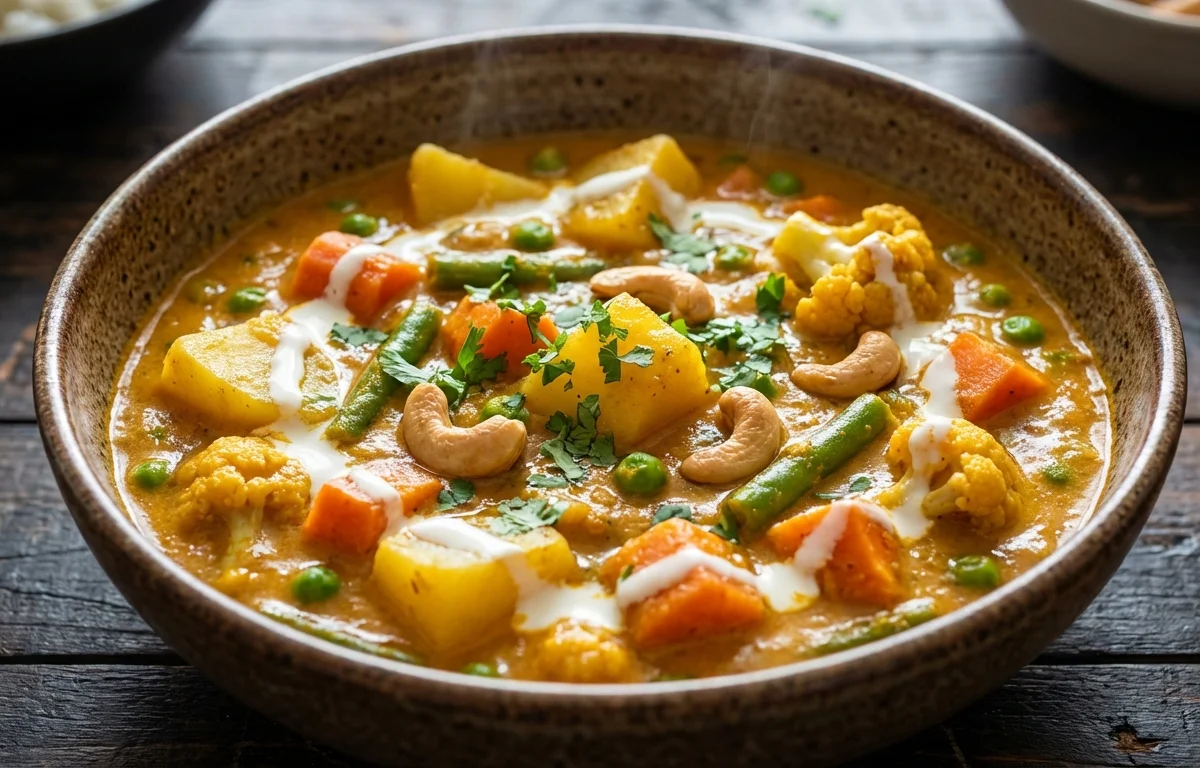
Vegetable Curry
A homestyle mixed vegetable curry with a medley of carrots, potatoes, beans, and peas simmered in a lightly spiced tomato-onion gravy. Quick, wholesome, and perfect for pairing with roti or steamed rice.
For 4 servings
- prep · ~10 min
Boil the root vegetables.
In a pot of water, bring the cubed potatoes, diced carrots, and green beans to a boil. Cook until fork-tender, about 10 minutes. Add peas in the last 2 minutes. Drain and set aside.
- temper · ~1 min
Bloom the cumin.
Heat oil in a saucepan over medium heat. Add cumin seeds and let them sizzle and crackle until fragrant, about 30 seconds.
- saute · ~10 min
Cook the onion base.
1.Add chopped onions and sauté until soft and translucent, about 4 minutes.2.Add grated ginger, minced garlic, and slit green chilies. Sauté until the raw aroma disappears, another 1-2 minutes.3.Add chopped tomatoes and cook until they soften and the oil begins to separate, about 5 minutes. - saute · ~1 min
Bloom the spices.
Lower the heat. Add turmeric powder, coriander powder, cumin powder, and red chili powder. Stir continuously for 30 seconds to toast the spices without burning them.
TIPKeep the heat low—dry spices can burn quickly. - simmer · ~10 min
Simmer the curry.
Add the boiled vegetables, water, and salt to the pan. Stir well to coat the vegetables in the masala. Bring the gravy to a gentle simmer, cover, and cook for 8-10 minutes to let the flavors meld together.
- mix · ~2 min
Finish with garam masala.
Turn off the heat. Sprinkle the garam masala over the curry and mix well. Let it rest for 2 minutes before serving.
- garnish
Garnish with fresh coriander leaves.
Transfer the curry to a serving bowl and sprinkle freshly chopped coriander leaves on top.
What to keep in mind.
6 tips from the recipe — small details that make a real difference to the final dish.
- 1Boil the potatoes and carrots until just fork-tender—overcooking makes them mushy in the gravy.
- 2Let the onions cook until deeply translucent for a sweeter, more flavorful base.
- 3Always bloom the garam masala off the heat to preserve its volatile aroma.
- 4For a thicker gravy, mash a few boiled potato cubes into the base before adding water.
- 5Rest the curry for 5 minutes after finishing—it allows the flavors to meld and deepen.
- 6If using frozen peas, add them directly to the boiling pot without thawing to keep them vibrant.
Adapt it for your goals.
Coconut-based
Swap one cup of water with coconut milk for a creamy, mildly sweet gravy—perfect for those who prefer a richer, less spicy curry.
low oilLow-oil
Reduce oil to 1 tablespoon and dry-roast the cumin seeds before adding onions. This cuts calories while keeping the tempering fragrant.
high proteinHigh-protein
Add 1 cup of boiled chickpeas or paneer cubes along with the vegetables for a more filling meal with extra plant-based protein.
jainJain
Skip the garlic, onion, and green peas (as per Jain dietary restrictions). Use asafoetida (hing) in the tempering for a similar savory depth.
veganVegan
This recipe is already vegan—confirm no ghee is used. For extra richness, stir in 2 tablespoons of cashew cream at the end.
Why this is on our healthy list.
Rich in Dietary Fiber
The mix of carrots, beans, peas, and potatoes provides a good amount of fiber, supporting healthy digestion and sustained energy release.
Packed with Antioxidants
Turmeric and coriander powder add curcumin and other antioxidants that help combat inflammation and protect cells from oxidative stress.
Low in Saturated Fat
This curry uses just 2 tablespoons of oil, making it a heart-friendly dish with no dairy or animal fats.
Good Source of Vitamin A
Carrots are rich in beta-carotene, which the body converts into vitamin A for healthy vision and immune function.
Frequently asked questions
Yes, but adjust the boiling time—frozen vegetables cook faster. Add them directly to the pot without thawing, and boil for only 4-5 minutes.