Yetti Pulimunchi
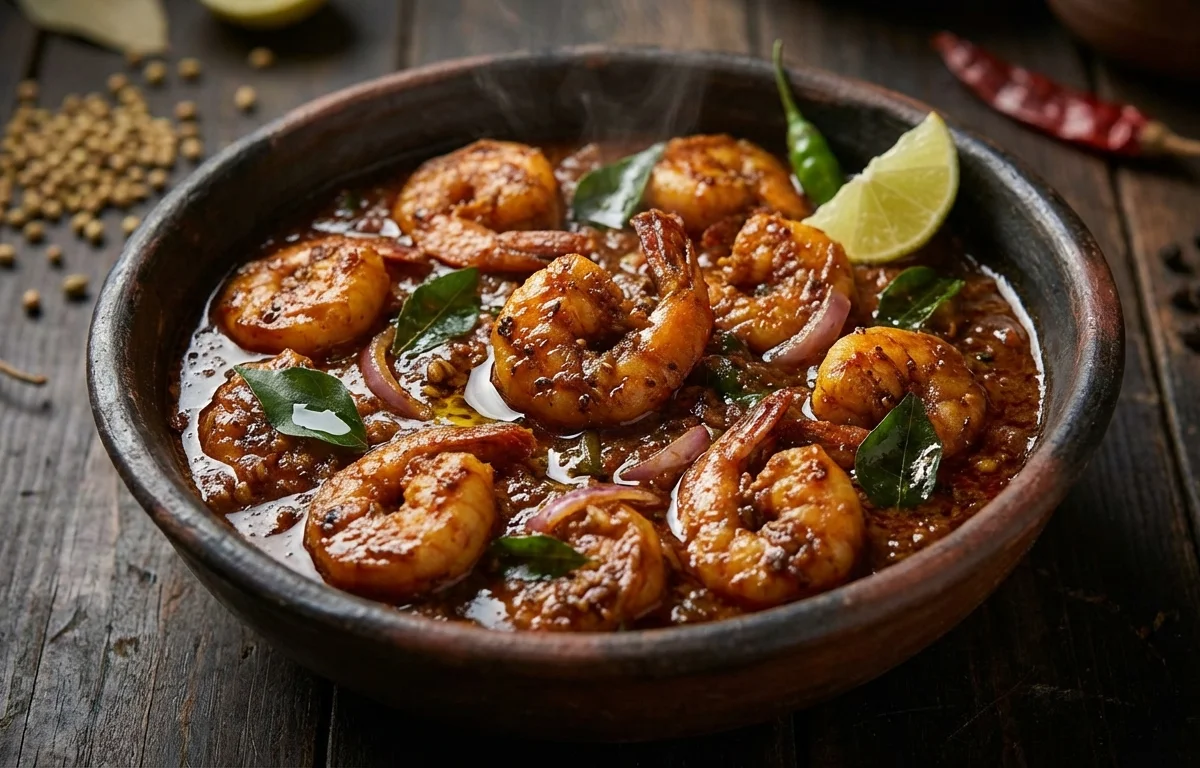
A fiery, tangy prawn curry from the Mangalorean coast, Yetti Pulimunchi is built on red chilies, tamarind, and garlic. It is bold, glossy, and deeply satisfying with neer dosa or plain rice.
For 4 servings
- prep · ~15 min
Clean the prawns and soak the chili and tamarind.
1.Rinse the prawns well and keep them drained.2.Soak the dried red chilies in warm water for 15 minutes.3.Soak the tamarind in a little warm water until soft. - mix · ~5 min
Grind the pulimunchi masala.
1.Squeeze the soaked tamarind and discard any fibers.2.Add the soaked chilies, tamarind pulp, garlic, turmeric powder, and a little water to a grinder.3.Grind to a smooth, thick red paste.TIPKeep the masala fairly thick so the curry stays bold and glossy. - saute · ~9 min
Cook the onion and tomato base.
1.Heat coconut oil in a pan over medium heat.2.Add the chopped onion and cook until soft and lightly golden, 4 to 5 minutes.3.Add the chopped tomato and cook until it breaks down, 3 to 4 minutes. - saute · ~5 min
Cook the masala.
Add the ground masala to the pan and cook on medium-low heat for 4 to 5 minutes, stirring often, until the raw smell fades and the oil starts to show at the edges.
TIPUse medium-low heat here so the chili paste cooks deeply without catching at the bottom. - simmer · ~7 min
Simmer the curry with prawns.
1.Add salt and the remaining water to loosen the masala into a thick curry.2.Bring it to a gentle simmer.3.Add the prawns and cook for 4 to 5 minutes until just curled and cooked through.TIPDo not overcook the prawns or they turn rubbery. - rest · ~5 min
Rest the curry for 5 minutes.
- serve
Serve Yetti Pulimunchi hot.
What to keep in mind.
7 tips from the recipe — small details that make a real difference to the final dish.
- 1Drain the prawns well before adding them so the curry stays thick and glossy, not watery.
- 2Grind the chili-tamarind-garlic paste very smooth; a coarse masala tastes harsher and won’t coat the prawns evenly.
- 3Cook the masala until oil beads appear at the edges, which means the raw chili and garlic notes have mellowed.
- 4Add the prawns only after the gravy is simmering gently, then cook just until they curl and turn opaque.
- 5Rest the curry for 5 minutes before serving so the tamarind, chili, and garlic settle into a rounder flavour.
- 6If making ahead, cook the masala base first and add prawns only when reheating to keep them tender.
- 7Store leftovers chilled for up to a day; seafood curries taste best fresh and can toughen if reheated too long.
Adapt it for your goals.
Extra-spicy
Add a few hotter dried red chilies along with the Byadagi for more heat while keeping the signature deep red color.
onion freeOnion-free
Skip the onion and cook the masala directly in coconut oil for a sharper, more traditional hot-sour profile.
fishFish
Use firm fish pieces instead of prawns; this suits the same pulimunchi masala and pairs especially well with rice.
thicker gravyThicker-gravy
Use slightly less water for a clingier masala that works beautifully with neer dosa or as a side to plain rice.
Why this is on our healthy list.
Protein-Rich Seafood
Prawns provide lean protein, making this curry satisfying without relying on heavy cream or rich dairy.
Garlic and Chili Benefits
Garlic and red chilies bring strong flavour along with plant compounds that add more than just heat to the dish.
Light, Dairy-Free Curry
The gravy gets body from cooked masala rather than cream, so the dish stays bold and relatively light.
Frequently asked questions
Yes, but thaw them fully and drain well first. Extra water from frozen prawns can thin the gravy and dull the masala.