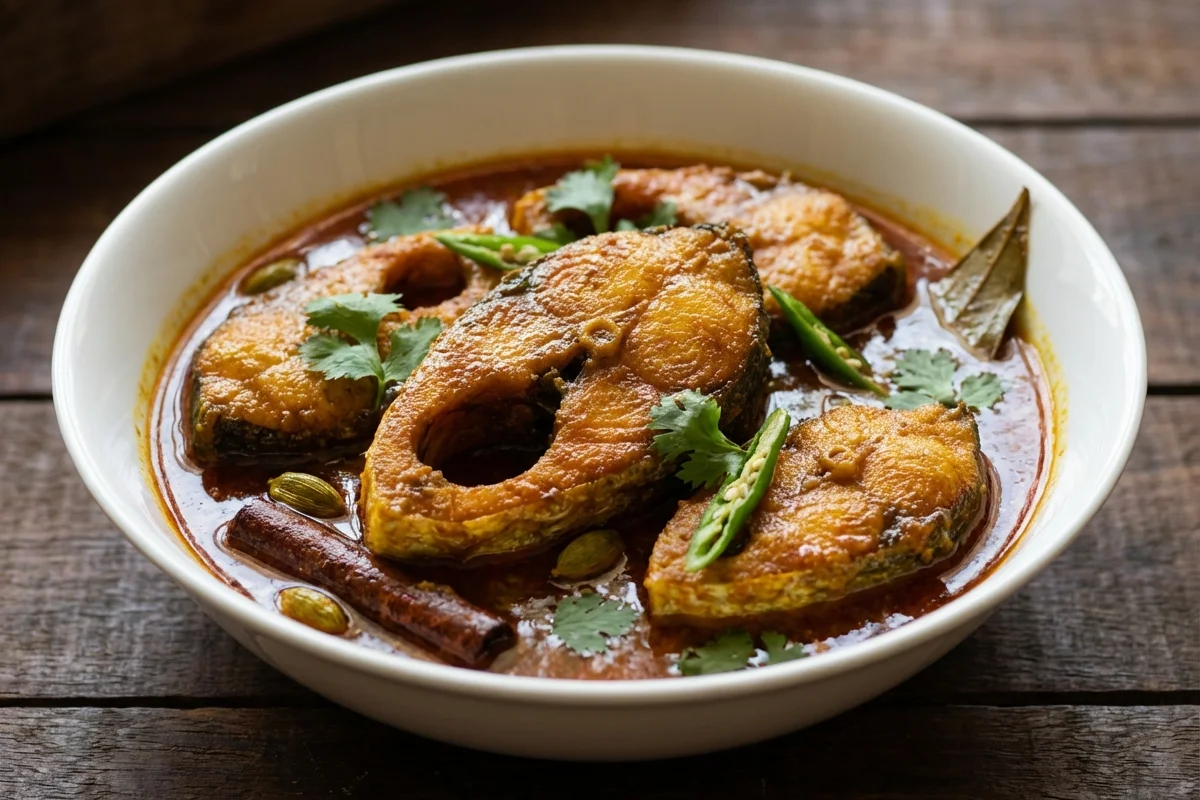
Aar Macher Kalia
A rich Bengali fish curry made with aar fish simmered in a lightly spiced onion-tomato gravy. The mustard oil, warm spices, and touch of yogurt give it a deep, festive flavor that goes beautifully with plain rice.
For 4 servings
- prep · ~10 min
Marinate the fish and potato.
1.Rub the aar fish pieces with 0.25 tsp salt and 0.5 tsp turmeric powder.2.Rub the potato halves with a light coating from the same marinade left in the bowl.3.Set aside for 10 minutes while you prepare the gravy ingredients.TIPHandle the fish gently so the pieces stay intact while frying. - fry · ~8 min
Fry the fish and potato.
1.Heat mustard oil in a kadai until it reaches smoking point, then lower the heat slightly.2.Fry the fish pieces in batches for 1-2 minutes per side until lightly golden. Remove carefully.3.Fry the potato halves in the same oil until lightly colored on the edges, about 4-5 minutes.4.Take the potatoes out and keep both fish and potatoes aside.TIPDo not fully cook the fish at this stage; it will finish gently in the gravy. - saute · ~14 min
Build the kalia base.
1.In the same kadai, add bay leaf, cinnamon, green cardamom, and cloves.2.Add the sliced onion and cook until golden, 5-7 minutes.3.Add onion paste, ginger paste, and garlic paste, then cook until the raw smell fades, about 2 minutes.4.Add tomato puree and cook until thick and glossy, 4-5 minutes.TIPKeep the heat at medium so the onion paste browns without catching at the bottom. - saute · ~5 min
Cook the spices and yogurt.
1.Lower the heat and add coriander powder, cumin powder, 1 pinch turmeric powder, red chili powder, sugar, and the remaining 0.25 tsp salt.2.Mix in the whisked yogurt a little at a time, stirring well so it does not split.3.Cook until the masala thickens and a little oil starts to separate, about 3-4 minutes.TIPA low flame helps the yogurt blend smoothly into the gravy. - simmer · ~15 min
Simmer the curry with fish and potato.
1.Pour in the water and bring the gravy to a gentle simmer.2.Add the fried potatoes and cook for 6-8 minutes until almost tender.3.Add the fried fish pieces and slit green chili.4.Cover and simmer for 5-6 minutes until the fish is cooked through and the gravy is medium thick.TIPShake the pan gently instead of stirring too much, so the fish does not break. - garnish · ~1 min
Finish with garam masala and ghee.
Sprinkle garam masala over the curry and drizzle in the ghee. Cook uncovered for 1 minute, then turn off the heat.
- rest · ~5 min
Rest the curry for 5 minutes.
- serve
Serve hot with plain rice.
What to keep in mind.
7 tips from the recipe — small details that make a real difference to the final dish.
- 1Let the mustard oil smoke first, then reduce the heat; this mellows its sharpness and gives the kalia its proper Bengali flavor.
- 2Fry the aar fish only until lightly golden, not fully cooked, or it can toughen and break when simmered in the gravy.
- 3Add the whisked yogurt gradually on low heat and keep stirring so the gravy stays smooth instead of curdling.
- 4Cook the onion-tomato masala until it looks glossy and oil begins to separate; this is the cue that the kalia base is ready.
- 5Give the potatoes a head start in the gravy before adding the fish so both finish cooking at the same time.
- 6Shake the kadai gently after adding the fish rather than stirring with a spoon to keep the steak pieces intact.
- 7Rest the curry for 5 minutes before serving so the mustard oil, whole spices, and ghee settle into the gravy.
Adapt it for your goals.
Low-oil
Shallow-fry the fish and potatoes with less mustard oil and use a splash of hot water while bhunoing the masala for a lighter everyday version.
no potatoNo-potato
Skip the potatoes for a more fish-forward curry with a slightly thinner, more traditional gravy profile.
rui kaliaRui-kalia
Use rohu steaks in place of aar fish if aar is unavailable; the same onion-yogurt gravy works beautifully with firm river fish.
spicierSpicier
Add one extra slit green chili or a little more red chili powder if you want the rich gravy to have a sharper heat.
Why this is on our healthy list.
Protein-Rich Fish Curry
Aar fish provides substantial protein, making this curry satisfying and helpful for building a balanced meal with rice.
Spice-Based Digestive Support
Ginger, garlic, cumin, coriander, and whole garam masala spices add flavor while traditionally supporting easier digestion.
Tomato and Onion Nutrients
The onion-tomato gravy contributes plant compounds and everyday vegetable nourishment along with the rich texture.
Frequently asked questions
Yes, but the gravy will be a little less rounded and rich. You can increase the tomato slightly and bhuno the masala longer for body.