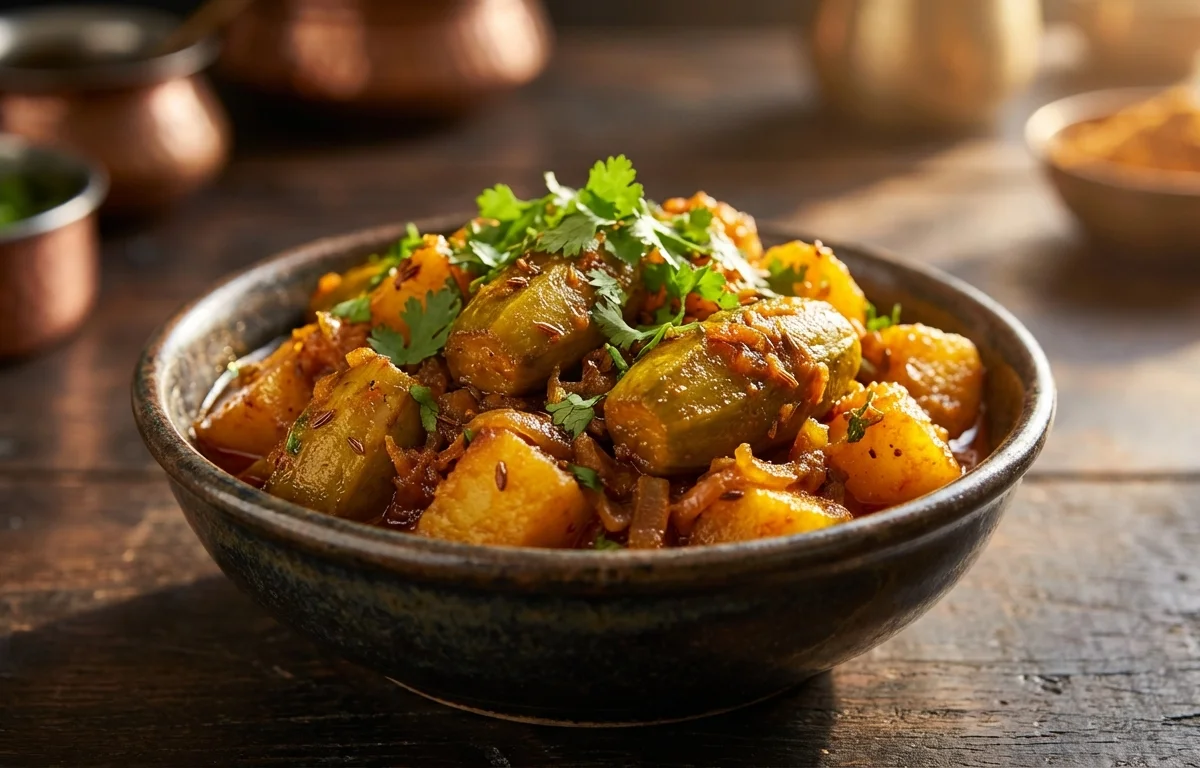
Aloo Parwal
A simple North Indian dry sabzi made with potatoes and pointed gourd, gently spiced and cooked until tender. It is light, homely, and pairs especially well with roti, dal, or plain rice.
For 4 servings
- prep · ~15 min
Prepare the vegetables.
1.Peel the potato and cut it into medium cubes.2.Trim the ends of the parwal, lightly peel it in stripes, and cut it lengthwise.3.Slice the onion, chop the ginger, slit the green chili, and keep the coriander leaves ready. - temper · ~1 min
Heat the oil and crackle the cumin.
Heat oil in a kadai over medium heat. Add cumin seeds and let them sizzle for a few seconds until fragrant.
- saute · ~6 min
Cook the onion, ginger, and green chili.
1.Add the sliced onion and cook until lightly golden, about 4 to 5 minutes.2.Add the chopped ginger and slit green chili.3.Stir for 1 minute until the raw smell fades. - saute · ~3 min
Add the potatoes and parwal.
1.Add the potato and parwal to the pan.2.Mix in turmeric powder, red chili powder, coriander powder, and salt.3.Stir well so the vegetables are evenly coated with the spices.TIPKeep the heat at medium so the spices toast without burning. - simmer · ~15 min
Cover and cook until tender.
Add water, mix once, then cover and cook on low heat for 12 to 15 minutes. Stir once or twice in between so the potatoes do not stick, and cook until both vegetables are tender.
TIPIf the pan looks dry before the vegetables soften, sprinkle in 1 more tablespoon of water. - saute · ~4 min
Finish the sabzi uncovered.
Remove the lid and cook for 3 to 4 minutes, stirring gently, until the moisture dries up and the edges look lightly browned. Sprinkle garam masala and mix well.
- garnish
Garnish with coriander leaves.
- serve
Serve hot with roti or plain rice.
What to keep in mind.
7 tips from the recipe — small details that make a real difference to the final dish.
- 1Cut the potato cubes slightly smaller than the parwal so both finish cooking at the same time.
- 2Lightly peeling parwal in stripes helps it absorb masala while still holding its shape.
- 3Do not rush the onion stage; lightly golden onions give this dry sabzi its base sweetness.
- 4Keep the pan covered on low heat so the vegetables steam gently instead of catching at the bottom.
- 5Stir gently once or twice only, or the potatoes can break and turn the sabzi mushy.
- 6Finish uncovered until the last moisture evaporates; that dry, lightly browned finish is key to good aloo parwal.
- 7This sabzi tastes even better after 20 to 30 minutes of resting, when the spices settle into the vegetables.
Adapt it for your goals.
Jain
Skip onion and ginger, increase cumin slightly, and add a pinch of hing for a simpler Jain-style aloo parwal.
no onionNo-onion
Omit the onion for a lighter everyday sabzi; the cumin, ginger, and coriander powder still keep it flavorful.
mustard oilMustard-oil
Use mustard oil for a sharper North Indian flavor that pairs especially well with roti and dal.
tomato touchTomato-touch
Add a small chopped tomato after the onions if you want a softer, slightly tangy masala coating.
Why this is on our healthy list.
Vegetable-Rich Everyday Sabzi
Pointed gourd and potato make this a simple vegetable-based dish that fits well into a balanced Indian meal.
Digestive Spice Support
Cumin, ginger, and coriander are classic spices used in homestyle cooking for warmth, aroma, and easier digestion.
Moderate Oil Preparation
This dry sabzi uses a small amount of oil and very little water, giving flavor without a heavy gravy.
Frequently asked questions
No. Lightly peeling it in stripes is ideal because it keeps the parwal firm while helping the masala cling better.



.webp)