Anda Sukke
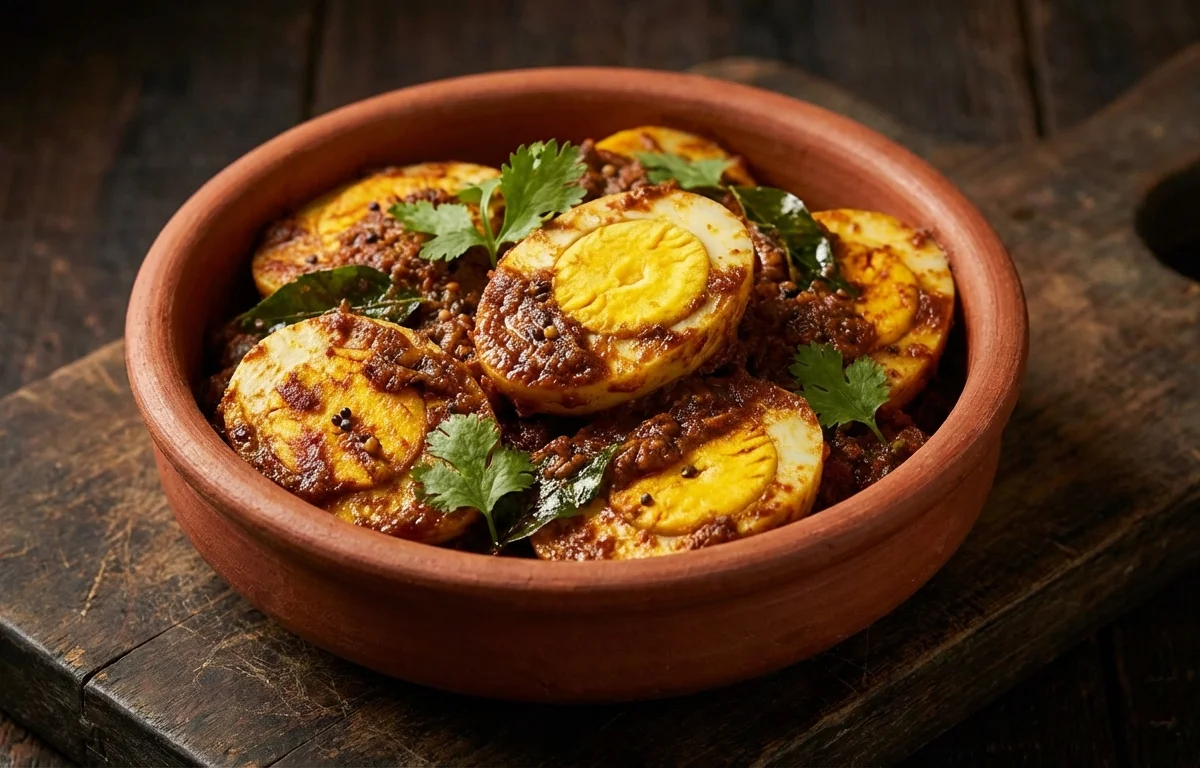
Hard-boiled eggs simmered in a freshly roasted coconut and spice masala until every crevice is coated in dark, aromatic goodness. This Mangalorean coastal classic is bold, slightly tangy from tamarind, and pairs beautifully with neer dosa or steamed rice for a satisfying meal.
For 4 servings
- prep · ~12 min
Boil and peel the eggs.
Place eggs in a saucepan with enough water to cover. Bring to a rolling boil, then reduce heat and simmer for 10 minutes. Drain hot water, transfer eggs to cold water, cool completely, then peel and set aside.
TIPShocking in cold water makes peeling easier and prevents the grey ring around the yolk. - roast · ~7 min
Roast the coconut and spices for the masala.
1.Heat a heavy-bottomed pan on medium-low heat. Add grated coconut and dry roast for 3-4 minutes until light golden and aromatic.2.Add dried red chilies, coriander seeds, cumin seeds, fenugreek seeds, and black peppercorns. Continue roasting 2-3 minutes more until spices are fragrant.3.Transfer to a plate and let cool completely.TIPKeep the heat medium-low and stir continuously — coconut burns quickly and becomes bitter. - mix · ~2 min
Grind the roasted masala into a coarse paste.
1.Add the cooled coconut-spice mixture to a blender jar.2.Add tamarind paste and ¼ cup water.3.Grind to a slightly coarse, thick paste. Do not make it too smooth — Anda Sukke masala must have texture. - prep · ~1 min
Score the boiled eggs.
Make 3-4 shallow vertical slits on each boiled egg using a sharp knife. This helps the masala penetrate. Set aside.
TIPDon't cut too deep or the eggs will break apart while cooking. - saute · ~11 min
Sauté the onions and garlic.
1.Heat coconut oil in the same pan over medium heat.2.Add finely chopped onions and sauté until deep golden brown, about 8-10 minutes.3.Add minced garlic and sauté 1 minute until raw smell disappears.4.Add turmeric powder and mix well.TIPDeep browning of the onions is key — it builds the sweet, rich backbone of the sukke. - simmer · ~7 min
Cook the ground masala with the onions.
1.Add the ground coconut-spice paste to the pan. Stir well to combine with onions.2.Add salt and mix. Add 2-3 tablespoons water if the masala is too thick.3.Simmer on low heat for 5-7 minutes, stirring occasionally, until the raw smell fades and oil begins to separate at the edges.TIPCook the masala patiently — raw masala paste tastes flat. The oil separating is your cue that it's ready. - simmer · ~5 min
Add the eggs and coat with masala.
1.Gently place the scored boiled eggs into the pan.2.Carefully roll them in the masala so each egg is well coated.3.Cover and simmer on very low heat for 5 minutes, letting the flavors meld into the eggs.TIPHandle the eggs gently with a spoon — they are delicate and can crumble. - serve
Serve the Anda Sukke warm.
Halve the masala-coated eggs lengthwise if desired, or serve whole. Spoon any remaining masala from the pan over the top. Best paired with neer dosa, plain steamed rice, or chapati.
TIPA squeeze of fresh lemon just before eating brightens up all the roasted flavors.
What to keep in mind.
7 tips from the recipe — small details that make a real difference to the final dish.
- 1Roast the grated coconut on medium-low heat, stirring constantly to avoid burning and bitterness.
- 2Scoring the boiled eggs with shallow slits helps the masala seep inside without breaking the eggs.
- 3Wait for the oil to separate from the masala before adding eggs — this ensures the raw taste is fully cooked out.
- 4Use a heavy-bottomed pan for even heat distribution while roasting the coconut and spices.
- 5Cool the roasted coconut-spice mixture completely before grinding to prevent a gummy paste.
- 6Brown the onions deeply (8-10 minutes) to build the sweet, rich base of the sukke.
- 7Gently roll the eggs in the masala with a spoon to coat them evenly without crumbling.
Adapt it for your goals.
Vegan
Replace the hard-boiled eggs with firm tofu or boiled potatoes (cut into chunks) and skip the eggs entirely. The rich coconut-spice masala works beautifully with these alternatives for a plant-based Mangalorean-style sukke.
low oilLow-oil
Use a non-stick pan and reduce the coconut oil to 1 teaspoon. The masala is cooked slowly with a splash of water instead of relying on oil, making this lighter while keeping the roasted flavours intact.
extra spicyExtra-spicy
Add 2-3 extra dried red chilies (like guntur or bird's eye) while roasting the spices. This is for heat lovers who want a fiery kick to the coastal classic.
protein boostProtein-boost
Add ½ cup of cooked, shredded chicken or prawns along with the eggs for a mixed-seafood or meat version. The masala complements both, making it a more substantial meal.
Why this is on our healthy list.
Rich in High-Quality Protein
Eggs provide complete protein with all essential amino acids, supporting muscle repair and satiety.
Source of Healthy Fats
Fresh coconut and coconut oil offer medium-chain triglycerides (MCTs) that may support energy metabolism.
Antioxidant-Rich Spices
Coriander, cumin, fenugreek, and black peppercorns contain antioxidants that help combat oxidative stress.
Digestive Aid
Fenugreek seeds and tamarind are traditionally used to support digestion and may help soothe the stomach.
Frequently asked questions
Yes, but rehydrate ⅔ cup dried unsweetened coconut with ¼ cup warm water for 10 minutes before roasting. Fresh coconut gives a more authentic, moist texture.