
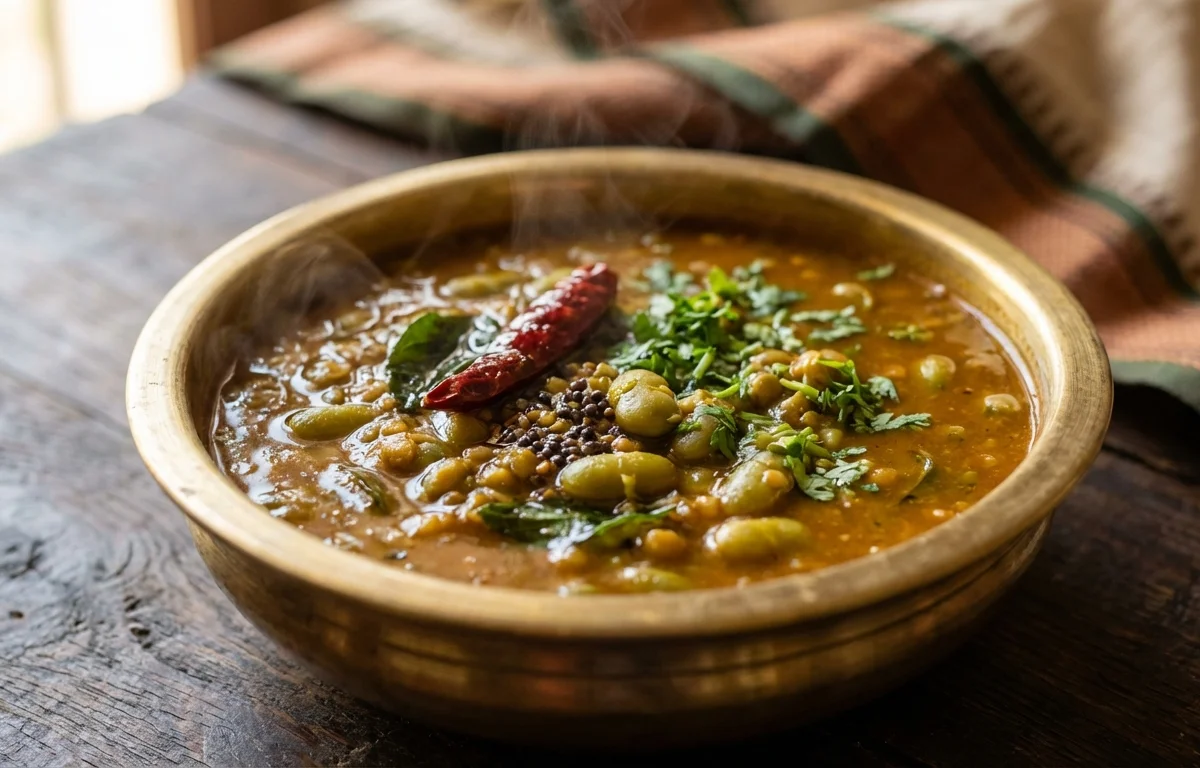
Avarekalu Saaru
A light, aromatic Karnataka-style rasam made with tender field beans. The gentle spice from fresh coconut and roasted spices creates a comforting broth perfect for rice. A winter specialty when avarekalu is in season.
For 4 servings
- pressure cook · ~10 min
Pressure cook the avarekalu.
Add shelled avarekalu, a pinch of turmeric powder, and 1 cup water to the pressure cooker. Cook on medium heat for 2 whistles. Let the pressure release naturally.
TIPDo not overcook. The beans should hold their shape and remain tender. - saute · ~2 min
Roast the spices for the masala paste.
Heat a teaspoon of ghee in a small pan over low heat. Add coriander seeds, cumin seeds, black peppercorns, and dried red chilies. Roast until fragrant and the spices turn a shade darker, about 2 minutes.
TIPKeep the heat low — spices burn quickly and turn bitter. - prep · ~2 min
Grind the coconut-spice paste.
Transfer the roasted spices to a mixer grinder. Add fresh grated coconut and a few tablespoons of water. Grind to a smooth, fine paste.
- simmer · ~7 min
Combine and simmer the saaru.
Open the pressure cooker and add the ground paste, chopped tomato, salt, jaggery, tamarind paste, and remaining 1 cup of water. Stir well and bring to a gentle simmer for 5-7 minutes until the raw smell of the paste disappears.
TIPDo not let it boil vigorously — a gentle simmer keeps the broth clear and aromatic. - temper · ~1 min
Make the tempering.
1.Heat the remaining teaspoon of ghee in a small pan over medium heat.2.Add mustard seeds and let them splutter (30 seconds).3.Add asafoetida and curry leaves. Fry until the leaves turn crisp (10 seconds).TIPPour the tempering immediately over the hot saaru to capture the full aroma. - simmer · ~1 min
Combine tempering and finish.
Pour the sizzling tempering over the saaru. Stir gently and let it blend on low heat for one minute. Turn off the heat and garnish with fresh coriander leaves.
What to keep in mind.
5 tips from the recipe — small details that make a real difference to the final dish.
- 1Use fresh, tender avarekalu (hyacinth beans) for the best texture and sweetness — older beans become starchy and mealy.
- 2Roast the spices on low heat until just fragrant; burnt spices will ruin the delicate aroma of the saaru.
- 3Grind the coconut-spice paste very smooth for a velvety broth; add water sparingly while grinding to avoid thinning it too much.
- 4Simmer the saaru gently, not vigorously, to keep the broth clear and prevent the coconut paste from curdling.
- 5Pour the sizzling tempering immediately over the saaru so the curry leaves and mustard seeds release their full aroma into the dish.
Adapt it for your goals.
Low-oil
Skip the tempering ghee and dry-roast mustard seeds, then add asafoetida and curry leaves directly to the simmering saaru. Reduces fat while keeping the aromatic punch.
high proteinHigh-protein
Add a handful of cooked toor dal (pigeon peas) along with the ground paste for a thicker, more substantial saaru with extra plant protein.
veganVegan
Replace ghee with coconut oil in both the spice roasting and tempering for a fully plant-based version that still tastes authentic.
Why this is on our healthy list.
Rich in Plant Protein
Avarekalu (hyacinth beans) provide a good source of plant-based protein, making this saaru a satisfying and nourishing dish.
Digestive Aid
Cumin, asafoetida, and black pepper in the recipe support digestion and help reduce bloating, especially when eaten with rice.
Low in Saturated Fat
With minimal ghee and a base of beans and vegetables, this saaru is low in saturated fat compared to cream-based soups or curries.
Antioxidant Spices
Turmeric, coriander seeds, and curry leaves are rich in antioxidants that help fight inflammation and support overall health.
Source of Dietary Fiber
Avarekalu and coconut contribute both soluble and insoluble fiber, promoting healthy digestion and stable blood sugar levels.
Frequently asked questions
Yes, soak dried avarekalu in water for at least 8 hours, then pressure cook for 3-4 whistles until tender before proceeding with the recipe.


