
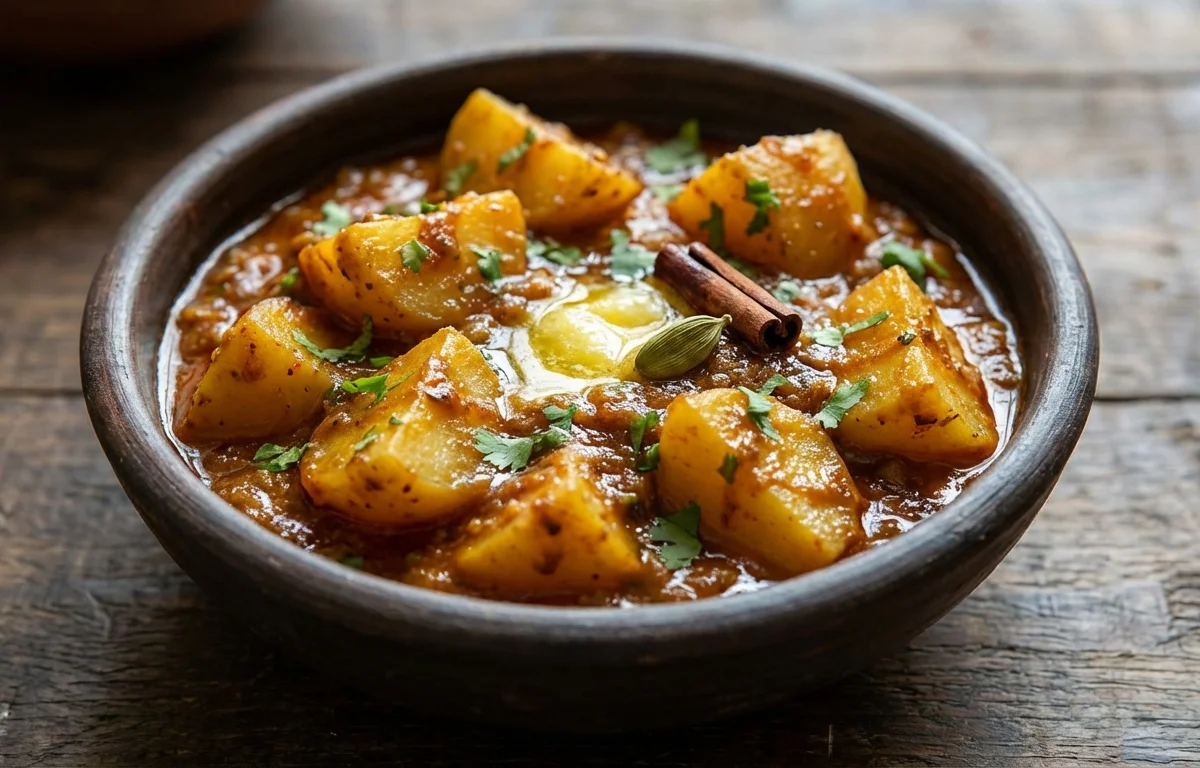
Bengali Aloo Kassa
Aloo kassa is a homestyle Bengali potato curry with a dark, clingy masala and gentle heat from mustard oil, ginger, and whole spices. It is simple, comforting, and especially good with luchi, porota, or plain rice.
For 4 servings
- prep · ~10 min
Prep the potatoes and aromatics.
1.Peel the potatoes and cut medium ones in half.2.Chop the onion and tomato finely.3.Grate the ginger and slit the green chilies. - fry · ~8 min
Brown the potatoes lightly.
Heat the mustard oil in a kadai until it just begins to smoke, then lower the heat. Add the potatoes and fry until light golden on a few sides, about 6 to 8 minutes. Remove and keep aside.
TIPSmoking the mustard oil briefly softens its raw sharpness without losing its Bengali character. - temper · ~1 min
Bloom the whole spices.
In the same oil, add bay leaf, cumin seeds, cinnamon, cardamom, and cloves. Let them sizzle for 20 to 30 seconds until fragrant.
- saute · ~7 min
Cook the onion, ginger, and chilies.
1.Add the chopped onion and cook until soft and light brown, 5 to 6 minutes.2.Add the grated ginger and slit green chilies.3.Cook for 1 minute until the raw smell fades. - saute · ~7 min
Cook the masala.
1.Add the chopped tomato and cook until soft, 3 to 4 minutes.2.Add turmeric powder, red chili powder, coriander powder, cumin powder, salt, and sugar.3.Cook the masala on low heat until it looks thick and glossy, 2 to 3 minutes.TIPIf the masala sticks too fast, splash in 1 or 2 tablespoons of water and keep cooking until the oil begins to separate. - simmer · ~5 min
Kassa the potatoes in the masala.
Return the fried potatoes to the pan and mix well so every piece is coated in the dark masala. Cook on low heat for 4 to 5 minutes, stirring often, so the spices cling to the potatoes.
- simmer · ~10 min
Add water and finish the curry.
Pour in the hot water and mix well. Cover and simmer for 8 to 10 minutes until the potatoes are tender and the gravy turns thick and clingy. Sprinkle in garam masala for the last minute.
- garnish
Garnish with coriander leaves.
- serve
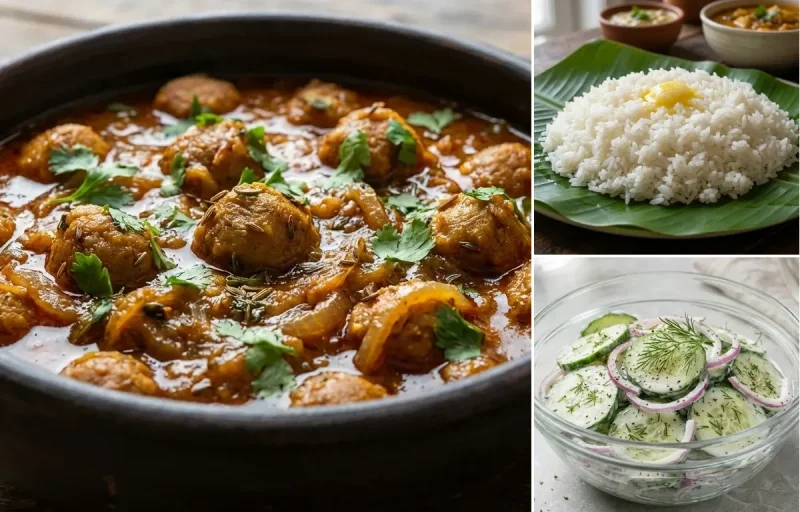
Serve hot with luchi, porota, or rice.
What to keep in mind.
7 tips from the recipe — small details that make a real difference to the final dish.
- 1Let the mustard oil reach a light smoking point first, then lower the heat so its sharp raw bite mellows properly.
- 2Fry the potato halves until lightly golden on a few sides only; they should not cook through before the kassa stage.
- 3Chop the onion and tomato quite fine so they break down into the dark, clingy masala this curry is known for.
- 4Cook the masala until it looks glossy and the oil starts separating; that is the cue the kassa base is ready.
- 5Use hot water, not cold, when finishing the curry so the potatoes keep simmering evenly and the gravy stays thick.
- 6Stir often during the kassa stage so the spice paste coats every potato without catching on the bottom of the kadai.
- 7This curry tastes even better after 30 minutes of rest, when the potatoes absorb the mustard oil and whole-spice flavour.
Adapt it for your goals.
No-onion-no-garlic
Skip the onion entirely and increase ginger slightly for a simpler niramish-style version that still tastes distinctly Bengali.
spicierSpicier
Add an extra green chili or a little more red chili powder if you want a sharper heat that stands up well to luchi or paratha.
tomato lightTomato-light
Reduce the tomato for a drier, more old-school aloo kassa with a darker spice coating and less tang in the gravy.
low oilLow-oil
Use less mustard oil and shallow-brown the potatoes more gently; the curry will be lighter, though slightly less rich and glossy.
Why this is on our healthy list.
Comforting Plant-Based Dish
Made mainly from potatoes, spices, and mustard oil, this is a satisfying vegan curry suitable for plant-based meals.
Digestive Spice Support
Ginger, cumin, coriander, and whole spices add aroma while traditionally helping make a starchy potato curry feel lighter.
Herb and Tomato Freshness
Tomato, green chili, and coriander leaves bring freshness and useful plant compounds that balance the richness of the masala.
Frequently asked questions
Heating mustard oil until it just begins to smoke softens its raw pungency and gives the curry a rounded Bengali flavour without losing character.

-curry.webp)
.webp)