
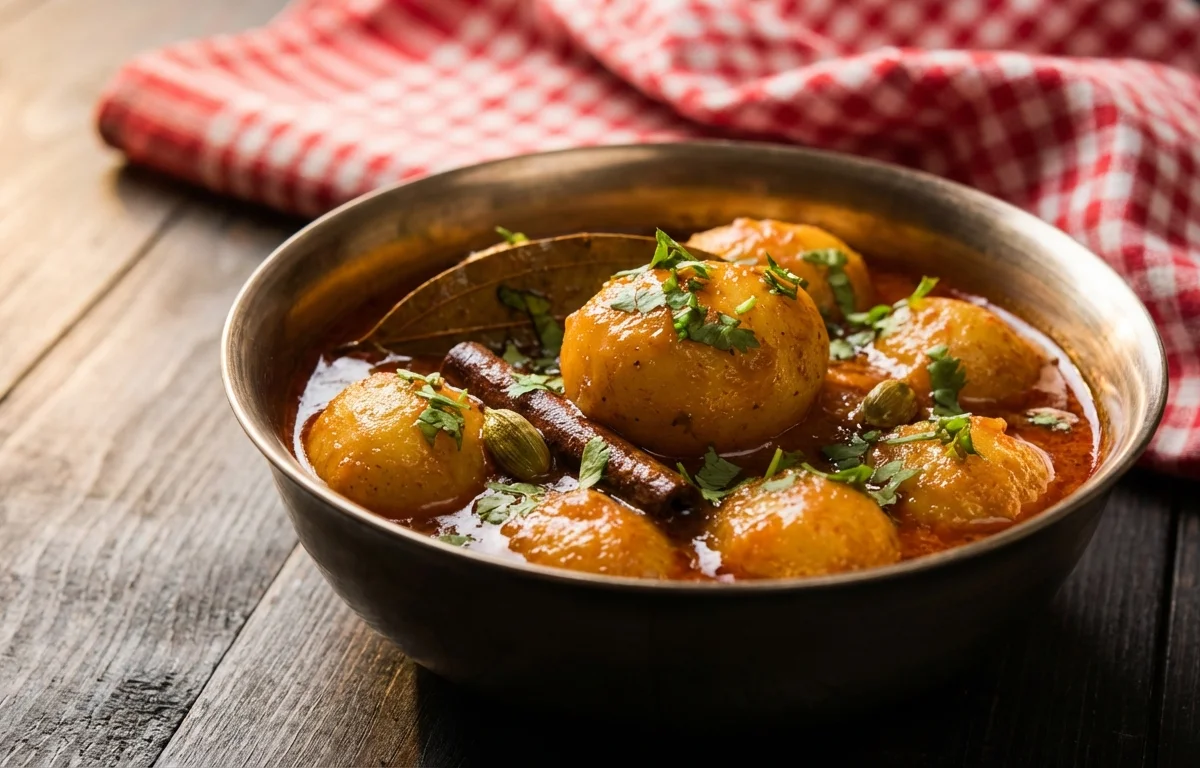
Bengali Alur Dom
A classic Bengali potato curry featuring baby potatoes simmered in a fragrant, slightly sweet and spicy tomato-ginger gravy. This beloved comfort food pairs perfectly with fluffy luchis or parathas for a truly authentic meal.
For 4 servings
- ~10 min
Prepare Potatoes and Pastes
1.If not already done, boil the baby potatoes until fork-tender, then peel the skins. Prick each potato multiple times with a fork; this is crucial for flavor absorption.2.In a blender, combine the roughly chopped onion, ginger, and green chilies. Blend into a smooth paste. You can add a splash of water if needed to help it blend.3.Puree the tomatoes in the same blender and set aside. - ~8 min
Sauté the Potatoes
1.Heat the mustard oil in a kadai or heavy-bottomed pan over medium-high heat until it is very hot and slightly smoking. This removes its raw pungency.2.Reduce the heat to medium, then carefully add the pricked baby potatoes. Sauté for 6-8 minutes, stirring occasionally, until they are evenly light golden brown and have a slightly crisp exterior.3.Using a slotted spoon, remove the potatoes from the pan and set them aside. - ~7 min
Temper Spices and Sauté Aromatics
1.In the same oil over medium-low heat, add the bay leaf, dried red chilies, cinnamon stick, crushed green cardamoms, and cloves. Sauté for about 30-45 seconds until they become fragrant.2.Add the onion-ginger-chili paste to the pan. Cook for 5-6 minutes, stirring frequently, until the raw smell is gone and the paste begins to turn golden brown at the edges. - ~7 min
Cook the Masala
1.Add the tomato puree to the pan. Cook for 4-5 minutes, stirring, until the mixture thickens.2.Add the powdered spices: turmeric, Kashmiri red chili powder, cumin powder, and coriander powder. Mix well and cook for another 2 minutes, stirring constantly, until the oil begins to separate from the masala. - ~4 min
Build the Gravy
1.Reduce the heat to the lowest setting. Add the whisked curd (yogurt) and stir continuously and vigorously for 1 minute to prevent it from splitting.2.Once the curd is incorporated, add the sautéed potatoes back into the pan. Gently stir to coat them thoroughly with the masala.3.Pour in 1.5 cups of warm water. Using warm water helps maintain the temperature and prevents the curd from splitting. Add salt and sugar, and stir well. - ~12 min
Simmer and Finish
1.Increase the heat to bring the curry to a gentle boil. Then, reduce the heat to low, cover the pan, and let it simmer for 10-12 minutes. This allows the potatoes to absorb the gravy's flavors and the gravy to thicken.2.Turn off the heat. Sprinkle the garam masala powder and drizzle the ghee over the top. Give it a final gentle stir.3.Garnish with freshly chopped coriander leaves. Let the Alur Dom rest for at least 5 minutes before serving to allow the flavors to meld.
What to keep in mind.
5 tips from the recipe — small details that make a real difference to the final dish.
- 1Using mustard oil is non-negotiable for the authentic sharp, pungent flavor of Bengali cuisine. Always heat it until it just begins to smoke.
- 2Pricking the boiled potatoes is a critical step. It creates channels for the spicy, tangy gravy to penetrate deep inside, making every bite flavorful.
- 3The small amount of sugar is characteristic of Bengali cooking. It doesn't make the dish sweet but balances the tang from the tomatoes and yogurt.
- 4To prevent curd from splitting, always whisk it well until smooth, add it on the lowest heat, and stir continuously for a minute after adding.
- 5For a richer, restaurant-style gravy, you can add a paste of 8-10 soaked cashews or 1 tablespoon of poppy seeds (posto) along with the tomato puree.
Adapt it for your goals.
Niramish (No Onion/Garlic)
For a sattvic or vegetarian version without onion, omit the onion paste. Add a pinch of asafoetida (hing) to the hot oil during tempering and slightly increase the amount of ginger.
With Green PeasWith Green Peas
Add 1/2 cup of fresh or frozen green peas (matar) to the gravy along with the potatoes for added texture and sweetness. This version is called 'Motor diye Alur Dom'.
Creamier GravyCreamier Gravy
For a creamier texture, add 1-2 tablespoons of fresh cream (malai) at the end of cooking, just before adding the garam masala.
Why this is on our healthy list.
Energy Boosting
Potatoes are a great source of complex carbohydrates, which provide sustained energy to the body, making this a fulfilling and hearty meal.
Rich in Antioxidants
The array of spices used, such as turmeric (curcumin), ginger, and cloves, are packed with antioxidants that help combat oxidative stress in the body.
Aids Digestion
Ginger and cumin are well-known for their digestive properties. They can help stimulate digestive enzymes and soothe the gastrointestinal tract.
Gut Health Support
The use of curd (yogurt) introduces probiotics, which are beneficial bacteria that support a healthy gut microbiome and improve digestion.
Frequently asked questions
A typical serving of Bengali Alur Dom (about 1 cup or 220g) contains approximately 250-300 calories, primarily from the potatoes (carbohydrates) and oil (fats).



-curry.webp)
.webp)