
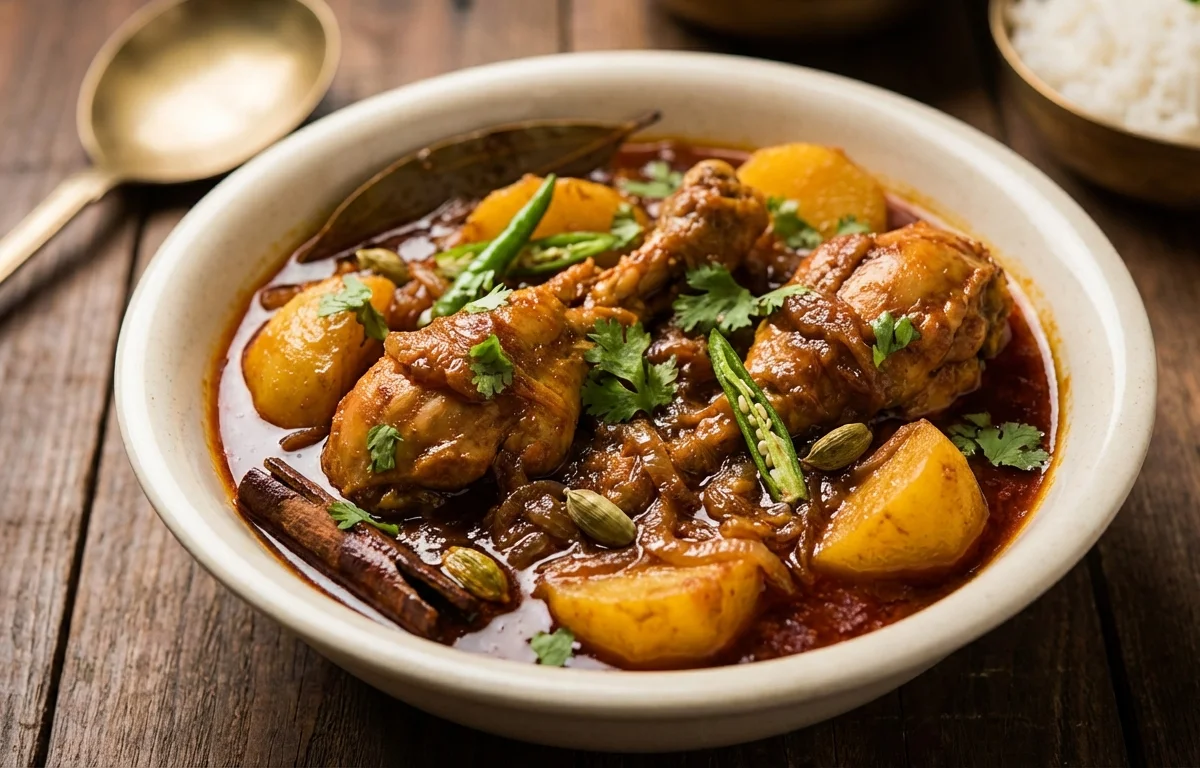
Chicken Kasa
A bold, slow-cooked Bengali chicken curry with deep caramelized onion richness and warm garam masala. The meat is simmered on low heat with minimal water, letting the spices cling to every piece in a thick, dark gravy. Perfect with steamed rice or luchi for a Sunday lunch.
For 4 servings
- prep · ~20 min
Marinate the chicken.
1.In a large bowl, combine chicken pieces with yogurt, turmeric powder, red chili powder, and half the salt.2.Mix well so every piece is coated.3.Cover and set aside for 20 minutes while you prep the onions. - saute · ~15 min
Caramelize the onions.
1.Heat mustard oil in a kadai over medium flame until it reaches smoking point, then reduce heat to low.2.Add bay leaves, crushed cardamom, cinnamon stick, and cloves. Sauté for 30 seconds until fragrant.3.Add sliced onions and cook, stirring frequently, until deep golden brown (12-15 minutes).4.Sprinkle sugar halfway through — it helps the onions caramelize faster and deeper.TIPDon't rush the onions. The deep brown color is what gives Kasa its signature dark gravy. - saute · ~10 min
Build the spice base.
1.Add ginger paste and garlic paste to the browned onions. Sauté for 2 minutes until the raw smell disappears.2.Add chopped tomatoes, cumin powder, coriander powder, and the remaining salt.3.Cook on medium heat until tomatoes break down completely and oil separates from the masala (6-8 minutes).4.Add a splash of water if the masala sticks to the pan.TIPOil separating from the masala is your visual cue that the raw spices are properly cooked. - saute · ~7 min
Sear the marinated chicken.
1.Add the marinated chicken pieces (along with all the marinade) to the masala.2.Increase heat to high and sauté vigorously for 5-7 minutes, turning pieces so they brown on all sides.3.The chicken will release some moisture — keep cooking until it evaporates and the masala clings thickly to the meat.TIPBrowning the chicken at high heat locks in juices and builds a deeper flavor base. - simmer · ~30 min
Slow-cook the kasa.
1.Pour in hot water and add the slit green chilies.2.Stir once, then cover with a tight-fitting lid.3.Reduce heat to the lowest setting and simmer for 25-30 minutes.4.Check at 15 minutes and give a gentle stir. Add a tablespoon of water only if the gravy is too dry.TIPKasa means 'dry-coated' — the final gravy should be thick, clinging to the chicken, not swimming in liquid. - garnish · ~5 min
Finish and serve.
1.Open the lid and sprinkle garam masala over the top.2.Cook uncovered for 2 more minutes to tighten the gravy.3.Turn off the heat and scatter chopped coriander leaves on top.4.Rest for 5 minutes before serving. - serve
Serve hot with steamed rice or luchi.
Spoon the Chicken Kasa into a serving bowl. Serve alongside steamed rice or freshly fried luchi (Bengali puri), with sliced onion and a wedge of lemon on the side.
What to keep in mind.
6 tips from the recipe — small details that make a real difference to the final dish.
- 1Use bone-in chicken for maximum flavor; the marrow enriches the gravy.
- 2Slice onions uniformly so they caramelize evenly without burning.
- 3Let oil smoke and then cool slightly before frying spices to avoid bitterness.
- 4Do not skip resting cooked kasa for 5 minutes—flavors meld and gravy thickens.
- 5For a deeper color, cook onions until they are dark mahogany, not just golden.
- 6Use thick, hung yogurt; watery yogurt will make the gravy runny.
Adapt it for your goals.
Mutton kosha-style
Replace chicken with bone-in mutton or goat meat and increase cooking time by 40 minutes for a richer, gamier kasa. Bengali households often prefer this for festive meals.
low oilLow-oil
Reduce mustard oil to 1 tablespoon and use a non-stick pan. The yogurt and caramelized onions still provide enough body and flavor for a lighter version.
vegetable kasaVegetable kasa
Substitute chicken with 500g of paneer or mixed vegetables (potatoes, cauliflower). Skip marination; add paneer in step 4 to avoid breaking. Great for a vegetarian Sunday lunch.
extra spicyExtra-spicy
Double the red chili powder and add 2 more slit green chilies for a fiery version. This variation suits those who love intense heat alongside the caramelized sweetness.
Why this is on our healthy list.
High-Quality Protein
Bone-in chicken provides lean protein that supports muscle maintenance and satiety, making this curry a balanced main dish.
Anti-Inflammatory Spices
Turmeric, ginger, and cumin have natural anti-inflammatory properties, contributing to overall wellness when eaten regularly.
Probiotic Boost from Yogurt
Fermented yogurt adds beneficial bacteria that support gut health and digestion, especially when marinated briefly.
Rich in Antioxidants
Coriander, onions, and green chilies provide antioxidants that help combat oxidative stress and promote immune function.
Frequently asked questions
Yes, but bone-in imparts more flavor and keeps the meat moist during the long simmer. If using boneless, reduce cooking time by 10 minutes to avoid dryness.



-curry.webp)
.webp)