Chingudi Mahura
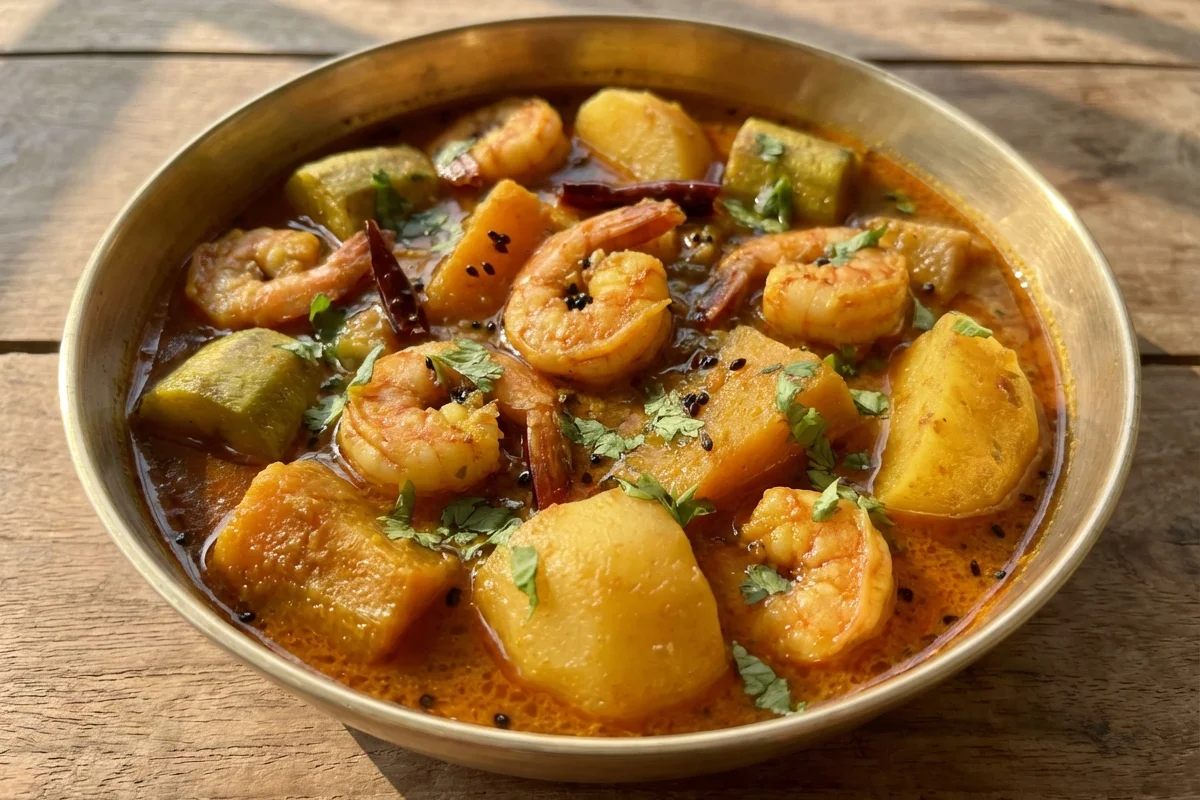
A fragrant and comforting prawn curry from the coastal kitchens of Odisha, where succulent prawns simmer in a spiced coconut-milk gravy. The gentle heat of black pepper and green chilies meets the rich sweetness of coconut, creating a dish that pairs beautifully with steaming hot rice.
For 4 servings
- prep · ~10 min
Marinate the prawns.
In a bowl, toss the cleaned prawns with a pinch of turmeric and a pinch of salt. Set aside for 10 minutes while you prepare the other ingredients.
TIPDon't over-marinate — the salt will draw out moisture and make the prawns rubbery. - boil · ~5 min
Parboil the potatoes.
Bring a small pot of water to a boil. Add the cubed potatoes and cook for 5 minutes until just tender but not falling apart. Drain and set aside.
- temper · ~2 min
Temper the whole spices in mustard oil.
1.Heat mustard oil in a deep pan or kadai over medium heat until it reaches its smoking point.2.Reduce heat to low, add bay leaves, cinnamon stick, green cardamom, and cloves.3.Sauté for 30 seconds until the spices release their aroma.TIPLet the mustard oil smoke fully before reducing heat — this removes its raw pungency. - saute · ~10 min
Sauté the onions and aromatics.
1.Add the sliced onions to the pan and cook until soft and translucent.2.Stir in the ginger-garlic paste and slit green chilies. Sauté for 2 minutes until the raw smell disappears.3.Add the chopped tomatoes and a pinch of red chili powder. Cook until the tomatoes break down and oil starts to separate from the mixture.TIPA pinch of salt at this stage helps the onions release moisture and cook faster. - saute · ~1 min
Bloom the ground spices.
Sprinkle in cumin powder and black pepper powder. Stir continuously for 1 minute to bloom the spices without burning them.
TIPKeep the heat low — ground spices burn quickly and turn bitter. - simmer · ~7 min
Build the coconut gravy.
1.Pour the thick coconut milk into the pan along with 0.5 cup of water. Stir to combine.2.Add the sugar and remaining pinch of salt. Bring to a gentle simmer.3.Add the parboiled potatoes and cook for 5 minutes, letting the gravy thicken slightly.TIPUse thick coconut milk (first extract) for the richest flavor — thin milk can split when simmered. - simmer · ~4 min
Cook the prawns in the gravy.
1.Gently slide the marinated prawns into the simmering gravy.2.Cook for 3-4 minutes just until the prawns turn pink and curl up. Do not overcook.3.Sprinkle garam masala over the top and give a gentle stir.TIPPrawns cook very fast — they're done the moment they turn opaque and pink. Overcooking makes them tough. - garnish · ~5 min
Finish with fresh coriander and rest.
Turn off the heat, garnish generously with chopped coriander leaves, and let the curry rest for 5 minutes before serving. This allows the flavors to meld.
What to keep in mind.
6 tips from the recipe — small details that make a real difference to the final dish.
- 1Let the mustard oil reach its smoking point before adding spices — this tames its pungent edge.
- 2Parboil potatoes only until just tender; they will finish cooking in the gravy and won't turn mushy.
- 3Slide the marinated prawns gently into the simmering gravy and cook just until pink — about 3-4 minutes.
- 4Use thick first-extract coconut milk for the richest body and sweetness; thin milk can curdle.
- 5Let the curry rest for 5 minutes after cooking so the flavors meld and the prawns finish carrying heat.
- 6For a deeper flavor, bloom the cumin and black pepper on low heat for just 60 seconds to avoid bitterness.
Adapt it for your goals.
Vegetarian
Replace prawns with paneer cubes (added with potatoes) or mixed vegetables like cauliflower and beans for a hearty, protein-rich curry without seafood.
low oilLow-oil
Reduce mustard oil to 1 tablespoon and use a non-stick pan to cut calories while keeping the essential tempering flavor.
coconut lightCoconut-light
Swap half the thick coconut milk for unsweetened almond or oat milk for a lighter gravy with a subtle nutty note, perfect for everyday meals.
extra spicyExtra-spicy
Double the green chilies and add a finely chopped dried red chili to the tempering for a fiery version that still retains the coconut sweetness.
jainJain
Omit onion and garlic; use a pinch of asafoetida (hing) in the tempering and replace ginger-garlic paste with ginger-green chili paste for a Jain-friendly version.
Why this is on our healthy list.
Rich in Lean Protein
Prawns provide high-quality, low-fat protein that supports muscle repair and satiety without heavy calories.
Good Source of Iodine
Prawns are naturally rich in iodine, essential for healthy thyroid function and metabolism.
Antioxidant Spices
Turmeric, cumin, and black pepper offer anti-inflammatory and antioxidant properties that support immune health.
Healthy Fats from Coconut
Coconut milk provides medium-chain triglycerides (MCTs), which are easily metabolized for quick energy.
Frequently asked questions
Yes, but thaw them completely in the refrigerator, pat dry, and marinate as directed. Adding them frozen will water down the gravy.