
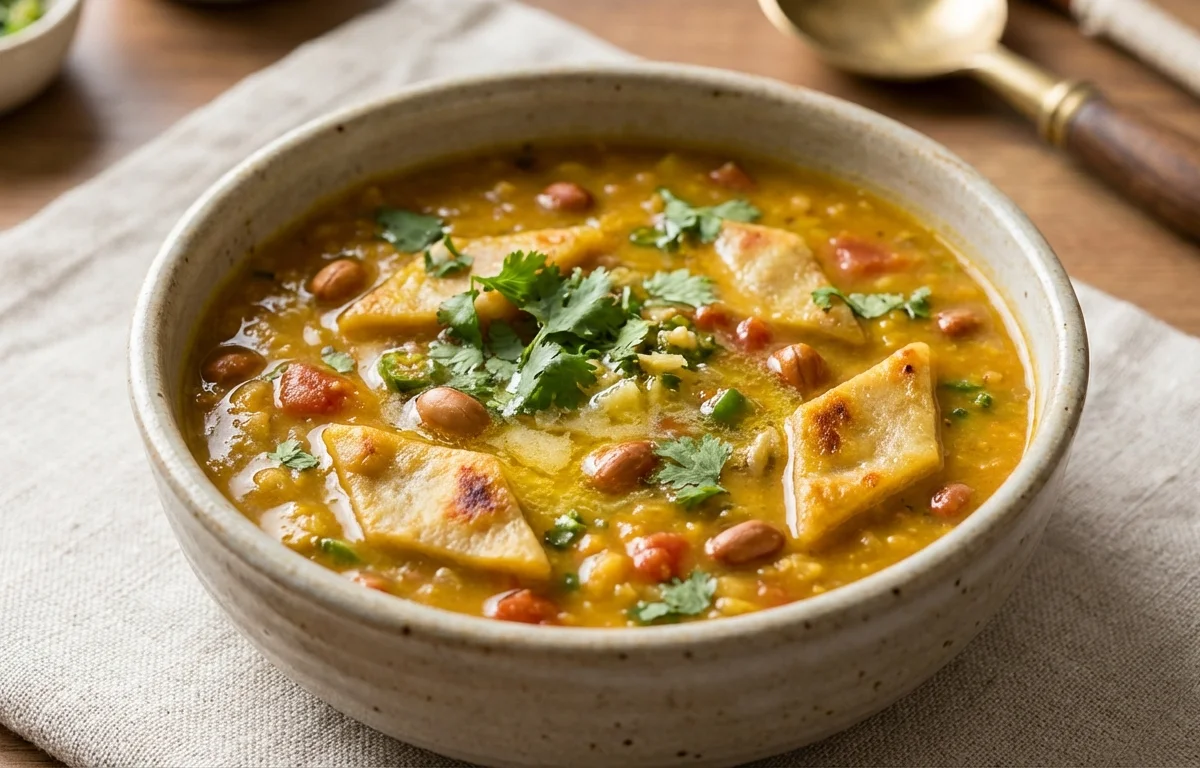
Dal Dhokli
A comforting one-pot Gujarati classic where soft strips of spiced wheat dough simmer right in tangy toor dal. It eats like a light meal, with cozy flavors from peanuts, lemon, and a simple tempering.
For 4 servings
- pressure cook · ~25 min
Cook the dal until soft.
1.Drain the soaked toor dal and add it to a pressure cooker with 4 cups water, peanuts, 1 pinch turmeric powder, and 0.25 tsp salt.2.Pressure cook on medium heat for 4 to 5 whistles until the dal is very soft.3.Let the pressure drop naturally, then mash the dal lightly.TIPSoft dal gives Dal Dhokli its silky texture, so cook it until it mashes easily. - knead · ~15 min
Knead the dhokli dough.
1.Mix whole wheat flour, gram flour, carom seeds, 1 pinch turmeric powder, 1 pinch red chili powder, 0.25 tsp salt, and 1 tsp oil in a bowl.2.Add 0.5 cup water little by little and knead to a firm, smooth dough.3.Cover and rest the dough for 10 minutes.TIPKeep the dough slightly firm so the dhokli pieces hold their shape while simmering. - temper · ~3 min
Make the tempering for the dal.
1.Heat ghee in a large pot over medium heat.2.Add mustard seeds and cumin seeds; let them crackle for 20 to 30 seconds.3.Add asafoetida, curry leaves, green chili, and ginger; cook for 30 seconds.4.Add red chili powder and coriander powder, then stir quickly.TIPLower the heat before adding chili powder so it blooms without burning. - simmer · ~10 min
Build and simmer the dal.
Add the cooked dal to the pot along with 2 cups water and jaggery. Mix well and bring to a gentle simmer for 8 to 10 minutes so the flavors come together.
- prep · ~7 min
Roll and cut the dhokli.
1.Divide the rested dough into 2 portions.2.Roll each portion into a thin round using a little dry flour if needed.3.Cut into small diamonds or squares. - boil · ~15 min
Cook the dhokli in the simmering dal.
1.Bring the dal to a steady simmer.2.Drop in the cut dough pieces a few at a time, stirring gently so they do not stick together.3.Cook uncovered for 12 to 15 minutes until the dhokli turns tender and rises slightly.4.Stir now and then to keep the pot from catching at the bottom.TIPDo not add all the dough pieces in one pile, or they may clump together. - garnish · ~2 min
Finish with lemon juice and cilantro.
Turn off the heat and stir in lemon juice. Sprinkle cilantro on top and let the Dal Dhokli sit for 2 minutes before serving.
- serve
Serve the Dal Dhokli hot.
What to keep in mind.
6 tips from the recipe — small details that make a real difference to the final dish.
- 1Roll the dhokli thin and even; thick pieces stay doughy in the center.
- 2Keep the dal slightly looser than soup at first, because the dhokli thickens it as it cooks.
- 3Drop the dough pieces in batches while stirring gently so they do not clump together.
- 4Cook the dhokli uncovered; this helps the floury taste cook off and keeps the texture light.
- 5Add lemon juice only after turning off the heat so the dal stays bright and not bitter.
- 6If reheating leftovers, add a splash of hot water since Dal Dhokli thickens a lot as it sits.
Adapt it for your goals.
Vegan
Replace ghee with peanut oil or neutral oil for a fully plant-based version that still suits the Gujarati flavor profile.
jainJain
Skip ginger and asafoetida if needed, and rely on curry leaves, cumin, lemon, and jaggery for aroma and balance.
spicierSpicier
Increase green chili and red chili powder slightly for a hotter bowl that still keeps the classic sweet-tangy dal balance.
no peanutNo-peanut
Omit the peanuts for an allergy-friendly version; the dish will still be hearty from dal and wheat dhokli.
Why this is on our healthy list.
Good Plant Protein Base
Toor dal, gram flour, and whole wheat flour together make this one-pot meal more filling and protein-rich.
Fiber From Dal and Wheat
Split pigeon peas and whole wheat flour add fiber that supports satiety and makes the dish feel substantial.
Steady Energy Meal
The combination of lentils and wheat dough provides lasting energy, making Dal Dhokli a satisfying light meal.
Digestive Spice Support
Ajwain, ginger, cumin, and asafoetida are traditional spices often used to make lentil-based dishes feel easier to digest.
Frequently asked questions
Usually the pieces were added all at once or the dal was not simmering steadily. Drop them in gradually and stir gently between additions.



.webp)
.webp)
.webp)