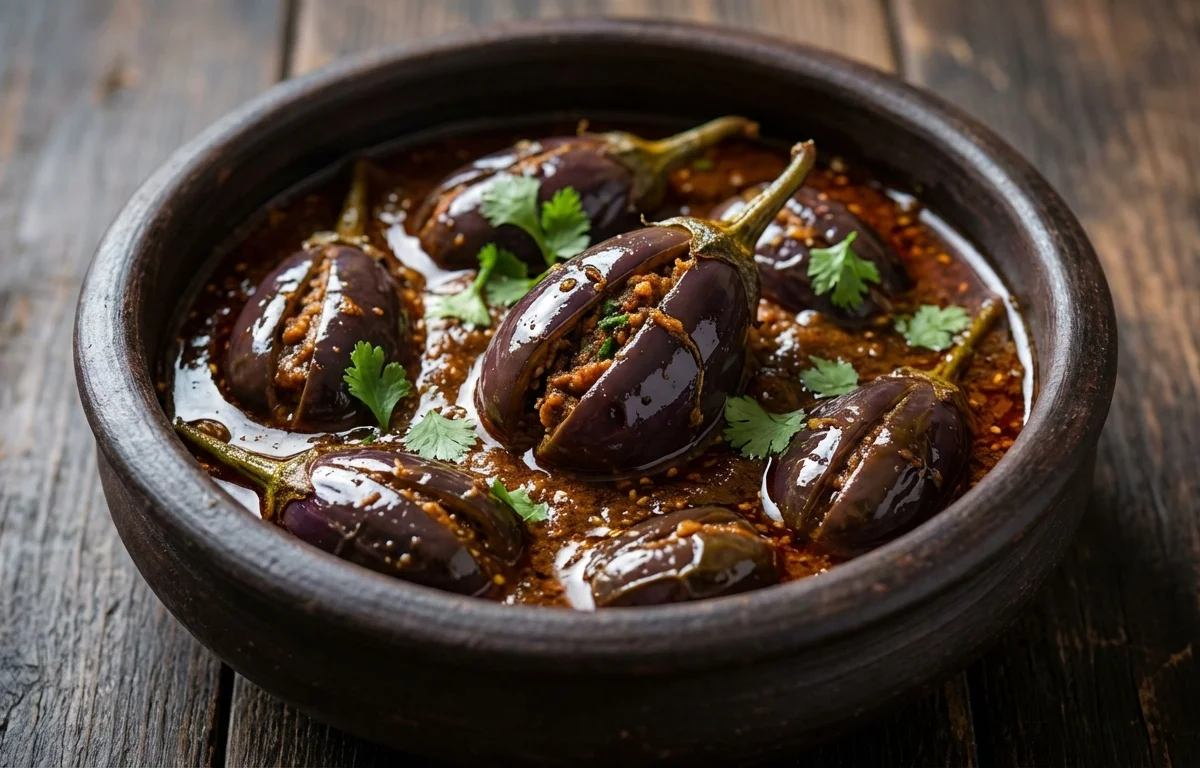
Ennai Kathirikai
Small brinjals are slit and stuffed with a bold roasted spice mix, then simmered gently in tamarind gravy until soft and glossy. This Tamil dish is rich, tangy, and deeply savory, with oil carrying all the spice into every bite.
For 4 servings
- prep · ~10 min
Soak the tamarind and slit the brinjals.
1.Soak tamarind in warm water for 10 minutes and squeeze out a thick extract.2.Wash and dry the small brinjals well.3.Make a deep cross slit in each brinjal from the base, keeping the stem end intact.4.Keep the brinjals aside in a wide plate.TIPDry brinjals brown better and the stuffing holds inside more easily. - roast · ~5 min
Roast the spices for the stuffing.
1.Heat a small pan over low heat and add peanuts, sesame seeds, coriander seeds, cumin seeds, dried red chili, urad dal, and chana dal.2.Roast gently, stirring often, until nutty and lightly golden.3.Add asafoetida at the end and switch off the heat.4.Cool the mixture completely.TIPKeep the heat low so the sesame and dals toast evenly without turning bitter. - mix · ~7 min
Grind the stuffing and fill the brinjals.
1.Grind the roasted mixture to a coarse powder.2.Mix in salt and turmeric powder.3.Open each slit brinjal gently and pack in some of the spice mixture.4.Keep any extra stuffing aside for the gravy. - temper · ~2 min
Make the tempering.
1.Heat sesame oil in a wide kadai over medium heat.2.Add mustard seeds and let them splutter.3.Add curry leaves and fry for a few seconds until fragrant. - saute · ~6 min
Cook the stuffed brinjals gently.
1.Place the stuffed brinjals in the pan in a single layer.2.Turn them gently in the oil so the skins get coated well.3.Cook on low heat for 5 to 6 minutes, turning now and then, until they begin to soften.TIPUse a wide pan and low heat so the brinjals soften without the stuffing falling out. - simmer · ~15 min
Add the tamarind gravy and simmer.
1.Pour in the tamarind extract and remaining water.2.Add jaggery and any leftover stuffing powder.3.Mix gently without breaking the brinjals.4.Cover and simmer on low heat until the brinjals are tender and the gravy turns thick and glossy. - rest · ~5 min
Let the curry rest for 5 minutes.
- serve
Serve hot with rice or curd rice.
What to keep in mind.
7 tips from the recipe — small details that make a real difference to the final dish.
- 1Choose evenly sized small brinjals so they cook at the same rate and stay intact.
- 2Dry the brinjals thoroughly before slitting; wet skins steam instead of sautéing in oil.
- 3Roast the peanut-sesame spice mix only until aromatic and pale golden, not dark brown.
- 4Grind the stuffing coarse, not pasty, so it stays inside the slits better.
- 5Use a wide kadai and keep the brinjals in one layer to avoid tearing while turning.
- 6Simmer on low until the oil begins to separate at the edges; that is the best doneness cue.
- 7This curry tastes even better after 30 minutes of resting, when the tamarind and spice settle in.
Adapt it for your goals.
Low-oil
Reduce the sesame oil slightly and cover the pan while simmering; the dish will be lighter, though a bit less rich and glossy.
spicierSpicier
Add 1 or 2 extra dried red chilies to the roast for a hotter, more robust masala that suits rice especially well.
no peanutNo-peanut
Skip the peanuts and increase sesame seeds a little for a nuttier sesame-led version if avoiding peanuts.
shallot addedShallot-added
Sauté a handful of small shallots after the tempering before adding the brinjals for extra sweetness and body in the gravy.
Why this is on our healthy list.
Fiber-Rich Vegetables
Brinjal and tamarind add fiber, which helps make this curry satisfying and pairs well with rice or curd rice.
Plant-Based Good Fats
Sesame oil, peanuts, and sesame seeds contribute nourishing unsaturated fats and help carry fat-soluble spice flavors.
Mineral-Containing Seeds and Dals
Sesame seeds, urad dal, and chana dal add plant nutrients and a little extra protein along with texture and flavor.
Frequently asked questions
Use small fresh brinjals, keep the stem intact, slit only deep enough to stuff, and cook them on low heat in a single layer.