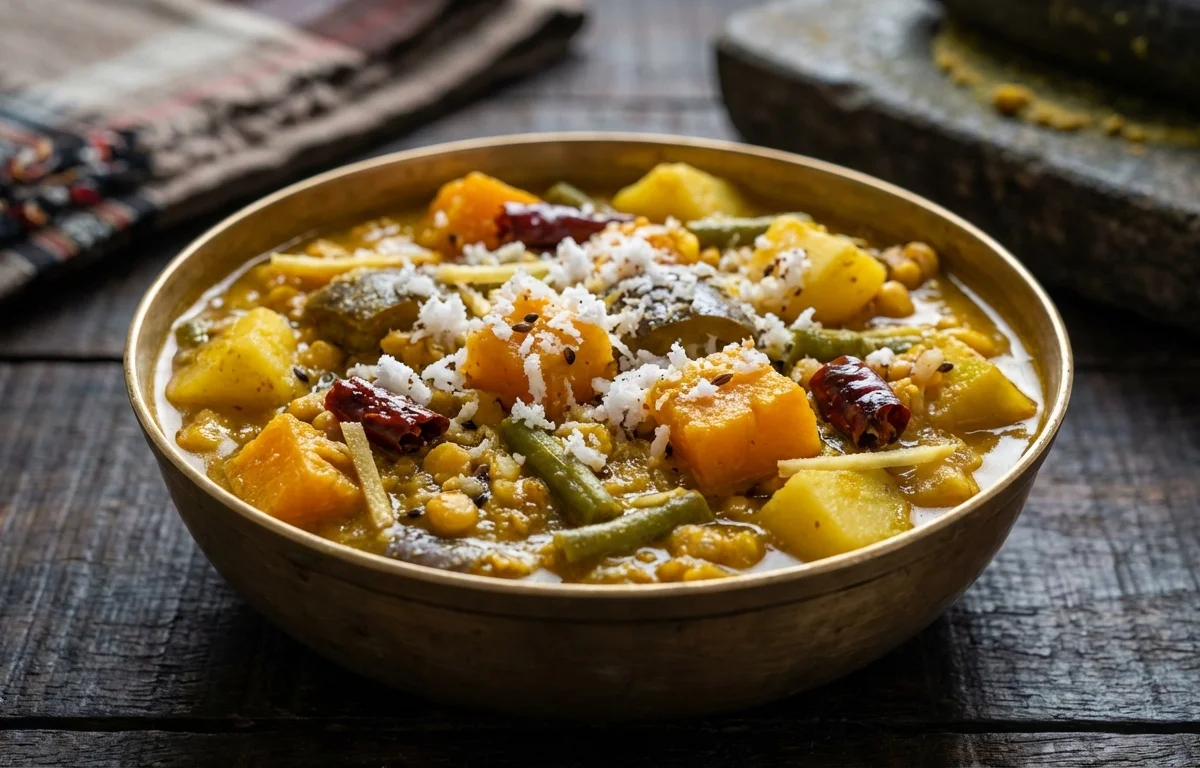
Ghanta Tarkari
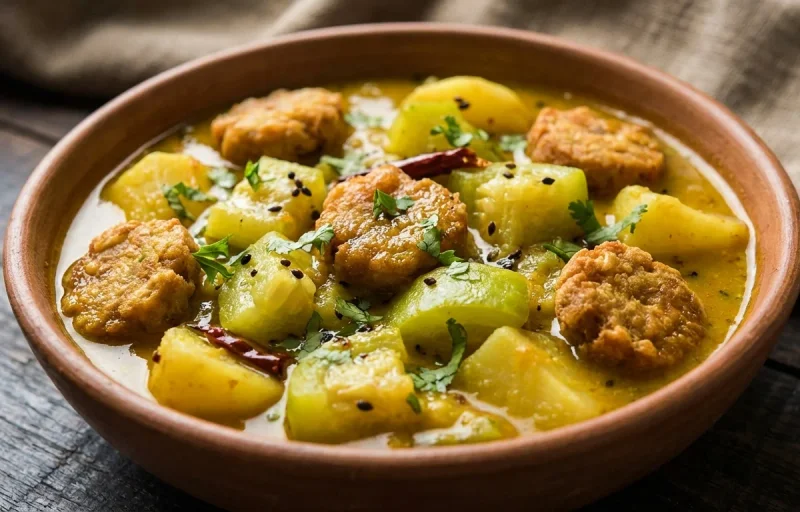
A comforting Odia mixed vegetable curry made with pumpkin, banana, potato, and a gentle spicing of ginger, cumin, and coconut. It cooks into a soft, lightly sweet, savory dish that is especially loved with rice or khichdi.
For 4 servings
- prep · ~15 min
Prepare the vegetables.
1.Peel and cube the pumpkin, raw banana, potato, and sweet potato into medium pieces.2.Crush the ginger and grate the fresh coconut.3.Measure the spices, jaggery, oil, salt, and water. - temper · ~3 min
Make the tempering.
1.Heat oil in a heavy pan over medium heat.2.Add cumin seeds, bay leaf, and dried red chili.3.Let the spices sizzle until fragrant, about 30 seconds.4.Add the crushed ginger and cook briefly.TIPKeep the heat moderate so the whole spices bloom without burning. - saute · ~4 min
Coat the vegetables in the spices.
1.Add pumpkin, raw banana, potato, and sweet potato to the pan.2.Sprinkle in turmeric powder, red chili powder, coriander powder, and salt.3.Mix well so the vegetables are lightly coated in the spiced oil. - boil · ~15 min
Cook the vegetables until tender.
Pour in the water, cover, and cook on medium-low heat until all the vegetables turn soft but still hold some shape. Stir once or twice so nothing catches at the bottom.
- simmer · ~7 min
Finish the ghanta.
Add grated coconut, jaggery, and garam masala. Mash a few vegetable pieces with the spoon, then simmer uncovered until the curry turns soft, lightly thick, and semi-dry.
TIPMash only part of the vegetables to get the right rustic texture. - serve
Serve hot with rice or khichdi.
What to keep in mind.
7 tips from the recipe — small details that make a real difference to the final dish.
- 1Cut the pumpkin, banana, potato, and sweet potato into similar medium cubes so they soften evenly.
- 2After peeling raw banana, keep the pieces in water until cooking to prevent darkening.
- 3Do not overbrown the cumin and dried red chili; burnt tempering will make the gentle curry taste bitter.
- 4Stir only once or twice while covered so the softer pumpkin does not break down too early.
- 5Mash just a few pieces at the end, especially some pumpkin and sweet potato, for the classic semi-dry binding.
- 6Add the coconut only in the final simmer so it stays sweet and fragrant instead of turning oily.
- 7This ghanta tastes even better after 30 minutes of resting, when the jaggery, ginger, and spices meld.
Adapt it for your goals.
No-onion-no-garlic festive
Already suitable for many festive meals; keep the seasoning delicate and serve with plain rice or khichdi for a traditional satvik-style plate.
low oilLow-oil
Reduce the oil slightly and use a heavy pan with a splash more water; the vegetables will still soften and bind from natural starch.
spicierSpicier
Add one extra dried red chili or a little more red chili powder if you want a warmer finish without changing the dish's core character.
with moong dalWith-moong-dal
Add a little cooked moong dal for a heartier ghanta-style meal that pairs especially well with rice.
Why this is on our healthy list.
Rich in Mixed Vegetables
Pumpkin, raw banana, potato, and sweet potato together provide a broad mix of plant nutrients and fiber from different root and gourd vegetables.
Naturally Satiating
The combination of starchy vegetables and coconut makes this curry filling and comforting, especially when served as part of a simple rice meal.
Contains Digestive Spices
Ginger and cumin are traditional spices used in everyday cooking that add warmth and support a lighter, more balanced flavor profile.
Frequently asked questions
Yes, but the curry will be a little less naturally sweet and less creamy when mashed. You can increase pumpkin slightly to keep the soft texture.