
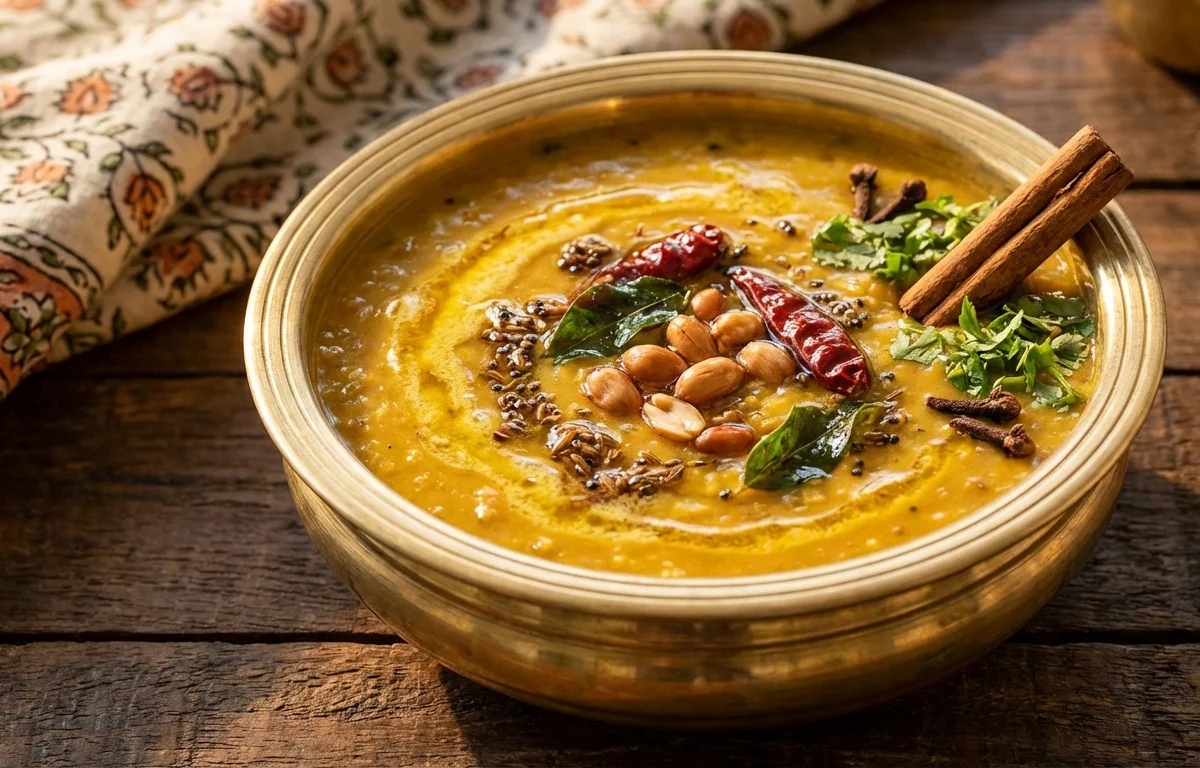
Gujarati Dal
This homestyle Gujarati dal is sweet, tangy, and lightly spiced, with toor dal simmered until silky and finished with peanuts, kokum, jaggery, and a fragrant tempering. It is comforting, balanced, and made to go with rice or roti.
For 4 servings
- prep · ~30 min
Wash and soak the dal.
Rinse the toor dal well and soak it in fresh water for 30 minutes. Drain before cooking.
TIPSoaking helps the dal cook faster and gives a smoother texture. - pressure cook · ~20 min
Pressure cook the dal and peanuts.
1.Add soaked toor dal, peanuts, 2.5 cups water, and turmeric powder to a pressure cooker.2.Cook on medium heat until the dal turns very soft, about 3 to 4 whistles.3.Let the pressure drop naturally before opening the cooker. - mix · ~3 min
Mash the cooked dal.
Mash the cooked dal and peanuts lightly until mostly smooth. Add the remaining water to loosen it to a pourable consistency.
- temper · ~2 min
Make the tempering.
1.Heat ghee in a pot over medium heat.2.Add mustard seeds and let them crackle.3.Add cumin seeds, fenugreek seeds, cloves, cinnamon, asafoetida, and curry leaves.4.Add grated ginger and sauté for a few seconds until fragrant.TIPKeep the heat medium so the spices bloom without burning. - saute · ~4 min
Cook the tomato and chili.
Add the chopped tomato and green chili to the tempering. Cook for 3 to 4 minutes until the tomato softens.
- simmer · ~12 min
Simmer the dal with sweet and tangy flavors.
1.Pour the mashed dal into the pot and mix well.2.Add kokum, jaggery, coriander powder, red chili powder, and salt.3.Bring the dal to a gentle simmer and cook for 10 to 12 minutes, stirring now and then.4.Add lemon juice at the end and adjust the consistency with a splash of water if needed.TIPGujarati dal should be light and flowing, not thick like Punjabi dal. - garnish
Garnish with cilantro.
- serve
Serve hot with rice or roti.
What to keep in mind.
6 tips from the recipe — small details that make a real difference to the final dish.
- 1Mash the cooked toor dal while it is still hot for the smooth, silky texture Gujarati dal is known for.
- 2Keep the finished dal slightly thin and pourable; it thickens quickly as it sits and cools.
- 3Do not burn the fenugreek seeds in the tempering, or the dal can turn noticeably bitter.
- 4Simmer the kokum and jaggery together for a few minutes so the sweet-tangy balance fully melds into the dal.
- 5Add lemon juice only at the end after simmering to keep its brightness fresh rather than cooked out.
- 6If making ahead, reheat with a splash of water and recheck salt, jaggery, and sourness before serving.
Adapt it for your goals.
Vegan
Replace ghee with peanut oil or a neutral oil for a fully plant-based version that still suits the dal's traditional flavor profile.
no peanutNo-peanut
Skip the peanuts if needed for allergy concerns; the dal will be less nutty but still balanced and comforting.
spicierSpicier
Use an extra green chili or a bit more red chili powder if you prefer a sharper heat against the sweet-sour dal.
jainJain
Omit ginger and asafoetida if required by your practice, keeping the kokum, jaggery, and whole-spice tempering for character.
Why this is on our healthy list.
Protein-Rich Lentil Base
Toor dal provides plant protein and makes this meal filling while pairing well with rice or roti.
Fiber From Dal and Peanuts
The combination of split pigeon peas and peanuts adds fiber that supports satiety and a hearty texture.
Digestive Spice Support
Ginger, cumin, asafoetida, and fenugreek are traditional spices often used to make legume dishes feel lighter to eat.
Antioxidant-Rich Aromatics
Tomato, curry leaves, cilantro, and turmeric contribute plant compounds along with fresh, layered flavor.
Frequently asked questions
It is traditionally served light and flowing so the sweet, tangy broth can coat rice well without becoming heavy.



.webp)
.webp)
.webp)