
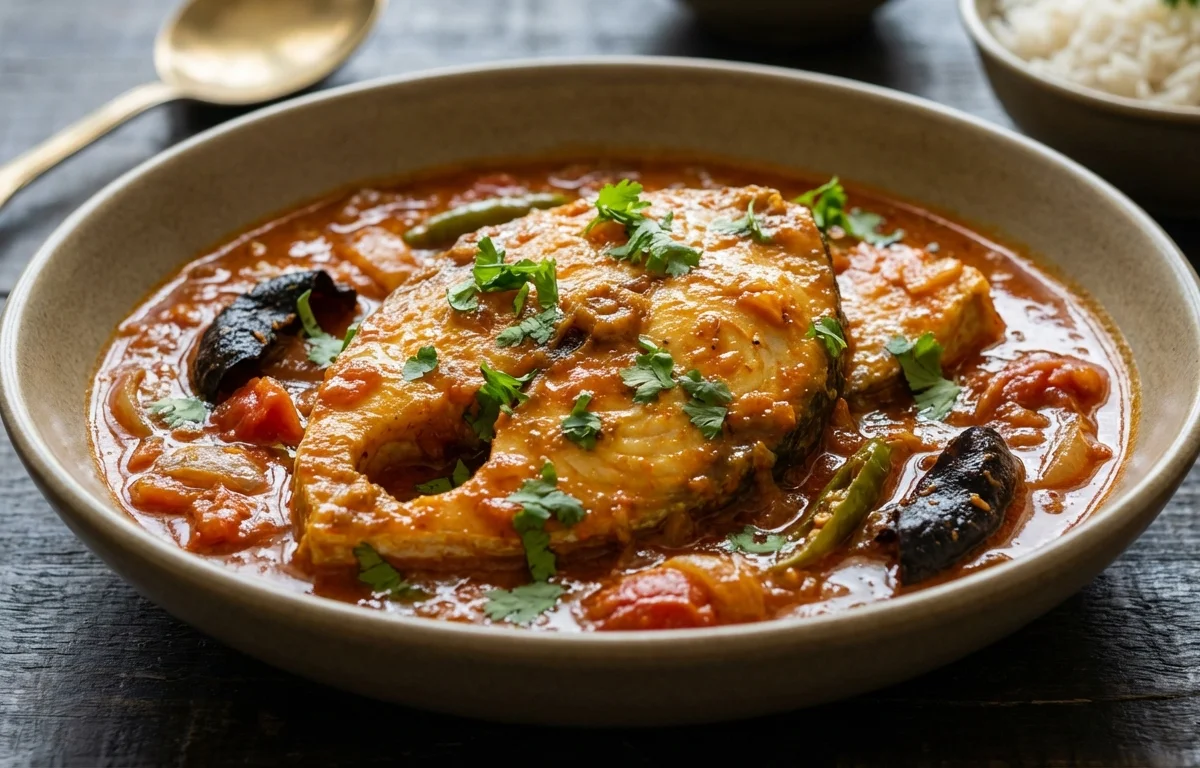
Gujarati Fish Curry
A vibrant, tangy fish curry from coastal Gujarat where succulent fish steaks simmer in a base of tomatoes, coconut, and a handful of warming spices. Unlike heavier curries, this one is light, slightly sweet from jaggery, and balanced with a pleasant sour kick from lemon. Perfect with steamed rice or khichdi.
For 4 servings
- prep · ~15 min
Marinate the fish.
1.Rub fish steaks with salt, a pinch of turmeric, and lemon juice.2.Set aside for 15 minutes while you prepare the masala. - temper · ~1 min
Heat oil and temper the whole spices.
1.Heat oil in a wide heavy-bottomed pan over medium heat.2.Add mustard seeds and let them splutter for 30 seconds.3.Add cumin seeds, fenugreek seeds, and asafoetida; stir for 10 seconds until fragrant. - saute · ~6 min
Sauté the onion, garlic, ginger, and green chili.
1.Add the chopped onion and cook until soft and translucent, about 4 minutes.2.Stir in the minced garlic, grated ginger, and slit green chilies; sauté for 2 minutes more. - saute · ~6 min
Cook the tomato masala paste.
1.Add chopped tomatoes and cook until they turn soft and oil begins to separate at the edges, about 5 minutes.2.Stir in red chili powder, turmeric powder, coriander powder, and cumin powder; cook for 1 minute to bloom the spices. - simmer · ~12 min
Build the gravy and gently cook the fish.
1.Pour in water and stir in the grated coconut, jaggery, and salt.2.Bring the gravy to a gentle simmer.3.Slide in the marinated fish steaks carefully, spoon some gravy over them.4.Cover and simmer on low heat for 10-12 minutes until the fish is cooked through.TIPDo not stir the curry vigorously once the fish is in — use the pan handle to swirl the gravy gently so the steaks stay whole. - garnish
Finish with lemon juice and fresh coriander.
1.Turn off the heat. Drizzle lemon juice over the top.2.Garnish generously with chopped coriander leaves. - rest · ~5 min
Rest the curry for 5 minutes before serving.
TIPResting lets the fish absorb the tangy, spiced gravy and makes the curry even more flavourful.
What to keep in mind.
7 tips from the recipe — small details that make a real difference to the final dish.
- 1Use a heavy-bottomed pan to prevent the fish from sticking and breaking during simmering.
- 2For the best texture, avoid overcooking the fish — it should flake easily after 10–12 minutes of gentle simmering.
- 3If using frozen fish, thaw it completely and pat dry with paper towels before marinating.
- 4To deepen the flavor, lightly toast the grated coconut in a dry pan for 1–2 minutes before adding to the gravy.
- 5Let the curry rest for 5 minutes after cooking; this allows the fish to soak up the tangy gravy without breaking apart.
- 6For a thicker gravy, crush a tablespoon of poached coconut with the back of a spoon before adding it to the pan.
- 7Make ahead: prepare the gravy base a day in advance, then gently reheat and add the fish just before serving.
Adapt it for your goals.
Low-oil
Reduce oil to 1 tablespoon and use a non-stick pan. The coconut and tomato base still provide enough moisture and richness, making this a lighter option for everyday cooking.
high proteinHigh-protein
Add 200g of peeled prawns or cubed paneer along with the fish for an extra protein boost. Simmer the prawns for only 3–4 minutes to keep them tender.
veganVegan
Replace fish with firm tofu slabs (pressed and pan-seared) and use coconut oil instead of vegetable oil. The tofu absorbs the spiced gravy beautifully and keeps the dish plant-based.
jainJain
Omit garlic, onion, and asafoetida. Use a pinch of hing-free asafoetida or skip it. Add extra ginger and a splash of coconut milk for depth, following Jain dietary restrictions.
Why this is on our healthy list.
Rich in Omega-3 Fatty Acids
Fish like pomfret or kingfish provide heart-healthy omega-3s that support brain function and reduce inflammation.
Good Source of Lean Protein
Each serving of fish delivers high-quality protein essential for muscle repair and satiety, with minimal saturated fat.
Antioxidant Power from Spices
Turmeric, cumin, and coriander are packed with antioxidants that help combat oxidative stress and support immunity.
Digestive Aid from Fenugreek
Fenugreek seeds and asafoetida in the tempering promote healthy digestion and reduce bloating.
Low in Unhealthy Fats
The recipe uses only 3 tablespoons of oil for the entire dish, making it a lighter curry compared to cream-based alternatives.
Frequently asked questions
Firm-fleshed fish like pomfret (paplet), surmai (kingfish), or seabass work best. They hold their shape during gentle simmering and absorb the flavors without flaking apart.


.webp)
.webp)
.webp)