Hyderabadi Mutton Khichda
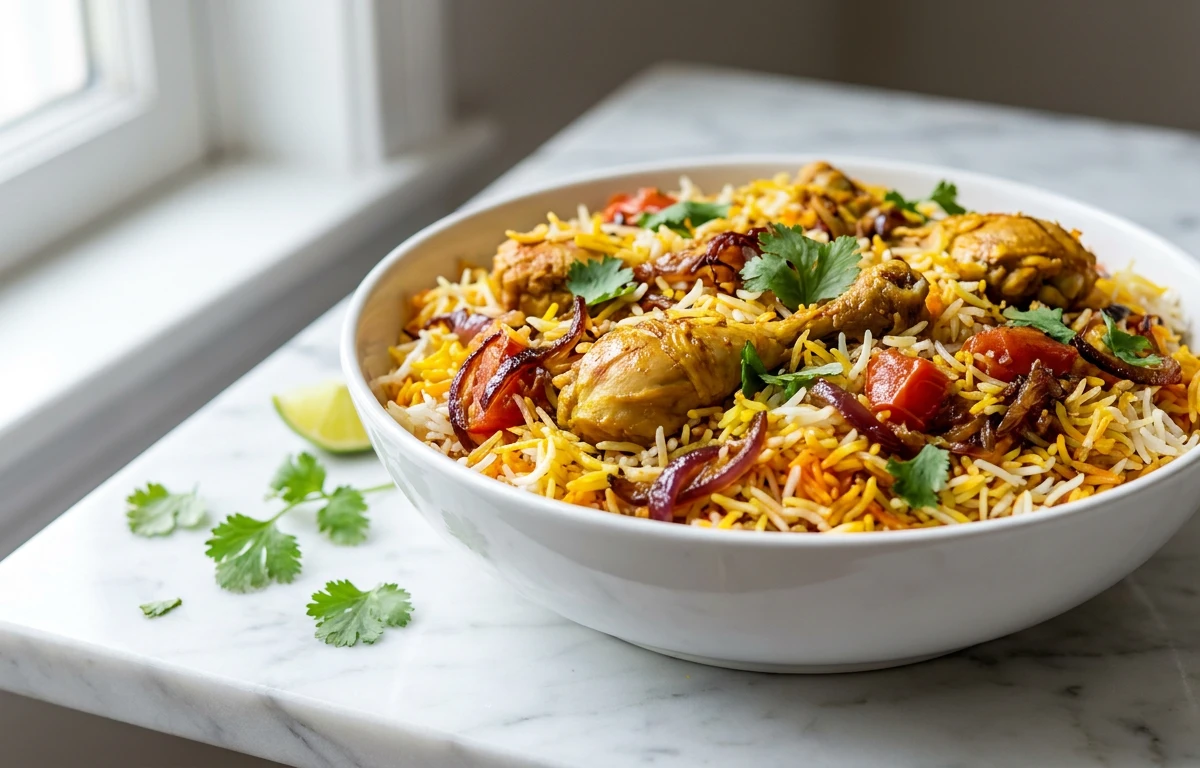
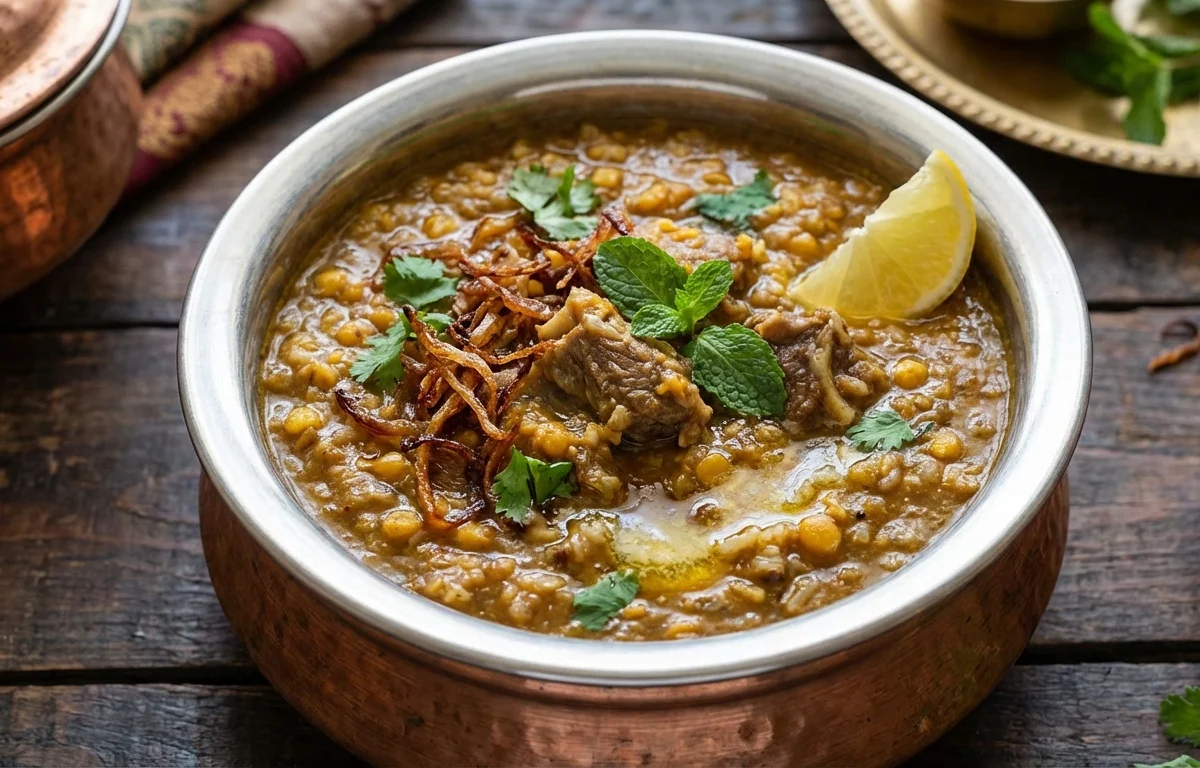
A slow-cooked Hyderabadi classic where mutton, lentils, wheat, and rice melt together into a rich, savory bowl. Finished with fried onions, mint, lemon, and warm spices, it is deeply comforting and perfect for festive meals.
For 4 servings
- prep · ~8 min
Soak the grains and lentils.
Wash the broken wheat, rice, chana dal, toor dal, moong dal, masoor dal, and urad dal well. Soak them together in plenty of water overnight, then drain before cooking.
TIPLong soaking helps the grains and lentils break down smoothly into the classic khichda texture. - fry · ~20 min
Fry the sliced onions.
1.Heat the oil for frying in a deep pan over medium heat.2.Add the thinly sliced onions in batches.3.Fry until deep golden and crisp, about 8 to 10 minutes per batch.4.Drain and keep aside for garnish.TIPPull the onions out just before they turn dark brown; they continue to deepen as they cool. - saute · ~15 min
Build the mutton masala base.
1.Heat ghee in a pressure cooker over medium heat.2.Add cumin seeds, black peppercorns, cloves, green cardamom, cinnamon, and bay leaf; cook for 30 seconds.3.Add the chopped onion and sauté until light golden, 5 to 7 minutes.4.Add ginger-garlic paste and green chili; sauté until the raw smell goes, about 1 minute.5.Add tomatoes and cook until soft, 4 to 5 minutes. - mix · ~8 min
Add the spices, yogurt, and mutton.
Add red chili powder, turmeric powder, coriander powder, garam masala, and salt. Mix in the yogurt, then add the mutton and cook for 6 to 8 minutes until the meat is coated well and the masala looks glossy.
TIPKeep the heat medium-low after adding yogurt so it blends smoothly without splitting. - pressure cook · ~40 min
Cook the mutton until tender.
Pour in 3 cups water, lock the cooker, and cook until the mutton is very tender, about 30 to 35 minutes after full pressure is reached. Let the pressure drop naturally.
- pressure cook · ~30 min
Cook the soaked grains and lentils.
In a second cooker or large pot, add the drained broken wheat, rice, lentils, and 2 cups water. Cook until everything turns very soft and mushy, about 20 to 25 minutes in a pressure cooker.
TIPThe mixture should be softer than plain khichdi because it will be mashed and simmered again. - mix · ~10 min
Shred the mutton and mash the grains.
1.Open the mutton cooker and remove any large bones from the meat.2.Lightly shred the mutton pieces with a spoon or fork.3.Mash the cooked grain and lentil mixture until mostly smooth.4.Add the mashed grain mixture into the mutton cooker and mix well. - simmer · ~30 min
Slow-cook the khichda.
Cook the combined mixture on low heat for 25 to 30 minutes, stirring often so it does not catch at the bottom. Add a splash of water only if needed to keep it thick, creamy, and spoonable.
TIPRegular stirring is what gives khichda its smooth, pulled texture. - garnish · ~3 min
Finish with fried onions, herbs, and lemon.
Stir in half of the fried onions, half of the mint, half of the coriander leaves, and the lemon juice. Spoon into bowls and top with the remaining fried onions, mint, and coriander leaves.
- serve
Serve the khichda hot.
What to keep in mind.
7 tips from the recipe — small details that make a real difference to the final dish.
- 1Soak the wheat and mixed dals overnight so they collapse into the signature silky khichda texture.
- 2Fry the onions in batches and remove them at deep golden, not dark brown, or the garnish can turn bitter.
- 3After pressure cooking, discard only the large bones; keep any marrow-rich cooking liquid for extra body and flavor.
- 4Mash the grain-lentil mixture while still hot so it blends more smoothly into the mutton masala.
- 5Stir the pot frequently during the final simmer, especially along the base and corners, because the thick mixture catches fast.
- 6Khichda thickens as it sits, so loosen leftovers with hot water while reheating rather than adding more oil or ghee.
- 7For make-ahead service, finish with fried onions, mint, coriander, and lemon only just before serving so the toppings stay bright.
Adapt it for your goals.
Spicier
Add extra slit green chilies and a little more red chili powder for a hotter, more robust festive-style khichda.
bonelessBoneless
Use boneless mutton if you want easier shredding and serving, though bone-in pieces give a deeper broth.
lighter garnishLighter-garnish
Reduce the fried onion topping and use more fresh mint and coriander if you want a less rich finish.
stovetopStovetop
Cook both the mutton and grain-lentil mixture slowly on the stovetop if you do not use a pressure cooker; it takes longer but still works well.
Why this is on our healthy list.
Protein-Rich Main Dish
Mutton and the mix of chana, toor, moong, masoor, and urad dals make this a hearty, protein-rich meal.
Good Fiber From Grains and Lentils
Broken wheat and multiple lentils add fiber that makes the dish more filling than a meat-only preparation.
Contains Herbs and Warming Spices
Mint, coriander, cumin, pepper, cloves, and ginger-garlic bring aroma along with plant compounds from herbs and spices.
Frequently asked questions
Yes. Simmer the mutton covered until very tender and cook the wheat, rice, and lentils separately until completely soft and mashable.