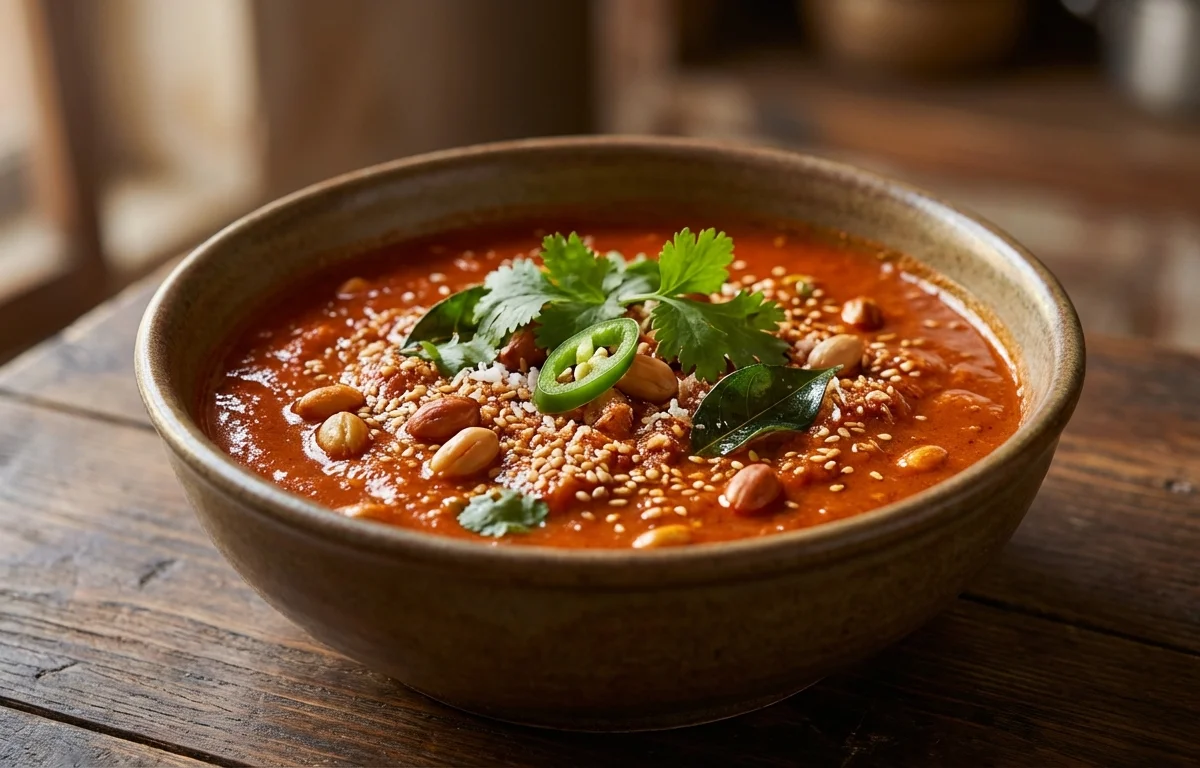
Hyderabadi Tomato Curry
Tangy tomatoes simmer in a rich, nutty gravy made with peanuts, sesame, and coconut in this Hyderabadi-style curry. It is gently spiced, deeply savory, and especially good with rice, roti, or biryani on the side.
For 4 servings
- roast · ~5 min
Roast the nuts and coconut.
1.Heat a small pan over low heat.2.Add peanuts and roast until lightly golden and aromatic, 2 to 3 minutes.3.Add white sesame seeds and desiccated coconut and roast for 1 to 2 minutes more.4.Take off the heat and let the mixture cool slightly.TIPKeep the heat low so the sesame and coconut do not burn and turn bitter. - mix · ~4 min
Grind the masala paste.
1.Add the roasted peanuts, sesame, and coconut to a grinder jar.2.Add onion, ginger, garlic, and 0.5 cup water.3.Grind to a smooth, thick paste.4.Set the paste aside. - saute · ~5 min
Fry the tomatoes lightly.
1.Heat 1 tbsp oil in a pan over medium heat.2.Add the tomatoes and cook gently for 3 to 4 minutes until the skins soften and they lightly blister.3.Turn them carefully so they hold their shape.4.Remove the tomatoes to a plate.TIPDo not fully mash the tomatoes here; they should stay chunky in the finished curry. - temper · ~2 min
Make the tempering.
1.Heat the remaining 1 tbsp oil in the same pan.2.Add mustard seeds and let them splutter.3.Add cumin seeds, fenugreek seeds, curry leaves, and green chili.4.Cook for a few seconds until fragrant. - saute · ~7 min
Cook the masala base.
1.Add the ground paste to the pan.2.Cook on medium-low heat, stirring often, for 5 to 7 minutes.3.Add turmeric powder, red chili powder, coriander powder, and salt.4.Cook until the paste thickens and the oil starts to show at the edges.TIPStir often once the paste thickens, since nut-based masala can catch at the bottom. - simmer · ~10 min
Simmer the curry.
1.Add tamarind paste and the remaining 1 cup water to the pan.2.Mix well and bring the curry to a gentle simmer.3.Slide in the fried tomatoes and spoon some gravy over them.4.Cover and simmer for 8 to 10 minutes until the tomatoes are soft and the gravy is rich. - garnish · ~1 min
Finish with garam masala and coriander leaves.
Sprinkle in the garam masala and chopped coriander leaves. Simmer for 1 more minute, then turn off the heat.
- serve
Serve the curry hot.
What to keep in mind.
8 tips from the recipe — small details that make a real difference to the final dish.
- 1Roast the peanuts, sesame, and coconut only until fragrant; overbrowning makes the gravy taste bitter.
- 2Grind the masala very smooth so the Hyderabadi-style curry turns rich and velvety, not grainy.
- 3Use ripe but firm tomatoes so they soften in the gravy without collapsing completely.
- 4Fry the tomatoes briefly before simmering to deepen their flavor while helping them hold shape.
- 5Cook the nut-onion paste until oil shows at the edges; this removes rawness and thickens the curry properly.
- 6Add tamarind after the masala cooks, not earlier, or the onion-nut paste can take longer to soften.
- 7This curry tastes even better after 30 minutes of resting, when the tomato, tamarind, and nutty masala meld.
- 8Reheat gently with a splash of water, since the peanut-sesame gravy thickens as it sits.
Adapt it for your goals.
Vegan
The recipe is already vegan as written, making it a good dairy-free curry with full body from peanuts, sesame, and coconut.
jainJain
Skip onion and garlic, increase coconut slightly, and use a little extra ginger for a Jain-friendly version with a different but still rich gravy.
spicierSpicier
Add one more green chili or a bit more red chili powder if you want the tangy, nutty gravy to have a stronger heat.
low oilLow-oil
Use less oil and dry-roast the tomatoes in a nonstick pan; the gravy will be slightly less rich but still flavorful.
Why this is on our healthy list.
Rich in Plant-Based Fats
Peanuts, sesame, and coconut add satisfying fats that give the curry body and help make it filling.
Tomato-Forward Dish
Tomatoes bring natural acidity and antioxidants, making the curry bright while adding vegetable content to the meal.
Aromatic Spice Support
Ginger, garlic, cumin, fenugreek, and curry leaves contribute flavor depth along with traditional plant compounds.
Frequently asked questions
Yes, but the texture will change. Whole or halved tomatoes are typical here because they stay chunky and soak up the gravy without turning fully saucy.