
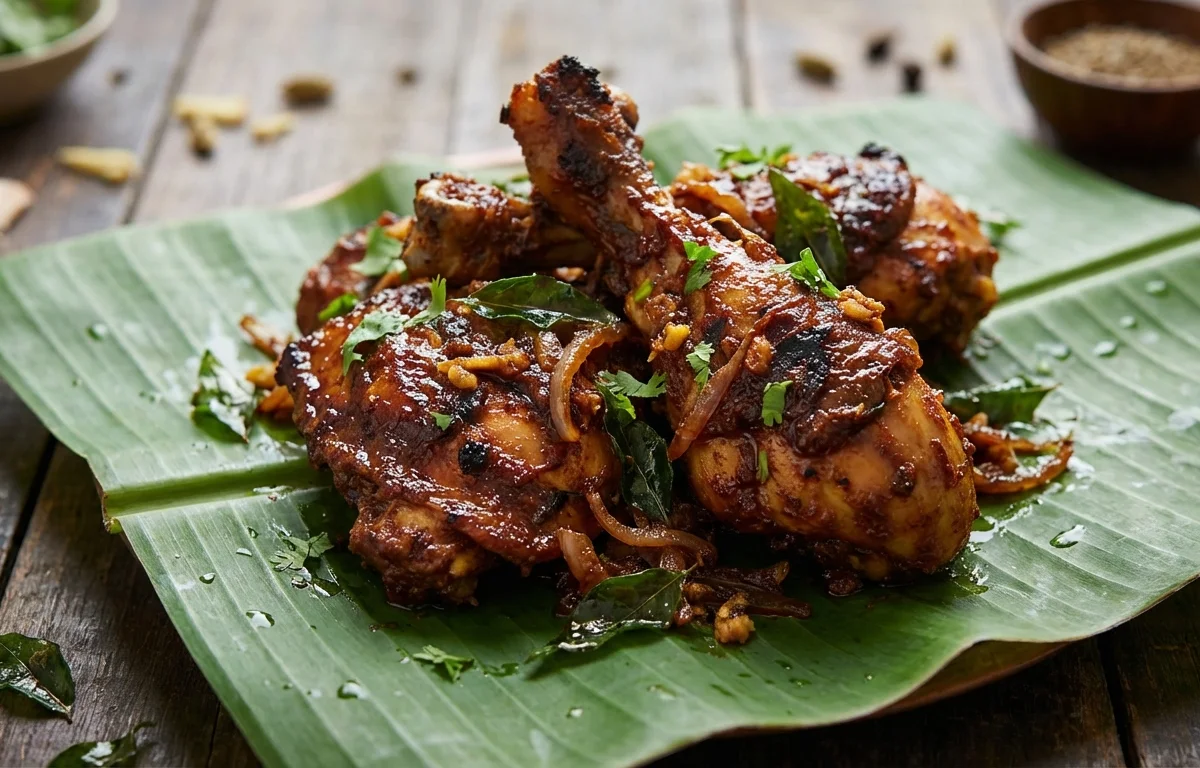
Kerala Chicken Roast
A bold, deeply aromatic dry chicken dish from Kerala where bone-in chicken pieces are slow-roasted with caramelized onions, curry leaves, and a fragrant masala paste. The edges get crisp, the meat stays juicy, and the aroma of coconut oil and roasted spices fills the kitchen. Perfect with rice and a simple dal or rasam.
For 4 servings
- prep · ~2 min
Make the fresh masala paste.
1.Combine the chopped ginger, garlic, fennel seeds, and 2 tbsp water in a blender.2.Grind to a smooth, thick paste. Set aside. - prep · ~10 min
Season the chicken.
Pat the chicken pieces dry. Rub with a pinch of turmeric powder, a pinch of salt, and 1 tsp lemon juice. Set aside for 10 minutes while you start the roast.
TIPDrying the chicken helps it sear instead of steam when it hits the pan. - fry · ~10 min
Sear the chicken pieces.
1.Heat 1 tbsp coconut oil in a heavy-bottomed pan over medium-high heat.2.Add the chicken pieces in a single layer. Sear for 3-4 minutes per side until golden brown.3.Remove the chicken to a plate. Do this in batches if needed.TIPDon't overcrowd the pan — the chicken will release water and boil. Brown in two batches for the best crust. - saute · ~15 min
Caramelize the onions.
1.In the same pan, add the remaining 1 tbsp coconut oil.2.Add the cinnamon stick, cloves, and crushed cardamom. Let them sizzle for 30 seconds.3.Add the sliced onions and a pinch of salt. Sauté on medium heat, stirring often, until deep golden brown (10-12 minutes).4.Add the slit green chilies and curry leaves. Sauté for 1 minute until the leaves turn crisp.TIPPatience is key here — deeply caramelized onions are the soul of this dish. - saute · ~10 min
Cook the masala base.
1.Reduce the heat to low. Add the ginger-garlic-fennel paste to the pan.2.Sauté continuously for 3-4 minutes until the raw smell disappears and it turns aromatic.3.Add the Kashmiri red chili powder and coriander powder. Stir for 30 seconds — no more, or they'll burn.4.Add the chopped tomatoes and cook until they soften and the oil starts separating around the edges (5-6 minutes).TIPKeep the heat low when adding dry spice powders. Burnt chili powder tastes acrid and bitter. - simmer · ~25 min
Roast the chicken with the masala.
1.Return the seared chicken pieces (and any juices from the plate) to the pan.2.Pour in ½ cup water and add 0.5 tsp salt. Stir well to coat every piece in masala.3.Cover and simmer on low heat for 20-25 minutes, stirring occasionally, until the chicken is cooked through. - fry · ~7 min
Dry-roast for intense flavor.
Remove the lid. Turn the heat to high. Cook for another 5-7 minutes, stirring constantly, until all the moisture evaporates. The masala should cling to the chicken in a thick, near-dry coating and start to catch slightly at the edges.
TIPThis final high-heat roast is what separates a good Kerala chicken roast from a regular chicken curry. - garnish · ~5 min
Finish and serve.
Remove from heat. Sprinkle garam masala, black pepper powder, and the remaining lemon juice over the top. Toss once and let it rest, covered, for 5 minutes before serving so the aromatics bloom.
TIPA final fistful of fresh curry leaves tossed in at the very end adds an incredible fragrance.
What to keep in mind.
7 tips from the recipe — small details that make a real difference to the final dish.
- 1Pat chicken pieces dry before marinating to ensure a good sear instead of steaming.
- 2Don't overcrowd the pan when searing chicken; work in batches for a proper golden crust.
- 3Caramelize onions slowly over medium heat until deep brown—this builds the dish's foundational flavor.
- 4Keep heat low when adding chili and coriander powders to prevent burning and bitterness.
- 5The final high-heat dry-roast is essential; stir constantly until masala clings thickly to the chicken.
- 6Rest the covered dish for 5 minutes after finishing so the garam masala and pepper aromas bloom.
- 7Leftover Kerala Chicken Roast keeps well in the fridge for 3 days; reheat in a dry pan to restore texture.
Adapt it for your goals.
Extra Spicy
Increase Kashmiri red chili powder to 3 tbsp and add 2 more slit green chilies for a fiery version that spice-lovers will enjoy with coconut rice.
Coconut Milk RoastCoconut Milk Roast
Replace the ½ cup water with ½ cup thick coconut milk during the simmer stage for a creamier, richer gravy that still reduces to a clingy coating.
Mutton (Goat) VersionMutton (Goat) Version
Substitute bone-in mutton pieces for chicken and extend the covered simmer to 40-45 minutes until the meat is tender; the robust meat pairs beautifully with the same masala.
Keto / Low CarbKeto / Low-Carb
Skip the tomato and use 2 tbsp tamarind paste mixed with ¼ cup water instead; serve with cauliflower rice for a dish that stays true to the Kerala flavor profile.
Why this is on our healthy list.
Rich in Anti-Inflammatory Spices
Turmeric, ginger, and fennel seeds in this dish provide natural anti-inflammatory compounds that support joint health and digestion.
High-Quality Protein
Bone-in chicken offers a good source of complete protein and minerals like phosphorus and calcium from the bones during simmering.
Supports Gut Health
Fennel seeds and ginger aid digestion, while the slow-cooked onion and garlic provide prebiotic fibers that feed beneficial gut bacteria.
Heart-Friendly Coconut Oil
Using virgin coconut oil adds medium-chain triglycerides (MCTs), which are metabolized differently than other saturated fats and may support heart health in moderation.
Frequently asked questions
Yes, but reduce the simmer time to 12-15 minutes and watch closely—boneless thighs are best to avoid dryness; bone-in gives deeper flavor.



.webp)
.webp)