
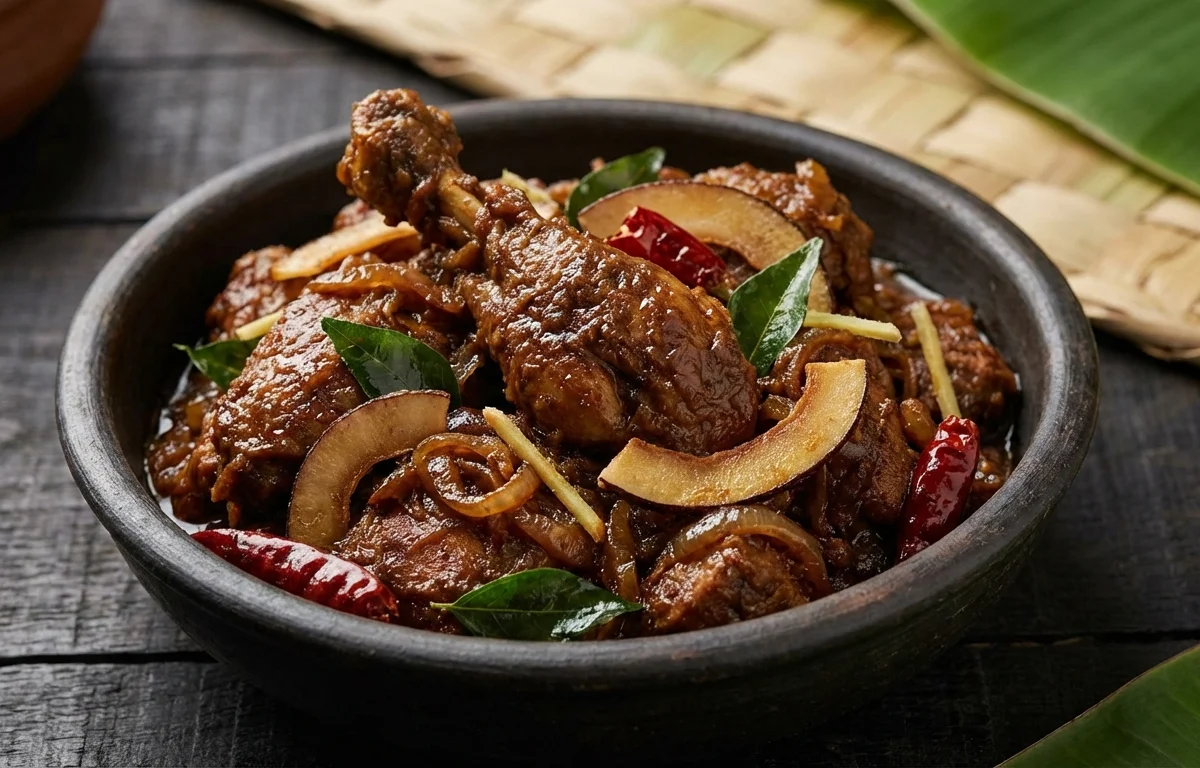
Kerala Duck Roast
A deeply spiced Kerala classic where duck is cooked until tender, then slow-roasted with onions, ginger, garlic, coconut slices, and curry leaves until the masala turns dark, glossy, and intensely flavorful.
For 4 servings
- prep · ~15 min
Marinate the duck.
1.Place the duck pieces in a bowl.2.Add turmeric powder, red chili powder, coriander powder, crushed black pepper, fennel seeds, cinnamon, cloves, green cardamom, and salt.3.Rub the spices well over the duck and let it sit for 15 minutes.TIPA short rest helps the spices cling better and seasons the meat more evenly. - pressure cook · ~20 min
Pressure cook the duck.
Transfer the marinated duck to a pressure cooker with 0.5 cup water. Cook on medium heat for 4 to 5 whistles, until the duck is tender but still holds its shape.
- rest · ~10 min
Let the pressure drop naturally.
- saute · ~15 min
Cook the onion masala.
1.Heat coconut oil in a wide pan over medium heat.2.Add curry leaves and coconut slices, then cook until the coconut turns lightly golden.3.Add sliced onion, shallots, ginger, garlic, and green chili.4.Cook until the onions soften and turn deep golden, about 8 to 10 minutes.5.Add chopped tomato and cook until soft and jammy.TIPUse a wide pan so the onions roast instead of steam. - roast · ~20 min
Roast the duck with the masala.
Add the cooked duck and all the cooking liquid to the pan. Sprinkle in garam masala and cook uncovered on medium-low heat, turning the pieces now and then, until the masala turns dark, coats the duck well, and the oil begins to show at the edges.
TIPKeep the heat medium-low at this stage so the masala darkens slowly without burning. - serve
Serve the duck roast hot.
What to keep in mind.
7 tips from the recipe — small details that make a real difference to the final dish.
- 1Do not over-pressure-cook; the duck should be tender but not falling apart, since it cooks again during the roast.
- 2Use a wide, heavy pan for the final roast so the masala reduces and clings instead of turning watery.
- 3Let the onions and shallots reach a deep golden brown before adding tomato; this gives the roast its signature dark color.
- 4Stir gently while roasting so the bone-in duck pieces stay intact and still get evenly coated in masala.
- 5If the pan dries before the masala darkens, add a small splash of the reserved cooking liquid rather than plain water.
- 6Fresh coconut slices should turn lightly golden, not dark brown, or they can make the roast taste bitter.
- 7This roast tastes even better after a few hours of rest, when the pepper, fennel, and curry leaf flavors settle into the duck.
Adapt it for your goals.
Low-oil
Trim visible duck fat and reduce the coconut oil slightly; you will get a lighter roast while keeping the same spice profile.
extra spicyExtra-spicy
Add more green chili and a little extra black pepper for a sharper, more traditional heat that suits appam or kappa.
dry roast styleDry-roast style
Cook the final stage longer until nearly all moisture evaporates for a drier, more intense roast that works well as a side dish.
stovetop onlyStovetop-only
If you do not use a pressure cooker, simmer the marinated duck covered until tender, then continue with the roasting step.
Why this is on our healthy list.
Protein-Rich Main Dish
Duck provides substantial protein, making this roast filling and suitable as a hearty center-of-plate dish.
Aromatic Spice Benefits
Ginger, garlic, black pepper, fennel, and turmeric add flavor complexity along with traditionally valued plant compounds.
Includes Alliums and Tomato
Onions, shallots, garlic, and tomatoes contribute savory depth plus beneficial antioxidants from whole vegetables.
Frequently asked questions
Yes. Simmer the marinated duck covered in a heavy pot with the water until tender, then roast it with the masala as written.


.webp)
.webp)