
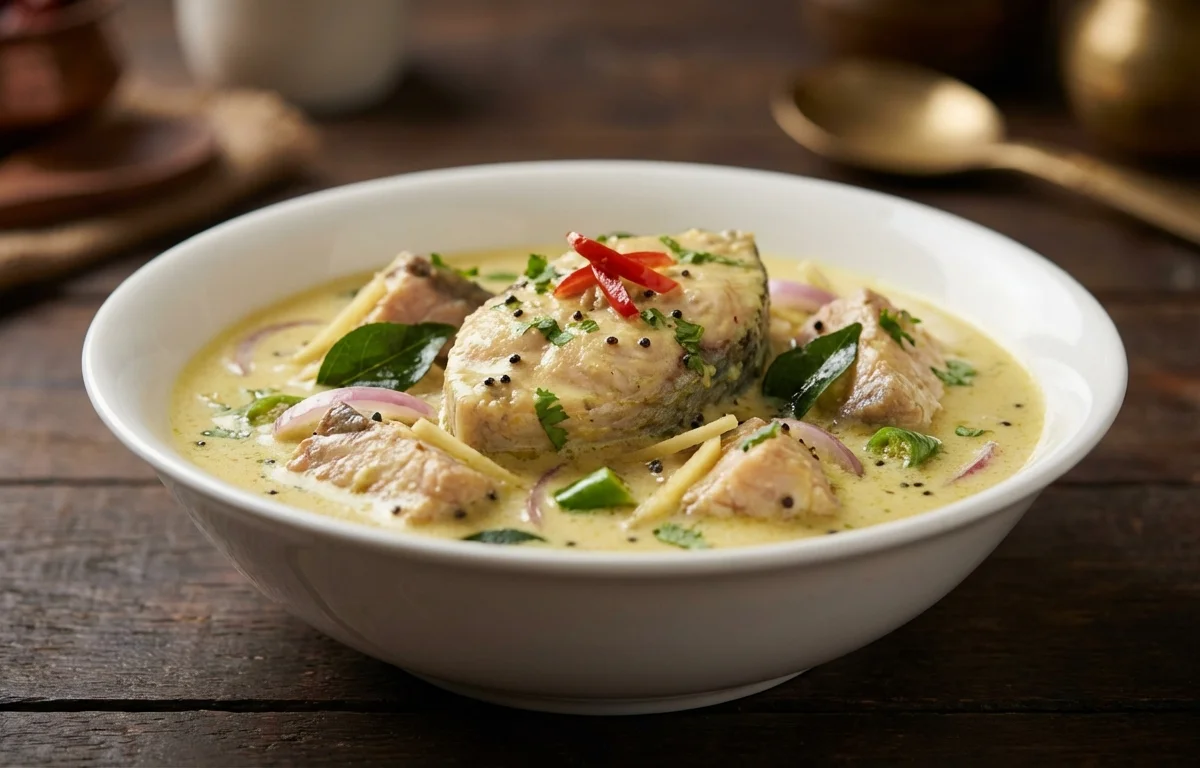
Kerala Fish Molly
Delicate fish simmered in a lightly spiced coconut milk gravy with ginger, green chili, curry leaves, and black pepper. This Kerala classic is gentle, fragrant, and perfect with appam, bread, or plain rice.
For 4 servings
- prep · ~10 min
Season the fish.
Rub the fish pieces with lime juice, a pinch of salt from the measured salt, and the turmeric powder. Set aside for 10 minutes.
TIPUse firm fish so the pieces hold their shape while simmering. - saute · ~7 min
Cook the onion base.
1.Heat coconut oil in a wide pan over medium heat.2.Add onion, ginger, garlic, green chili, and curry leaves.3.Cook gently until the onion turns soft and lightly translucent without browning, 4 to 5 minutes.4.Add tomato and cook until just softened, 2 minutes.TIPKeep the heat moderate; browned onions will change the pale color and delicate taste of the curry. - simmer · ~4 min
Make the gravy.
Pour in the thin coconut milk and water. Add the remaining salt and black pepper, then bring to a gentle simmer.
- simmer · ~8 min
Cook the fish in the gravy.
Slide the fish pieces into the simmering gravy in a single layer. Cover and cook on low heat until the fish is just cooked through and flakes easily, 6 to 8 minutes.
TIPDo not stir hard after adding the fish; swirl the pan gently to avoid breaking the pieces. - simmer · ~2 min
Finish with thick coconut milk.
Lower the heat completely and stir in the thick coconut milk. Warm gently for 1 to 2 minutes without boiling.
TIPDo not let the curry boil after adding thick coconut milk or it may split. - serve
Serve the fish molly hot.
What to keep in mind.
7 tips from the recipe — small details that make a real difference to the final dish.
- 1Choose seer fish, snapper, cod, or another firm white fish so the pieces stay intact in the coconut gravy.
- 2Keep the onions pale and just translucent; any browning will darken the curry and make it taste less delicate.
- 3Add the fish in a single layer and swirl the pan instead of stirring so the pieces do not break apart.
- 4Once the thick coconut milk goes in, heat only until steaming; boiling can make the gravy split or turn grainy.
- 5Freshly crushed black pepper at the end gives a brighter aroma than pre-ground pepper in this mild curry.
- 6Fish molly tastes even better after a short rest of 10 to 15 minutes, which lets the curry leaves and ginger infuse the gravy.
- 7Reheat leftovers on very low heat just until warm, because vigorous simmering can overcook the fish.
Adapt it for your goals.
Prawn
Replace the fish with prawns for a quicker seafood version; simmer only until the prawns turn opaque and curl.
spicierSpicier
Add extra slit green chilies and a little more black pepper if you want a hotter molly while keeping its classic coconut base.
tomato lightTomato-light
Reduce or skip the tomato for an even paler, more delicate gravy that lets the coconut milk stand out.
vegetarianVegetarian
Use paneer or lightly cooked vegetables like cauliflower and potatoes instead of fish for a meat-free Kerala-style molly.
Why this is on our healthy list.
Protein-Rich Main Dish
The fish provides high-quality protein, making the curry filling while still feeling lighter than many heavily fried seafood dishes.
Gentle Spice Profile
Ginger, garlic, green chili, and black pepper add flavor and warmth without relying on heavy masalas or rich cream.
Naturally Dairy-Free
Coconut milk gives the curry its richness, making this dish suitable for those avoiding dairy while still delivering a creamy texture.
Frequently asked questions
Use a firm white fish such as seer fish, snapper, cod, halibut, or king fish. Soft fish can break apart in the gentle simmer.


.webp)
.webp)