Kolambi che Kalvan
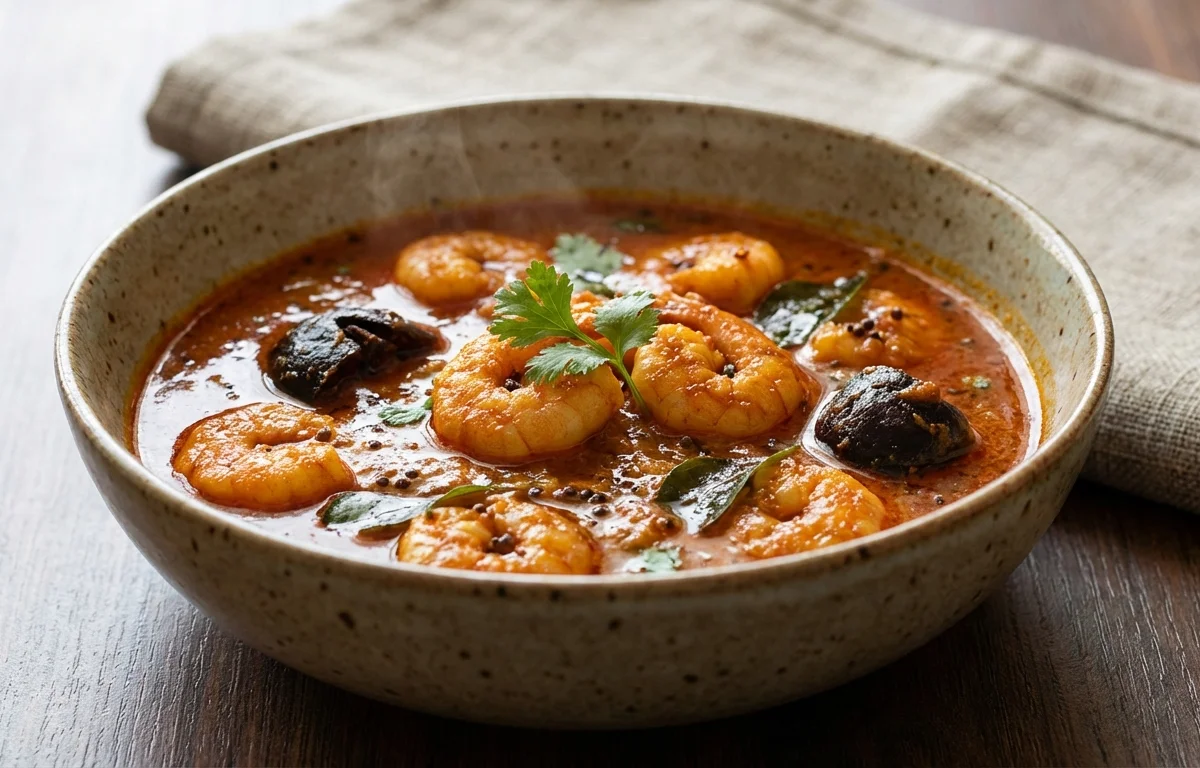
This coastal Maharashtrian prawn curry is light, fragrant, and full of fresh coconut flavor. The gravy gets its warmth from roasted spices and a gentle tang from tamarind, making it perfect with steamed rice.
For 4 servings
- prep · ~10 min
Soak the tamarind and clean the prawns.
1.Soak tamarind in a little warm water for 10 minutes.2.Rinse the prawns gently and pat them dry.3.Keep the prawns ready while you make the masala. - roast · ~8 min
Roast the coconut and whole spices.
1.Heat a pan over medium heat and add grated coconut, sliced onion, garlic, and ginger.2.Add dried red chili, coriander seeds, cumin seeds, and black peppercorns.3.Roast, stirring often, until the coconut turns light golden and the onion softens, 6 to 8 minutes.4.Take the mixture off the heat and cool slightly. - mix · ~3 min
Grind the masala.
Transfer the roasted mixture to a grinder. Add tamarind with its soaking liquid and 1 cup water, then grind to a smooth paste.
- saute · ~8 min
Cook the curry base.
1.Heat oil in a kadai over medium heat.2.Add chopped tomato and cook until soft, 3 to 4 minutes.3.Add turmeric powder and stir for a few seconds.4.Pour in the ground masala and cook until the raw smell fades, 3 to 4 minutes. - simmer · ~7 min
Simmer the gravy and cook the prawns.
Add the remaining 1 cup water and salt, then bring the curry to a gentle simmer. Add the prawns and cook 4 to 5 minutes, just until they turn opaque and are cooked through.
- garnish
Garnish with cilantro.
- serve
Serve hot with steamed rice.
What to keep in mind.
7 tips from the recipe — small details that make a real difference to the final dish.
- 1Roast the coconut only to light golden; dark browning can make the kalvan taste bitter.
- 2Pat the prawns dry before cooking so they stay firm and don't water down the gravy.
- 3Grind the roasted masala very smooth for the classic coastal texture and fuller coconut body.
- 4Cook the ground masala until the raw aroma disappears; this deepens flavor and prevents a pasty taste.
- 5Add prawns only after the curry is simmering gently, then cook just until opaque to avoid rubbery seafood.
- 6If the tamarind is very sharp, start with a little less soaking liquid and adjust after simmering.
- 7This curry tastes even better after a short 15-minute rest, which lets the coconut and tamarind meld.
Adapt it for your goals.
Spicier
Add 1-2 extra dried red chilies or a few more peppercorns if you prefer a hotter coastal-style kalvan.
thinner kalvanThinner-kalvan
Increase the water slightly for a lighter, more brothy curry that pairs especially well with steamed rice.
fishFish
Use firm fish pieces instead of prawns for a similar Maharashtrian coconut-tamarind curry with a different seafood texture.
no tomatoNo-tomato
Skip the tomato and rely on tamarind for tang if you want a more traditional, coconut-forward flavor profile.
Why this is on our healthy list.
Lean Seafood Protein
Prawns provide satisfying protein that makes this curry filling without feeling too heavy.
Spice-Rich Digestive Support
Ginger, garlic, cumin, coriander, and pepper bring aromatic compounds commonly used to aid digestion in savory curries.
Natural Fats from Coconut
Fresh coconut adds richness and body, helping carry the flavors of the roasted spices through the gravy.
Frequently asked questions
They are done when they turn opaque and firm up slightly, usually in 4 to 5 minutes. Overcooking will make them chewy.



.webp)