Kori Ajadina
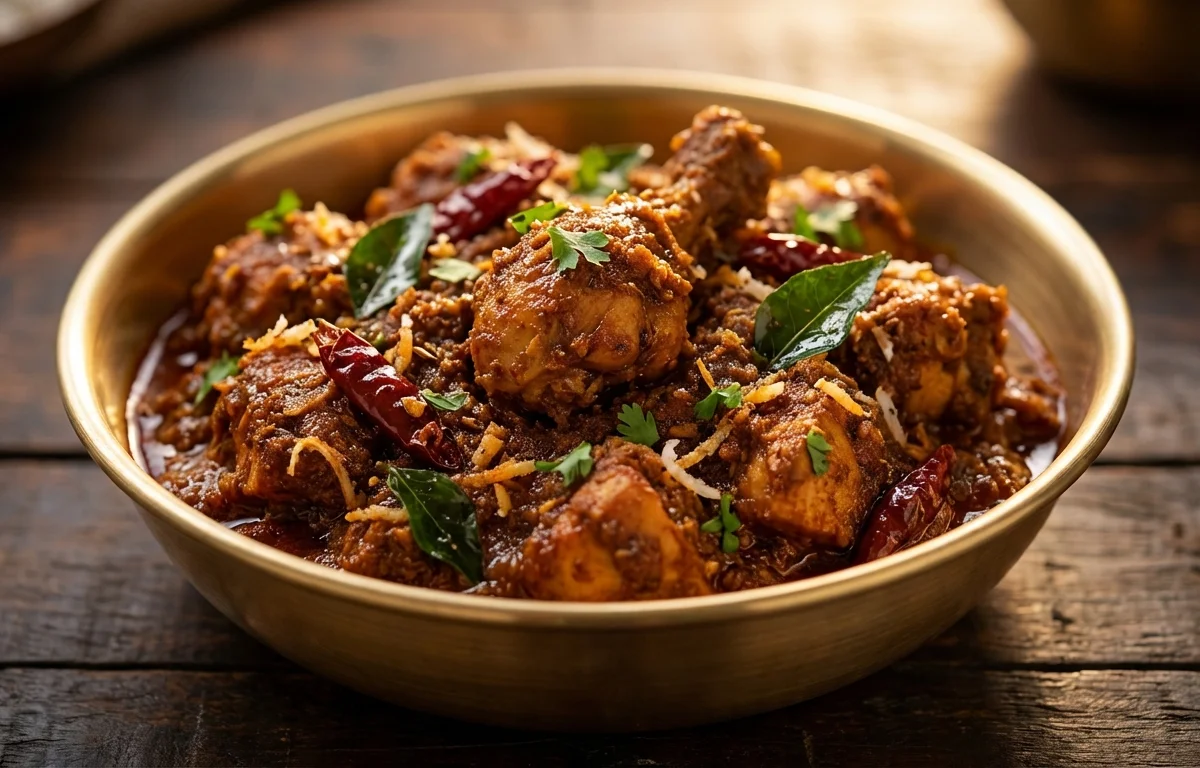
A Mangalorean-style dry chicken dish where pieces of chicken are cooked with onions, tomato, coconut, tamarind, and a dark roasted spice paste. It turns rich, spicy, and deeply savory, with a thick masala that clings to every bite.
For 4 servings
- prep · ~15 min
Soak the tamarind and prepare the chicken.
1.Soak the tamarind in a little warm water for 15 minutes.2.Wash the chicken pieces and drain well.3.Slice the onions and chop the tomatoes. - roast · ~8 min
Roast the spices and coconut.
1.Heat a dry pan over low to medium heat.2.Roast the dried red chili, coriander seeds, cumin seeds, black peppercorns, fenugreek seeds, and garlic until fragrant.3.Add the grated coconut and roast until deep golden brown.4.Take everything off the heat and cool slightly.TIPKeep the heat moderate so the coconut browns evenly and does not turn bitter. - mix · ~4 min
Grind the masala paste.
Squeeze the soaked tamarind and discard the fibers. Grind the roasted spices, coconut, garlic, tamarind, turmeric powder, and a little water to a thick, smooth paste.
- saute · ~10 min
Cook the onions and tomatoes.
1.Heat oil in a wide pan over medium heat.2.Add the curry leaves and sliced onions, then cook until lightly browned.3.Add the tomatoes and cook until soft and pulpy. - saute · ~5 min
Coat the chicken in the masala.
Add the chicken pieces and salt to the pan. Mix in the ground masala and cook for 4 to 5 minutes so the chicken is well coated and the paste starts to smell rich.
- simmer · ~20 min
Cook until the chicken is tender.
Add the remaining water, cover, and cook on low heat until the chicken is tender and the masala thickens and clings to the pieces. Stir a few times to prevent sticking.
TIPThis dish should stay thick and semi-dry, so do not add too much water. - serve
Serve Kori Ajadina hot.
What to keep in mind.
7 tips from the recipe — small details that make a real difference to the final dish.
- 1Roast the coconut to a deep golden brown, not just pale, for the signature dark Ajadina color and nutty depth.
- 2Use a wide pan in the final simmer so excess moisture evaporates and the masala turns semi-dry instead of saucy.
- 3Bone-in chicken gives the masala more body and flavor as it cooks; avoid tiny pieces that can dry out.
- 4Grind the roasted mixture with minimal water so the paste stays thick and coats the chicken properly.
- 5Stir more often toward the end of cooking, because the coconut-rich masala can catch at the bottom once it thickens.
- 6If the tamarind is very sharp, add it gradually while grinding; the dish should taste tangy, not sour.
- 7This dish often tastes even better after a short rest, once the roasted spice paste settles into the chicken.
Adapt it for your goals.
Spicier
Increase the dried red chilies or use a hotter variety for a fiercer Mangalorean-style heat.
bonelessBoneless
Use boneless chicken for easier eating, but reduce simmer time so the pieces stay juicy.
low oilLow-oil
Cut the oil slightly and cook onions slowly; the masala will still be rich from the roasted coconut.
thicker dryThicker-dry
Use less water and finish uncovered for a drier version that works especially well with neer dosa or chapati.
Why this is on our healthy list.
Protein-Rich Main Dish
Chicken makes this a satisfying, protein-forward dish that can help keep the meal filling and balanced.
Spice-Based Flavor
Dried chilies, coriander, cumin, pepper, garlic, and curry leaves bring strong flavor without relying only on heavy sauces.
Includes Aromatic Plant Ingredients
Onion, tomato, tamarind, garlic, and coconut add variety, depth, and naturally occurring plant compounds to the dish.
Frequently asked questions
Usually too much water was added or the pan was too crowded. Keep the masala thick while grinding and simmer uncovered at the end until it clings to the chicken.