
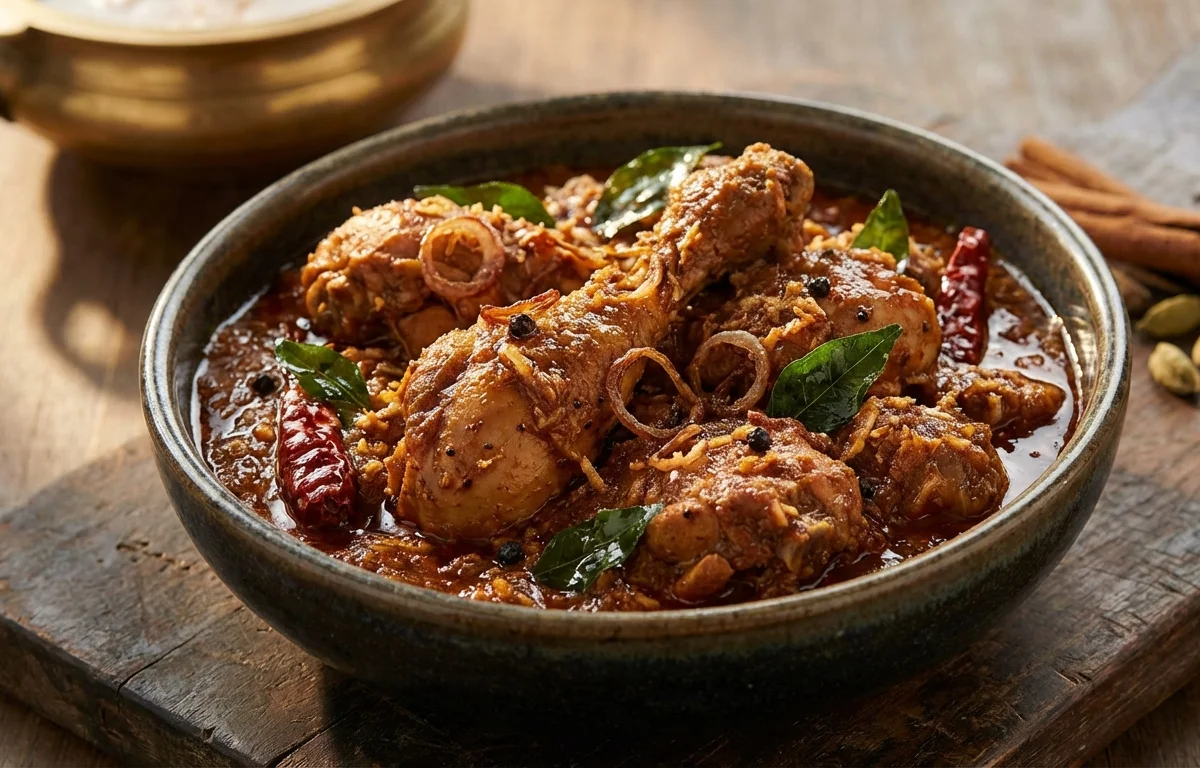
Kozhi Varutharachathu
A rich Kerala chicken curry built on roasted coconut, dried spices, and a slow-cooked onion tomato base. It turns deeply aromatic, lightly smoky, and wonderfully comforting with rice, appam, or chapati.
For 4 servings
- prep · ~10 min
Prep the chicken and vegetables.
1.Wash and drain the chicken pieces well.2.Slice the onions thinly and chop the tomatoes.3.Peel the shallots, garlic, and ginger for the roasted masala. - roast · ~8 min
Roast the coconut masala.
1.Heat a small pan over medium heat and add the grated coconut.2.Add shallots, garlic, ginger, dried red chili, coriander seeds, fennel seeds, and black peppercorns.3.Roast, stirring often, until the coconut turns deep golden brown and the spices smell nutty.4.Take it off the heat and let it cool slightly.TIPKeep the heat medium and stir constantly near the end so the coconut browns evenly without burning. - mix · ~3 min
Grind the roasted masala.
Transfer the cooled roasted mixture to a blender, add 0.5 cup water, and grind to a smooth, thick paste.
- saute · ~10 min
Cook the onion base.
1.Heat coconut oil in a kadai over medium heat.2.Add curry leaves and sliced onions.3.Cook until the onions turn soft and light golden.4.Add chopped tomatoes and cook until they break down. - saute · ~5 min
Add the chicken and spice powders.
1.Add the chicken pieces to the pan and mix well with the onion tomato base.2.Add turmeric powder, red chili powder, garam masala, and salt.3.Cook for 4 to 5 minutes until the chicken is lightly sealed and coated. - simmer · ~20 min
Cook with the roasted paste.
Add the ground roasted masala and the remaining 1 cup water. Mix well, cover, and simmer on low heat until the chicken is tender and the gravy turns thick and glossy.
TIPStir once or twice during simmering so the thick coconut gravy does not catch at the bottom. - garnish
Finish with cilantro.
- serve
Serve hot with rice, appam, or chapati.
What to keep in mind.
6 tips from the recipe — small details that make a real difference to the final dish.
- 1Roast the coconut to a deep golden brown, not just pale beige, for the signature varutharacha depth.
- 2Let the roasted coconut mixture cool slightly before grinding so it blends smoother and stays thick, not oily.
- 3Slice the onions thinly and cook them until light golden; undercooked onions make the gravy taste raw and sharp.
- 4Use bone-in chicken if possible, since it gives the simmering gravy more body and richer flavor.
- 5Keep the final simmer on low heat and stir the bottom once or twice because coconut masala can stick quickly.
- 6Rest the curry for 10 to 15 minutes before serving; the roasted spice and coconut flavors settle and deepen.
Adapt it for your goals.
Spicier
Add 1 to 2 extra dried red chilies or a little more black pepper for a hotter, more peppery Kerala-style curry.
thicker gravyThicker-gravy
Use slightly less water in the final simmer for a clingier masala that pairs especially well with chapati or pathiri.
duckDuck
Swap chicken for duck for a richer, festive Kerala-style varutharacha curry; increase simmering time until tender.
potato addedPotato-added
Add cubed potatoes with the chicken to stretch the curry and soak up the roasted coconut gravy.
Why this is on our healthy list.
Protein-Rich Main Dish
Chicken makes this curry filling and satisfying, helping turn it into a substantial meal with rice or flatbread.
Aromatic Whole Spices
Coriander, fennel, pepper, ginger, and garlic bring flavor intensity, so the dish tastes full without relying only on heat.
Coconut-Based Satiety
Fresh coconut adds richness and texture, making the curry deeply satisfying in modest portions.
Frequently asked questions
Yes, but bone-in chicken gives the gravy more flavor and body. If using boneless pieces, reduce the simmer time so they do not dry out.


.webp)
.webp)