Kukuda Kassa
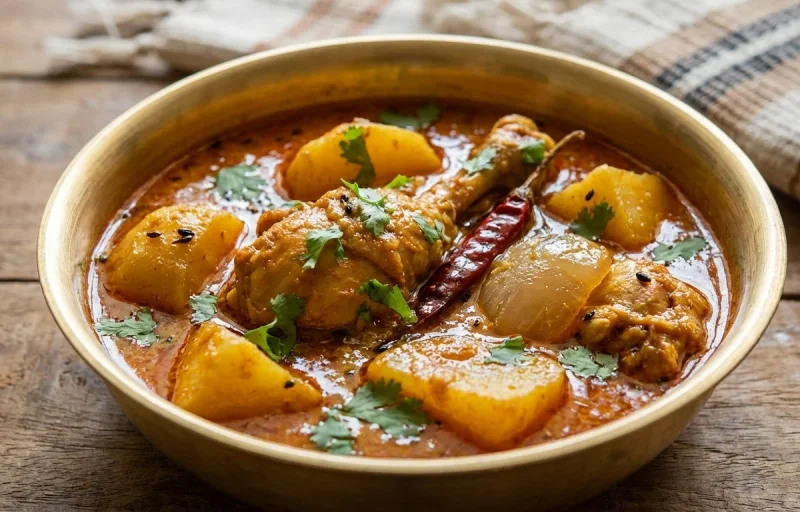
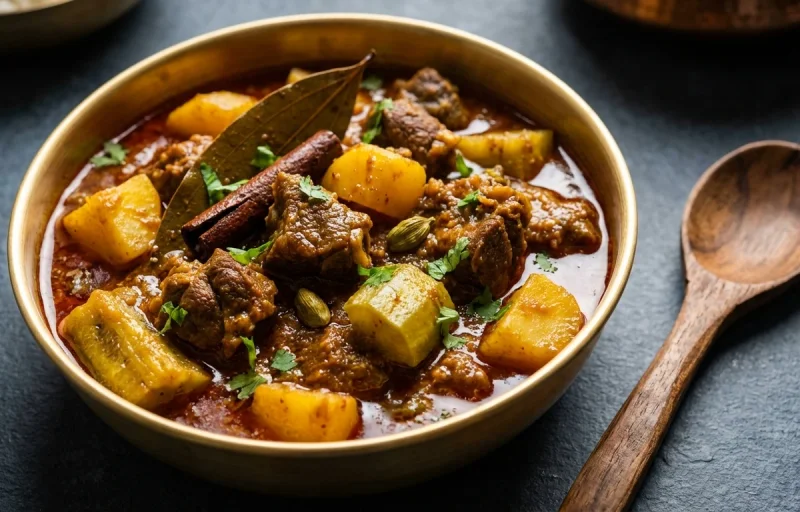
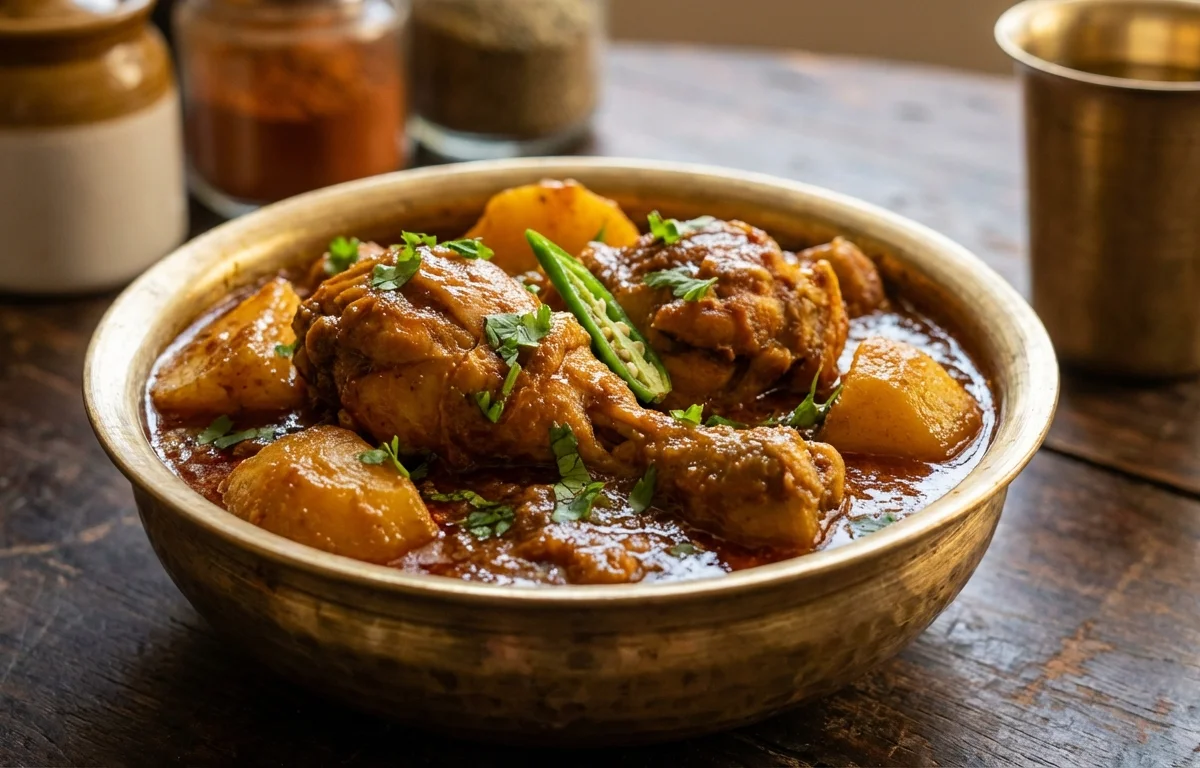
A rustic Odia-style chicken curry with a dark, slow-cooked masala and bold village flavors. The chicken cooks down with onion, garlic, ginger, and warm spices until the gravy turns rich, thick, and deeply savory.
For 4 servings
- prep · ~20 min
Marinate the chicken.
1.Blend garlic and ginger to a coarse paste.2.Mix chicken with yogurt, half the ginger-garlic paste, turmeric powder, red chili powder, and salt.3.Coat well and set aside for 20 minutes.TIPA short rest helps the chicken absorb the masala and stay juicy while cooking. - saute · ~10 min
Cook the whole spices and onions.
1.Heat mustard oil in a heavy pan until lightly smoking, then lower the heat.2.Add bay leaf, cinnamon, green cardamom, cloves, and cumin seeds.3.Add sliced onions and cook until deep golden, stirring often, for 8 to 10 minutes.TIPDo not rush the onions; their deep color gives kukuda kassa its dark, rich base. - saute · ~6 min
Build the masala base.
1.Add the remaining ginger-garlic paste and cook for 1 minute.2.Add chopped tomato, coriander powder, cumin powder, and black pepper.3.Cook until the tomatoes soften and the masala looks thick and glossy, about 5 to 6 minutes. - saute · ~10 min
Bhuna the chicken with the masala.
Add the marinated chicken and cook over medium heat, stirring well so the pieces get coated in the onion masala. Keep cooking until the chicken changes color and the mixture looks slightly dry and roasted at the edges.
TIPBhuna cooking is key here; let the masala catch lightly on the pan without burning. - simmer · ~25 min
Simmer until the chicken is tender.
Pour in hot water, mix well, cover, and cook on low heat for 20 to 25 minutes until the chicken is tender and the gravy turns thick. Stir once or twice so the masala does not stick.
- garnish
Finish with garam masala and coriander leaves.
- serve
Serve hot.
Serve kukuda kassa hot with rice or roti while the gravy is still thick and glossy.
What to keep in mind.
6 tips from the recipe — small details that make a real difference to the final dish.
- 1Heat the mustard oil until it just smokes, then reduce the flame to tame its raw sharpness before adding spices.
- 2Slice the onions evenly so they brown at the same rate and give the curry its signature dark kassa color.
- 3During the bhuna stage, scrape the pan bottom often; those browned masala bits deepen the gravy when stirred back in.
- 4Use hot water, not cold, when simmering so the chicken keeps cooking steadily and the yogurt-based masala stays smooth.
- 5Bone-in chicken works best here because the bones enrich the thick gravy as it slowly cooks down.
- 6If making ahead, rest the curry for a few hours before reheating; the onion-spice base tastes even fuller the next day.
Adapt it for your goals.
Low-oil
Use a little less mustard oil and cook the onions more slowly with a splash of water as needed; the curry will be lighter but still robust.
spicierSpicier
Increase red chili powder or add slit green chilies during the masala stage for a fiercer, more rustic heat.
bonelessBoneless
Use boneless chicken for quicker cooking and easier serving, though the gravy will be slightly less rich than with bone-in pieces.
potato addedPotato-added
Add halved potatoes during the simmer for a heartier curry; they absorb the dark masala beautifully and stretch the dish.
Why this is on our healthy list.
Good Protein Source
Chicken provides satisfying protein, making this curry filling and useful for a balanced main meal.
Rich in Aromatic Spices
Ginger, garlic, cumin, coriander, black pepper, and whole spices add flavor complexity along with beneficial plant compounds.
Cooked with Yogurt
Yogurt adds tang and creaminess while helping tenderize the chicken without relying on heavy cream.
Frequently asked questions
Usually the onions were not browned enough or the bhuna stage was rushed. Cook the onions to a deep golden color and roast the masala until it looks thick and slightly oily.