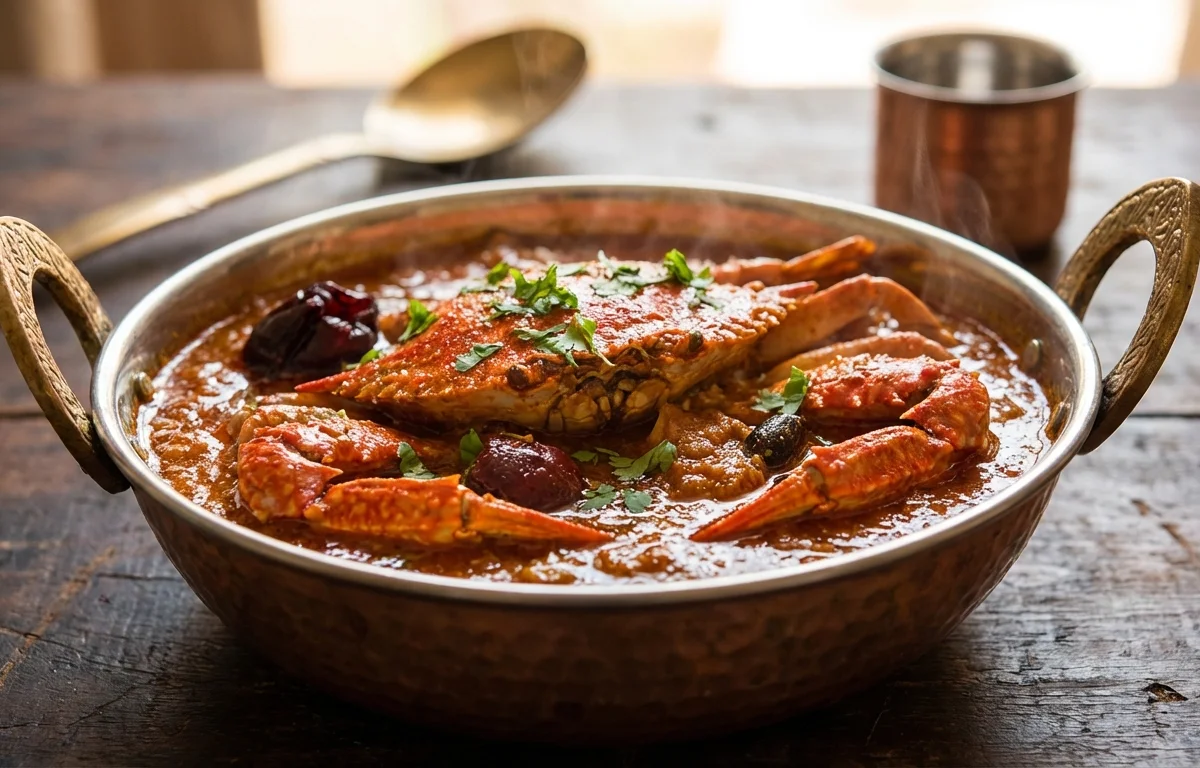
Kurlya Masala
A coastal Maharashtrian crab curry with a bold roasted coconut masala, warming spices, and a tangy finish. The gravy turns rich and deeply flavored as the crab cooks, making it perfect with bhakri or steamed rice.
For 4 servings
- prep · ~15 min
Clean the crab and get the masala ingredients ready.
1.Wash the crab pieces well and lightly crack the claws and shell so the gravy can seep in.2.Slice the onion, chop the tomato, and roughly chop the ginger.3.Peel the garlic cloves and measure out the spices, tamarind paste, oil, salt, and water.TIPAsk the fish seller to clean and cut the crab to save time. - roast · ~6 min
Roast the coconut and whole spices.
1.Heat a pan on medium and dry roast the grated coconut until lightly golden and nutty.2.Add the dry red chili, coriander seeds, cumin seeds, black peppercorns, cloves, and cinnamon.3.Roast for 1 to 2 minutes more until fragrant, then take off the heat and cool slightly.TIPKeep the heat medium and stir often so the coconut browns evenly without burning. - mix · ~3 min
Grind the roasted mixture into a masala paste.
Transfer the roasted coconut and spices to a grinder. Add a little water and grind to a smooth, thick paste.
- saute · ~10 min
Cook the onion, ginger, garlic, and tomato.
1.Heat oil in a kadai over medium heat.2.Add the sliced onion, ginger, and garlic, and cook until the onion turns light golden.3.Add the tomato, turmeric powder, and red chili powder.4.Cook until the tomato softens and the mixture looks pulpy. - saute · ~5 min
Cook the masala paste.
Add the ground coconut masala to the pan and cook for 4 to 5 minutes, stirring often, until the raw smell fades and the oil starts to show at the edges.
- simmer · ~4 min
Add the crab and make the curry.
1.Add the cleaned crab pieces and mix well so they get coated in the masala.2.Stir in the tamarind paste, salt, and remaining water.3.Bring the curry to a gentle simmer and cover the pan. - simmer · ~15 min
Simmer until the crab is cooked through.
Cook for 12 to 15 minutes, stirring once or twice, until the crab turns bright orange-red and the gravy thickens slightly. The flesh should be opaque and cooked through.
TIPDo not overcook the crab or the meat can turn tough. - garnish
Garnish with coriander leaves.
- serve
Serve hot with bhakri or steamed rice.
What to keep in mind.
7 tips from the recipe — small details that make a real difference to the final dish.
- 1Crack the claws lightly before cooking so the roasted coconut gravy can seep into the shell.
- 2Roast the coconut only to light golden; dark brown coconut can make the masala bitter.
- 3Cool the roasted mixture slightly before grinding, or the paste can turn oily instead of smooth.
- 4Cook the coconut masala until oil shows at the edges; this is the cue that the raw taste is gone.
- 5Keep the curry at a gentle simmer after adding crab, not a hard boil, so the meat stays tender.
- 6If making ahead, prepare the roasted masala paste a day earlier and refrigerate; cook the crab fresh before serving.
- 7The gravy thickens as it rests, so add a splash of hot water when reheating if serving with rice.
Adapt it for your goals.
Spicier
Increase dried red chilies or chili powder for a hotter Konkan-style curry with more punch.
thicker gravyThicker-gravy
Use slightly less water for a richer, clingier masala that pairs especially well with bhakri.
milderMilder
Reduce the dried red chilies and chili powder to keep the crab flavor more front and center.
prawnPrawn
Swap crab for prawns and reduce simmering time, for a similar coastal masala with quicker cooking.
Why this is on our healthy list.
Protein-Rich Seafood
Crab provides high-quality protein that makes this curry filling while keeping the focus on seafood rather than heavy starches.
Mineral-Dense Ingredients
Crab and the spice mix contribute minerals and trace nutrients, adding more than just flavor to the dish.
Spice-Based Aromatics
Ginger, garlic, pepper, cumin, and coriander bring flavor intensity without needing a large amount of oil.
Frequently asked questions
The shell turns bright orange-red and the meat inside should look opaque, not translucent. Avoid cooking much past that point.

.webp)