Machha Chhencheda
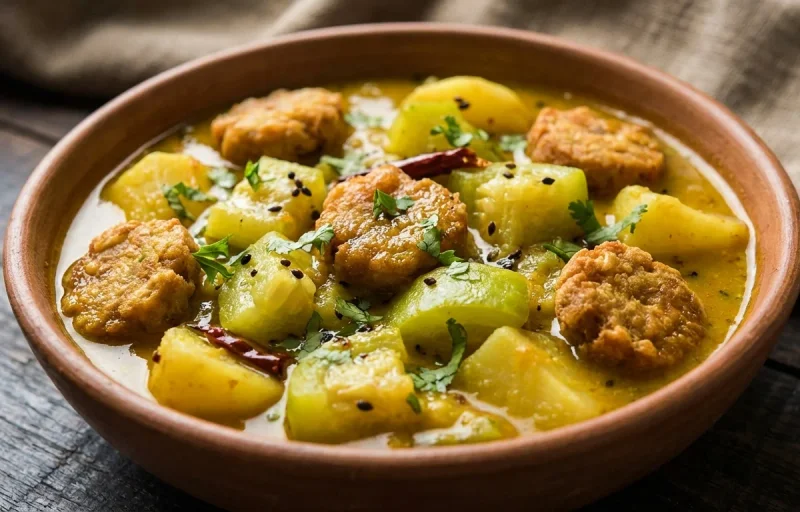
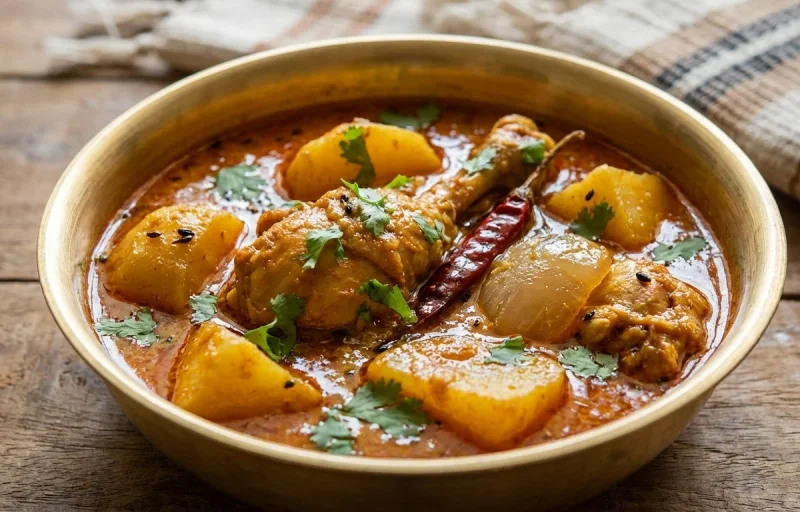
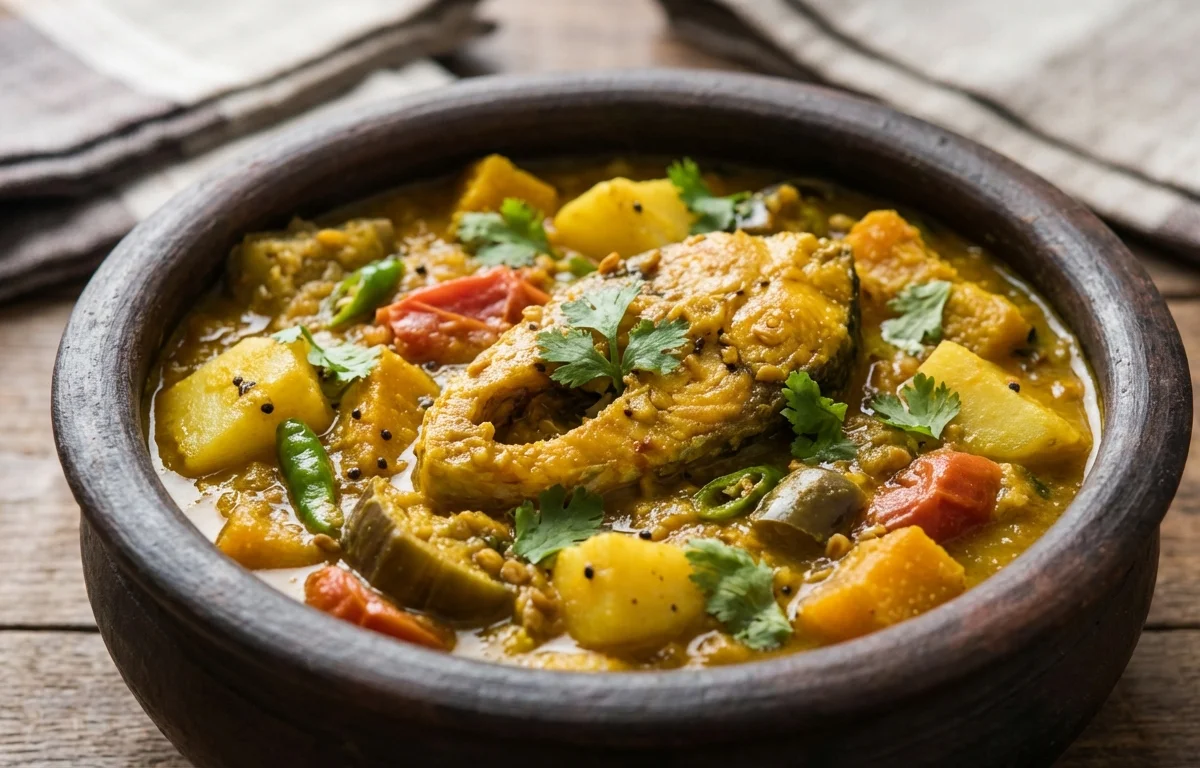
A rustic Odia fish-head curry where tender chunks of fish head and vegetables simmer together in a mustard-spiced gravy. The fish head releases rich gelatinous flavors, melding beautifully with potatoes, brinjal, and pumpkin. A village-style comfort dish with a fiery kick from dry red chilies and pungent mustard oil.
For 4 servings
- prep · ~30 min
Soak and prepare the fish head.
1.Cut the large fish head into 4-5 manageable chunks.2.Rinse the pieces well under running water.3.In a bowl, mix 2 cups water with 0.5 tsp salt and soak the fish head chunks for 30 minutes.4.Drain and pat dry with a kitchen towel. - fry · ~7 min
Fry the fish head chunks.
1.Heat 1 tbsp mustard oil in a deep pan over medium-high heat until it reaches smoking point.2.Once the oil shimmers, carefully lay in the drained fish head chunks.3.Fry for 2-3 minutes per side until lightly golden and sealed.4.Remove the fish head from the pan and set aside on a plate.TIPMustard oil must be heated to its smoking point first to mellow its pungency, ensuring a smoother final flavor. - saute · ~6 min
Sauté the onions and aromatics.
1.In the same pan, pour in the remaining 2 tbsp mustard oil and heat over medium flame.2.Add the broken dried red chilies and sauté for 30 seconds until they turn slightly dark.3.Scatter in the panch phoran and let the seeds crackle for 1 minute.4.Add the sliced onions and crushed garlic. Sauté until the onions become translucent and golden at the edges, about 4-5 minutes. - saute · ~6 min
Cook the masala base.
1.Add the chopped tomatoes, turmeric powder, red chili powder, and cumin powder to the pan.2.Sprinkle in 0.25 tsp of salt.3.Stir continuously until the tomatoes soften into a pulp, release their juices, and the oil begins to separate at the edges, about 5-6 minutes. - boil · ~15 min
Simmer the vegetables in the gravy.
1.Pour 2 cups of hot water into the pan and bring the mixture to a rolling boil.2.Add the cubed potatoes, pumpkin, and brinjal to the bubbling gravy.3.Cover the pan with a lid, reduce the heat to low, and simmer until the vegetables are fork-tender, about 12-15 minutes.4.Gently stir once or twice during cooking to prevent sticking. - simmer · ~9 min
Add the fish head and finish cooking.
1.Uncover the pan and gently slide the fried fish head chunks into the simmering gravy.2.Spoon some gravy over the fish pieces to submerge them slightly.3.Cover again and simmer on low heat for another 8-10 minutes, allowing the fish head to cook through and release its gelatinous richness into the curry.4.Adjust the consistency with a splash of water if it becomes too thick; the final gravy should be medium-bodied.TIPAvoid vigorous stirring after adding the fish head, or the delicate pieces may break apart. - garnish
Garnish with coriander and serve hot.
Scatter the freshly chopped coriander leaves over the curry. Ladle into bowls and serve immediately with steamed rice.
What to keep in mind.
7 tips from the recipe — small details that make a real difference to the final dish.
- 1Soak the fish head in salted water for 30 minutes to draw out impurities and firm up the flesh.
- 2Heat mustard oil until it reaches its smoking point to tame its sharp bite and develop a nutty aroma.
- 3Panch phoran must crackle in hot oil for about 1 minute to fully release its fragrant oils.
- 4Cook the tomato masala until oil visibly separates at the edges, ensuring a deep, well-integrated flavor base.
- 5Slide the fried fish head into the gravy gently and avoid stirring vigorously to keep the chunks intact.
- 6For a thicker gravy, mash one or two cooked potato cubes against the side of the pan before adding the fish head.
- 7This curry tastes even better the next day as the flavors meld; store in the fridge and reheat gently.
Adapt it for your goals.
Vegetarian Version
Omit the fish head entirely and double the quantity of vegetables (potato, pumpkin, brinjal, and add raw banana or cauliflower). The cooking method and spice profile remain the same, yielding a hearty plant-based curry with the same mustard-panch phoran punch.
With Other Fish PartsWith Other Fish Parts
If you cannot find a whole fish head, replace it with 250 g of rohu or catfish collars (the meaty fin sections) or even belly pieces. Adjust cooking time to 6-8 minutes, as these parts cook faster than the head.
Extra FieryExtra Fiery
For those who love intense heat, increase the dried red chilies to 5-6 and add 1 tsp of mustard seeds (coarsely crushed) along with the panch phoran. This amplifies both the pungency and spice level, staying true to the fiery Odia village style.
Pumpkin FreePumpkin-Free
Substitute pumpkin with an equal weight of chopped ash gourd (white pumpkin) or bottle gourd for a lighter, less sweet version. This variation is common in coastal Odia households where seasonal vegetables vary.
Creamy VersionCreamy Version
After the curry is done, stir in 2 tablespoons of fresh coconut milk or a tablespoon of cashew paste for a richer, milder gravy. This is a subtle variation that softens the sharp mustard bite while adding a velvety texture.
Why this is on our healthy list.
Rich in Collagen and Gelatin
Fish heads are packed with collagen, which breaks down into gelatin during simmering. This supports joint health, skin elasticity, and gut health without adding any artificial thickeners.
High in Omega-3 Fatty Acids
Rohu fish head contains natural omega-3s (EPA and DHA) from the fatty tissues around the jaw and skull. These essential fats support heart and brain health.
Good Source of Vitamin A
Red pumpkin is naturally high in beta-carotene, which the body converts to vitamin A. This supports vision, immune function, and skin health.
Fiber from Vegetables
Brinjal (eggplant) and pumpkin contribute soluble and insoluble fiber, aiding digestion and helping maintain steady blood sugar levels.
Anti-Inflammatory Spices
Turmeric contains curcumin, and mustard seeds contain selenium and magnesium — both known for their anti-inflammatory and antioxidant properties.
Frequently asked questions
Yes! Catla, mrigal, or even large tilapia heads work well. The key is to use a fresh, large head (about 500 g) with enough gelatinous tissue to enrich the gravy.